A licence to drive: teaching drivers of all abilities 30 June 2025 We go behind the scenes of a new documentary series about people with disabilities learning to drive.
How can we change Kiwi mobility habits? 30 June 2025 What is needed to get more New Zealanders out of their cars?
Does our driver licensing system need to change? 30 June 2025 The Government is proposing some significant changes to New Zealand's Graduated Driver Licensing System. What does the AA think?
Road rules: when do you need to give way? 30 June 2025 Generally, we have to give way to traffic on our right. Here are three separate give way scenarios to test your knowledge of road rules.
Q&A: Shaun Fairbairn, AA Roadservice Officer 30 June 2025 Dunedin Roadservice Officer Shaun Fairbairn shares his on-the-job stories and tips for winter driving.
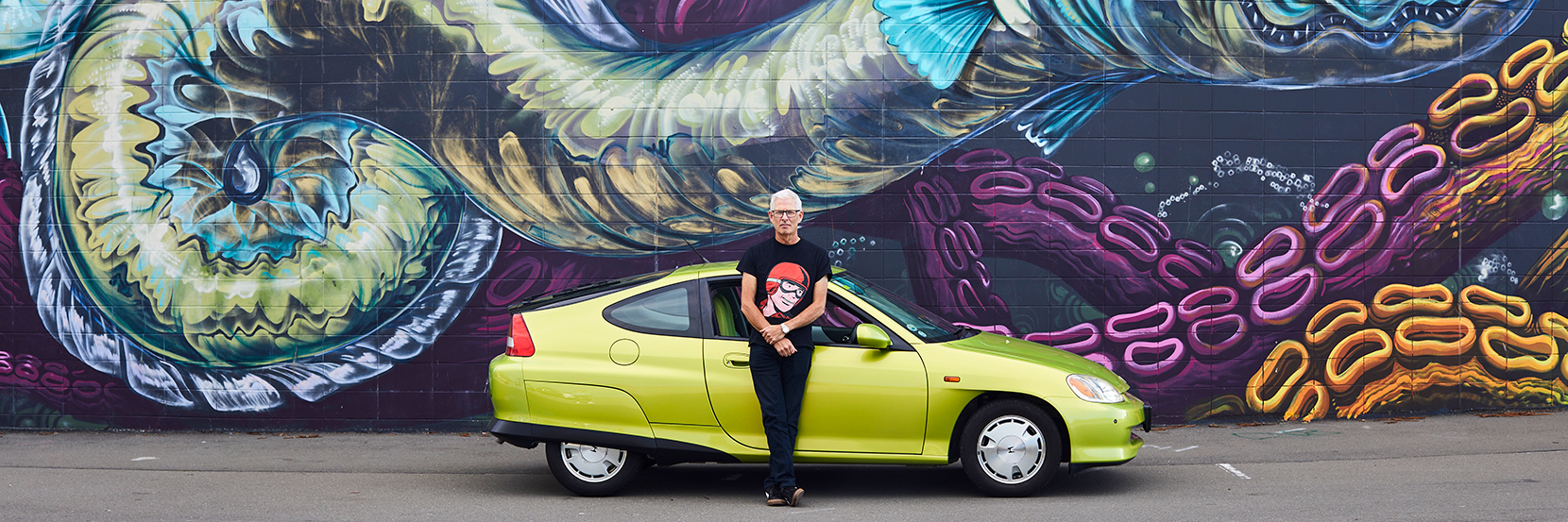
Wheel Love: a 2000 Honda Insight 30 June 2025 Andrew Gladstone shares what he loves about his unusual 2000 Honda Insight, one of the first hybrid vehicles ever made.
Congestion charging: what do AA Members want? 26 June 2025 Is congestion charging the best solution to the traffic woes plaguing New Zealand's major cities?
Sharing the road: improving safety for vulnerable users 26 June 2025 With so many cars on the road it can be easy to forget the needs of more vulnerable road users. Here are a few things other road-goers would like motorists to know.
e-Scooter commuting 23 June 2025 Efficiency, convenience and practicality compelled Blake, an inner-city Auckland resident, to opt for an e-scooter to commute.
How to avoid road rage 23 June 2025 Driving while emotional can be distracting and even downright dangerous. We share tips on how to keep your cool behind the wheel.