


%20front%20quarter%20view.jpg)
Used Car Review: Toyota Aqua
23 February 2026
Find out what our AA Motoring expert thought of the Toyota Aqua - one of New Zealand's most popular used cars.
%20front%20side%20view%20in%20grass.jpg)
13 October 2025
.jpg)
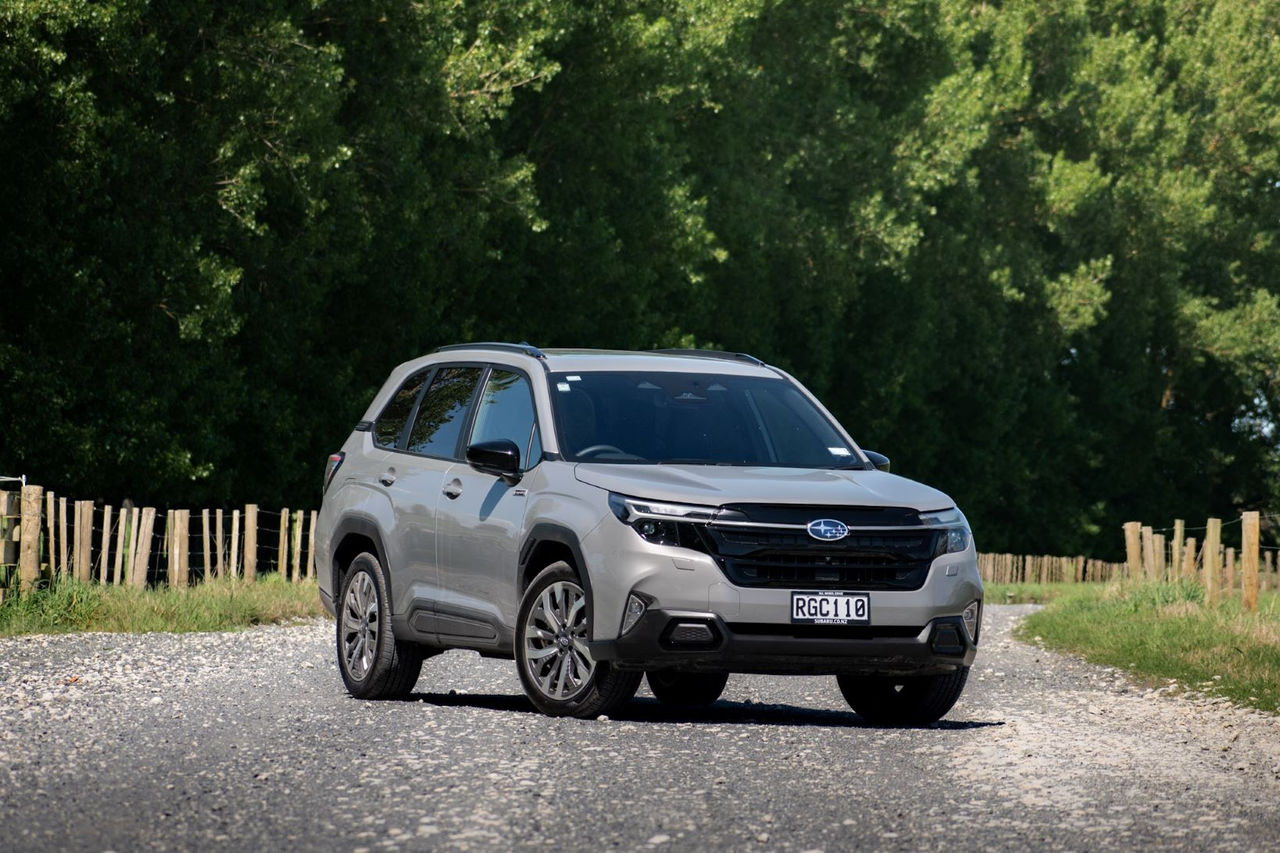
The Subaru Forester is one of those iconic cars that has years of history behind it. Built for any situation, the Forester has been in production for more than a quarter of a century. Now in its sixth generation, the Forester has gone through another evolution that hopefully continues this legacy.
For years, the Forester has been an icon for rugged dependability and bridging the gap between urban and rural vehicle. Its closest rivals, the Hyundai Tucson, Mazda CX-5, and perhaps the Volkswagen Tiguan, are only light crossovers that are predominantly front-wheel drive despite having AWD available.
The Forester on the other hand – with its flat-four engine, continuous AWD system, and 22cm ground clearance – fully embraces the rural lifestyle while remaining poised and elegant when not tackling adverse road conditions. And with a new platform offering more efficiency and control, the sixth generation Forester has even better handling than the last one.
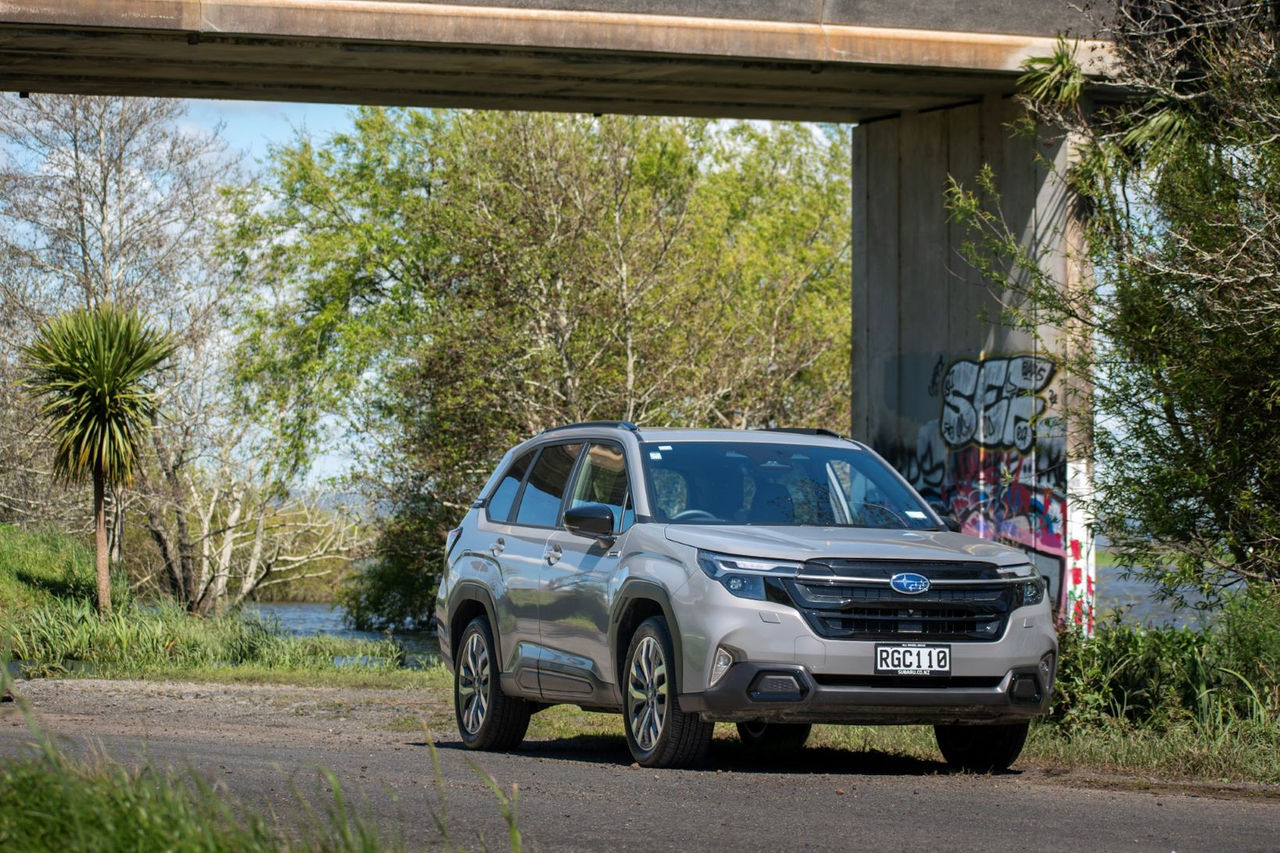
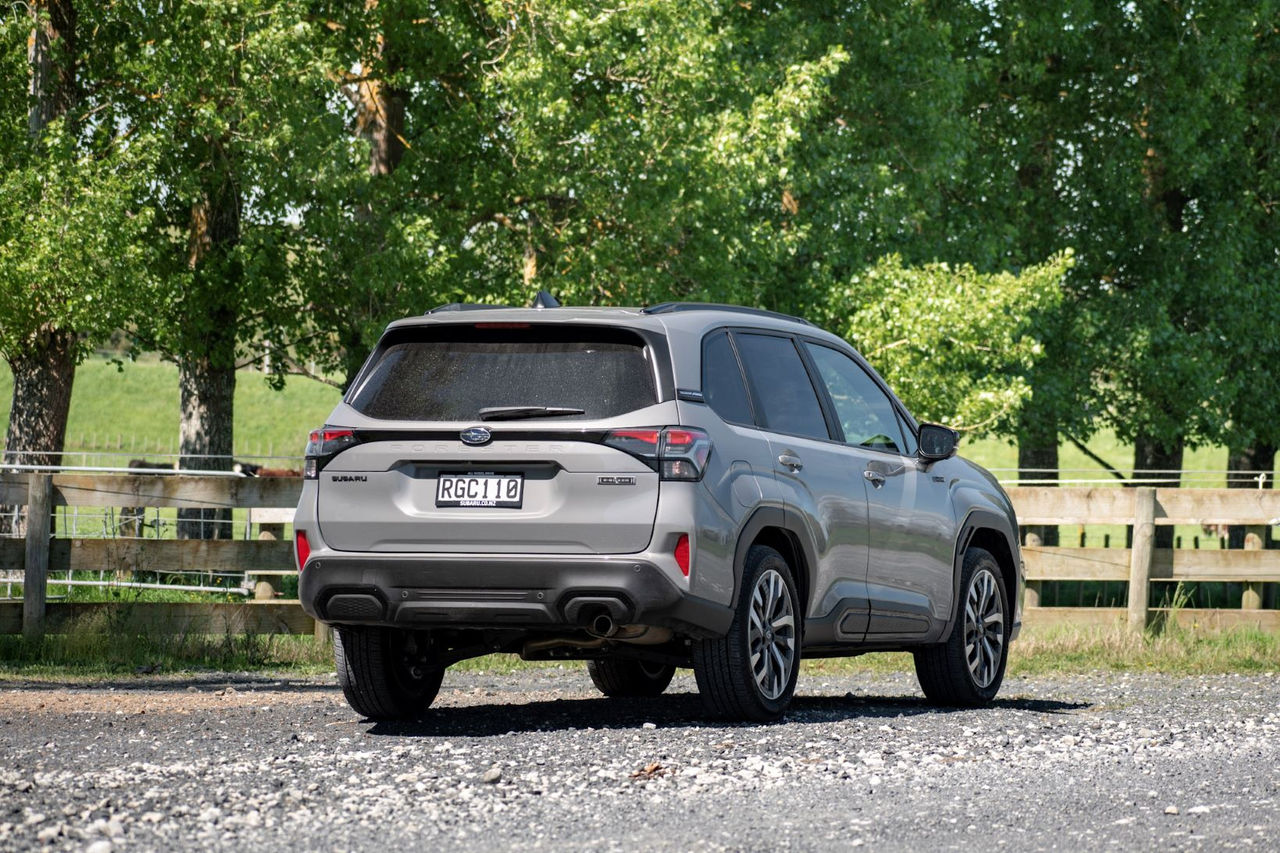
The latest version feels like a nostalgic trip down memory lane. While the previous two generations had more SUV influence in their styling, the new Forester has ditched the sharp edges and gone back to blocky, more subtle design cues – that overall make it look smarter and more like a crossover.
The new version remains the same height as the last but is slightly longer and wider, meaning it resembles the elevated station wagon shape of the first few generations.
The larger dimensions translate to more space on the inside. Up front the Forester feels roomier than the last version and provides ample space for adults in the back. Additionally, the boot space offers 484-litres, which is slightly more than the previous model.
Size isn’t the only increase we are seeing with the 2025 Forester. Although you can pick up the base model for $49,990, the top spec Touring AWD Hybrid we drove costs $60,990 – that’s almost reaching premium territory. And, with the Jaecoo J7 EX+ AWD coming in at $43,990, the competition underneath the Forester is heating up.
What makes the Forester stand out is its smooth and balanced ride, which is unparalleled by its competitors. The upgraded platform increases rigidity by 10 percent, while the proven symmetrical AWD system keeps the Forester planted on the road.
While some manufacturers have switched to electrical AWD setups, Subaru have kept the mechanical connection alive. While this results in a less efficient setup, there is a direct link between the output and rear wheels which helps with traction.
Under the bonnet remains a familiar 2.5-litrer Boxer engine, although with a few upgrades to make it quieter and more responsive. There is also an e-Boxer hybrid that uses a 1.1kWh battery and components from Toyota (via a partnership) to debut a “strong hybrid” that develops a combined 145kW and 212Nm – that’s the one we drove.
The power is delivered smoothly and efficiently, with the engine silently transitioning between electric and petrol modes. This results in a claimed fuel consumption of 6.2L/100km – we achieved a low of 6.5L/100km via a mix of urban and motorway driving. The CVT gearbox controls the charging of the hybrid battery and utilises a planetary gearset, rather than the regular belt setup used in conventional CVT gearboxes.
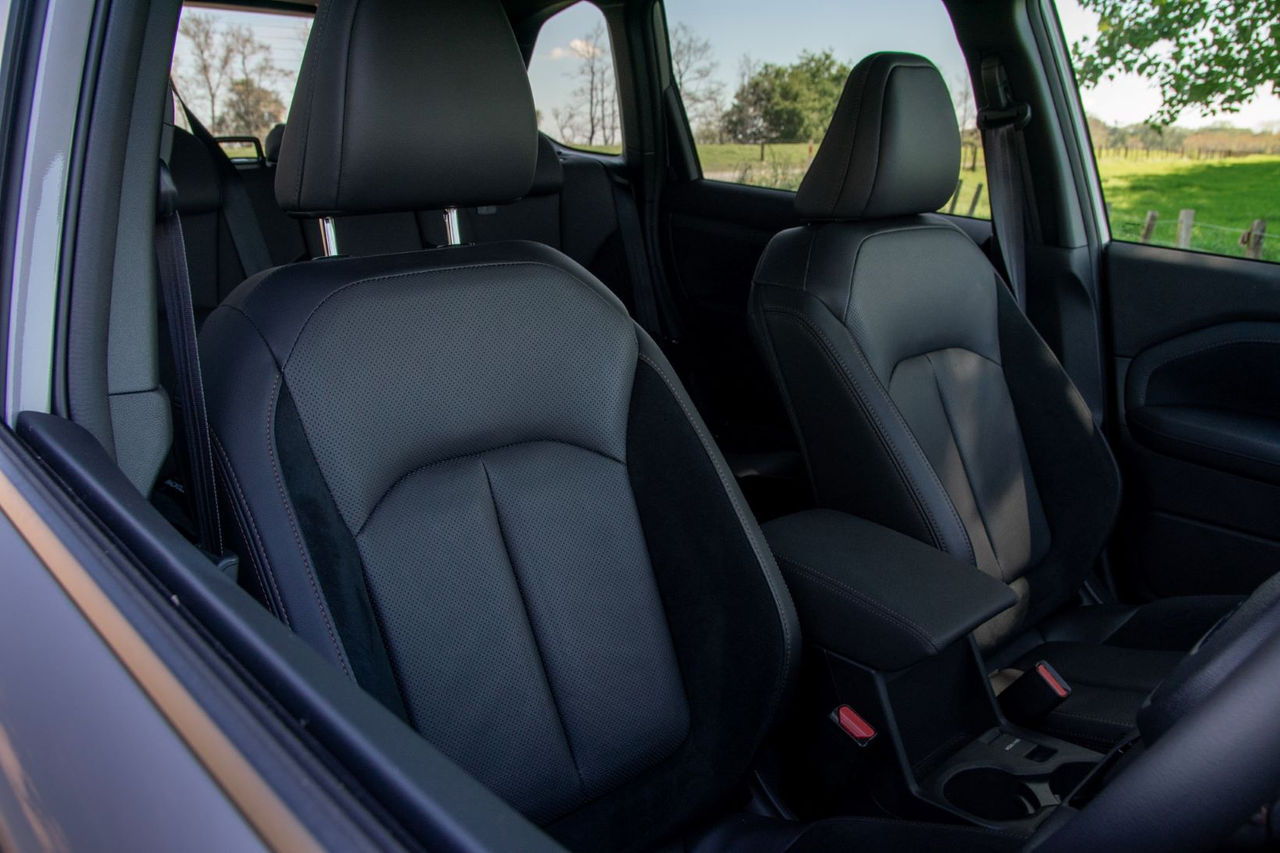
The new Forester has three trim levels attached to the two engine options – the base model Forester, a mid-range Sport, and top spec Touring. The base model gets LED headlights, a leather steering wheel, and cloth seat trims. The Sport gets an electric sunroof, water repellent synthetic leather seat trim, and a powered rear boot lid. The top spec Touring comes with leather and suede seat trim, driver and passenger ventilation seats, and 19-inch alloys.
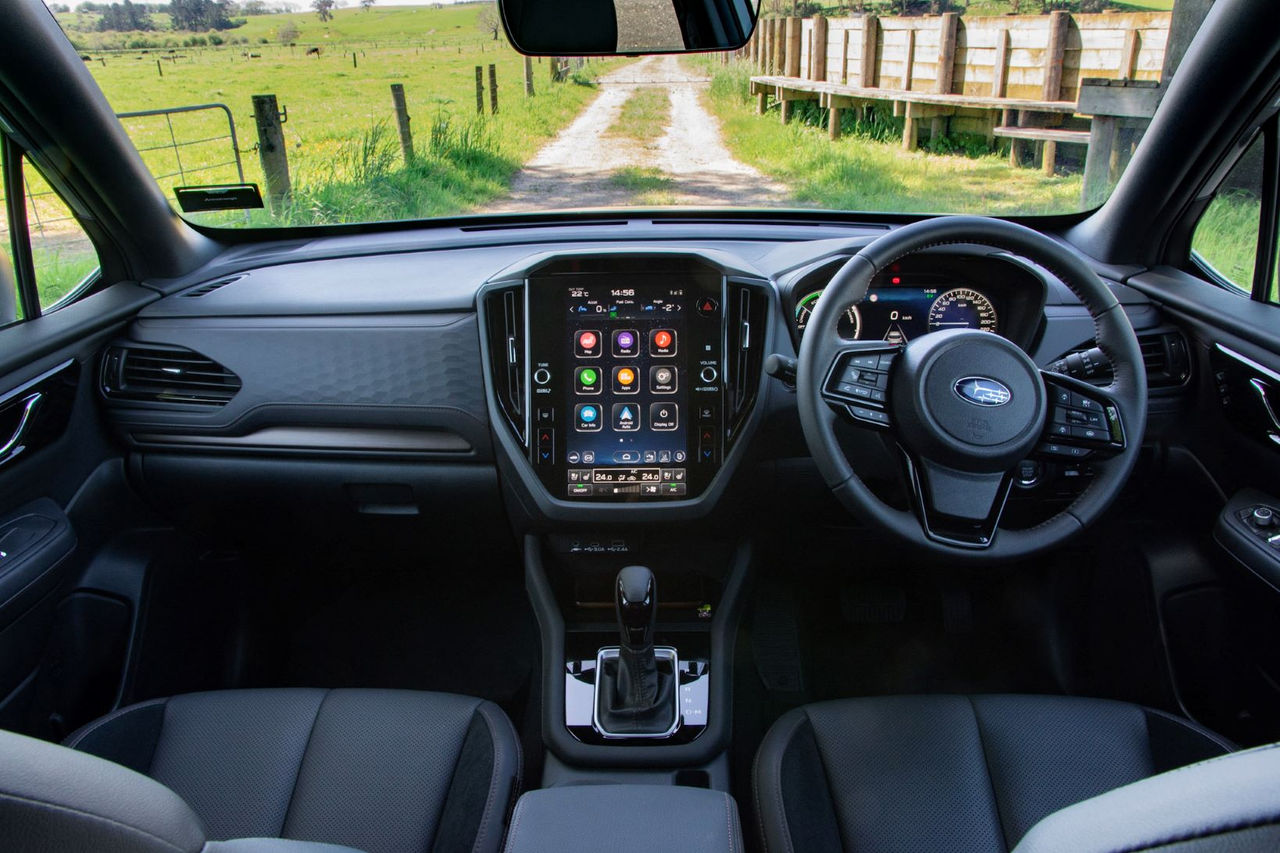
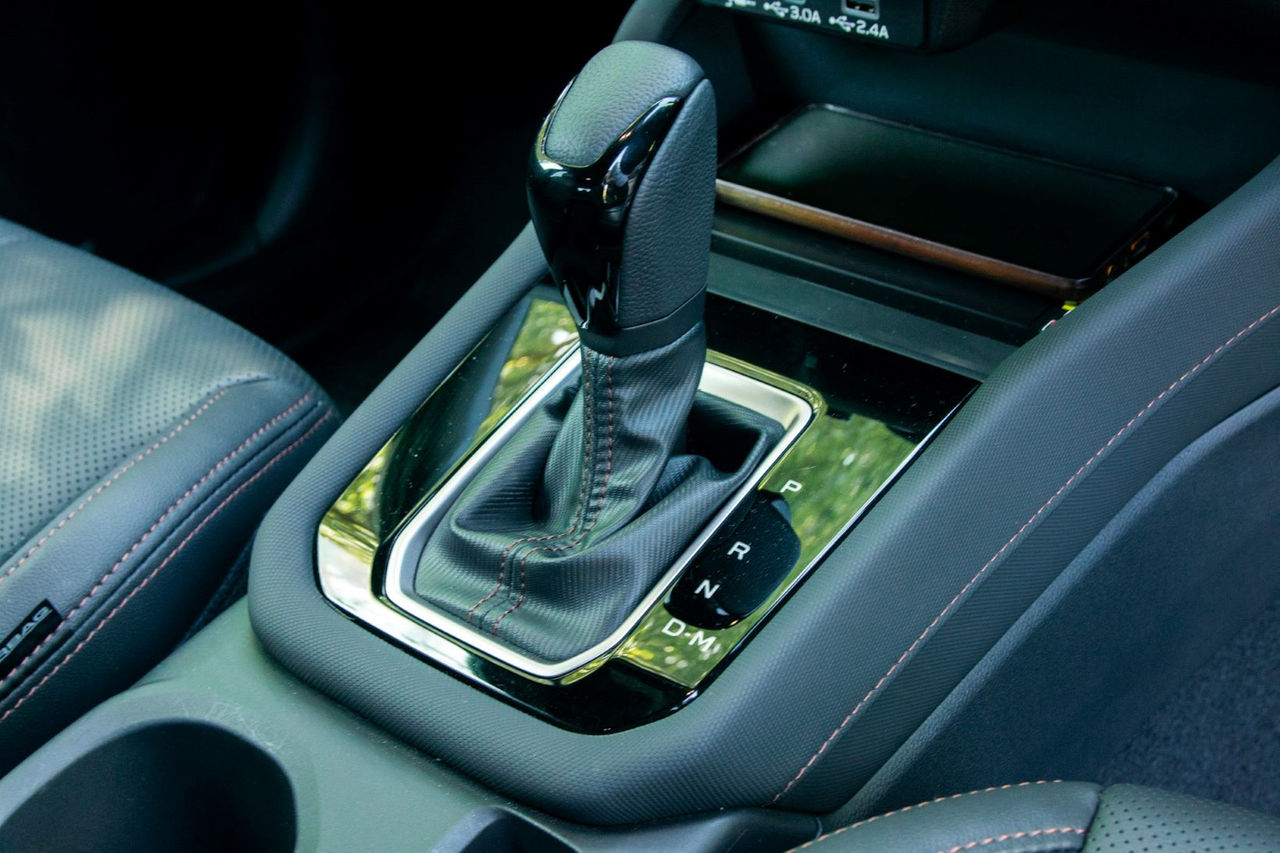
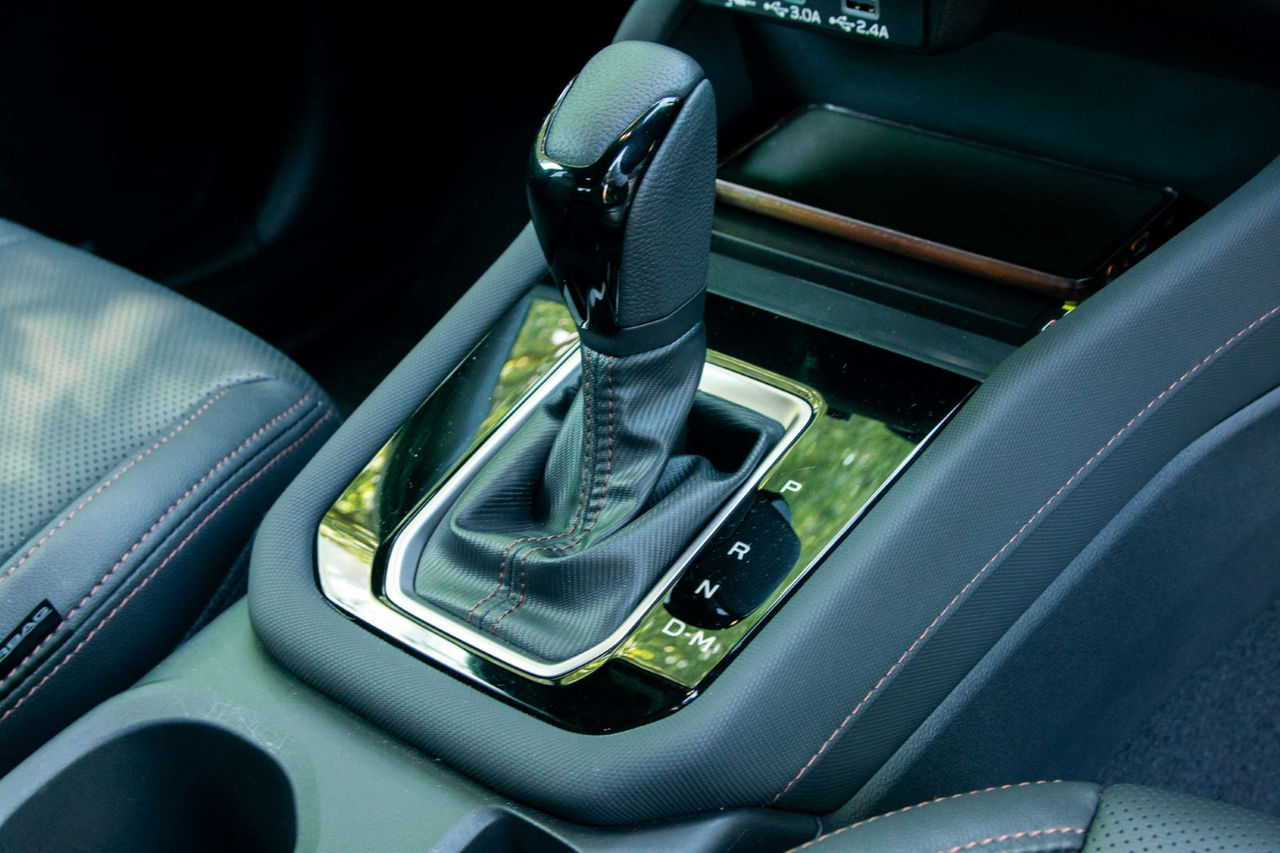
On the inside, Subaru have kept it much the same. There are subtle upgrades that improve the overall experience but those coming from previous models will find it familiar, yet more refined. The build quality feels premium and new additions include charging pad and both USB-A and USB-C connections.
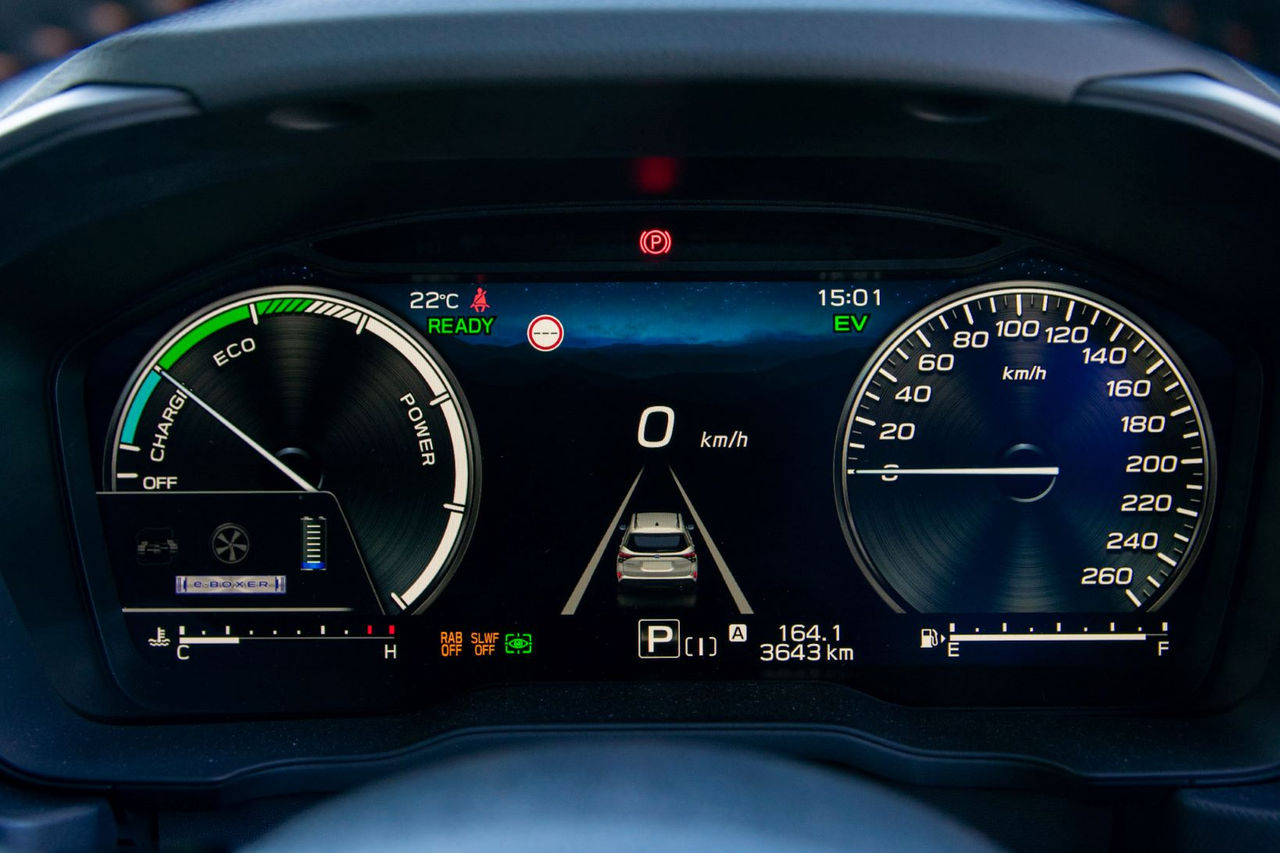
The instrument cluster has gone fully digital with a 12.3-inch display. In the hybrid, the rev counter has also been replaced with a power meter that shows you when the hybrid battery is charging and using energy.
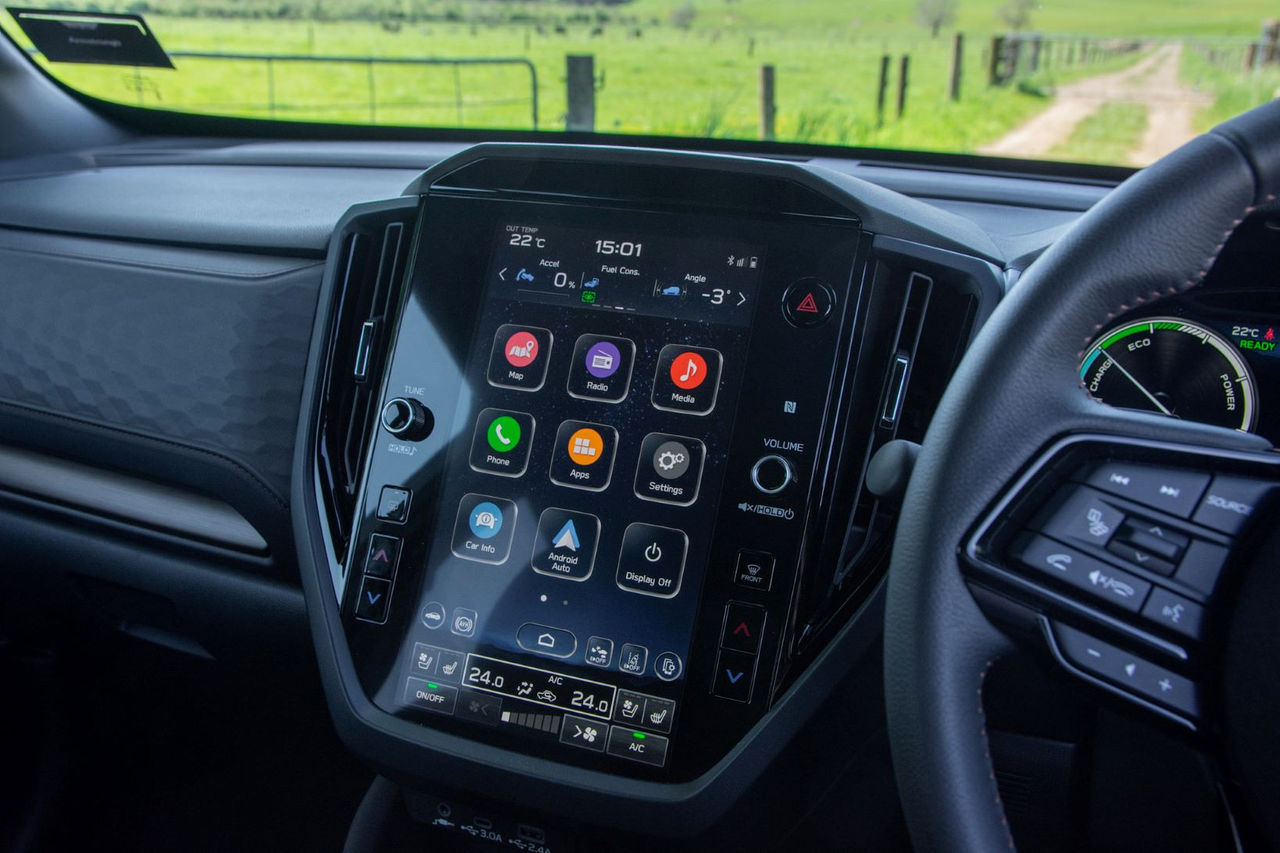
The 11.6-inch infotainment touchscreen display is responsive and clear. The controls are simple and easy to navigate with large touchscreen buttons helping to find options and settings quickly. The touchscreen incorporates the climate controls at the bottom and are quick and easy to locate making changing anything a simple process.
Luckily, not all buttons have gone digital. There are still two dials next to the touchscreen to adjust the entertainment volume and radio tuning.
As you’d expect, you get Subaru’s full safety suite and driver assist systems. Although interestingly, only the hybrids get the pedestrian alert system.
Overall, the sixth generation is an improvement on the past versions. It’s quiet, efficient, and capable. Subaru have taken something that works and improved it – not an easy thing to do. While the price may cut a lot of people out of the market, it remains reasonable as even the base model gets AWD. The Touring is our pick as it combines premium features with elegant styling and smooth drivetrain.
| Pros | Cons |
|---|---|
| The AWD system makes the Forester as capable off road as it is on road. | Slightly elevated price point means people may choose cheaper alternatives. |
| Smooth hybrid powertrain balances power with efficiency. | While we like the styling, others may find it bland and want a more aggressive aesthetic – fair enough. |
| Exceptional styling and room on the inside. | Fuel economy still a little high for hybrid. |
%20-%20front%20quarter%20view.jpg)
%20front%20quarter%20view.jpg)