Front quarter view

Used Car Review: Mazda Demio (2014-2019)

Ryan Bos

By Ryan Bos
As a Motoring Advisor at the AA, Ryan shares his enthusiasm for all things automotive and passion for writing to create engaging and informative reviews. With an automotive apprenticeship and journalism degree under his belt, he brings deep technical insights and a solid understanding of automotive systems.

23 February 2026

Want to learn more about the previous generation Mazda Demio? Check out our review of the 2012 model.

TL;DR: The Mazda Demio (sold new in New Zealand as the Mazda2) is one of the country’s most popular used-import hatchbacks. It’s cheap to run (around 5 L/100 km), easy to park, and use Mazda’s renowned Skyactiv engines. If you want a low-cost commuter or a second car, it’s a proven, practical choice – just pick the trim, check its condition, and book a service at an AA Auto Centre.

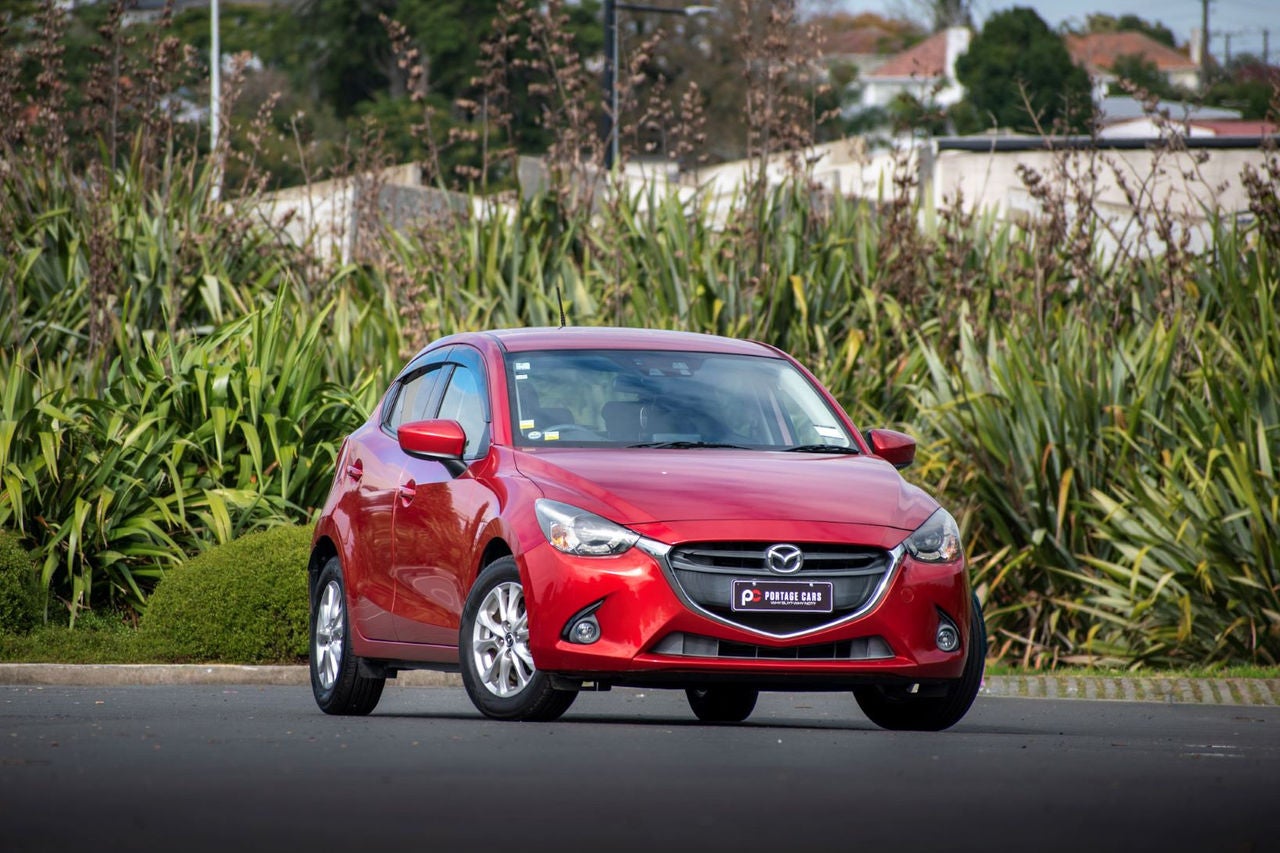
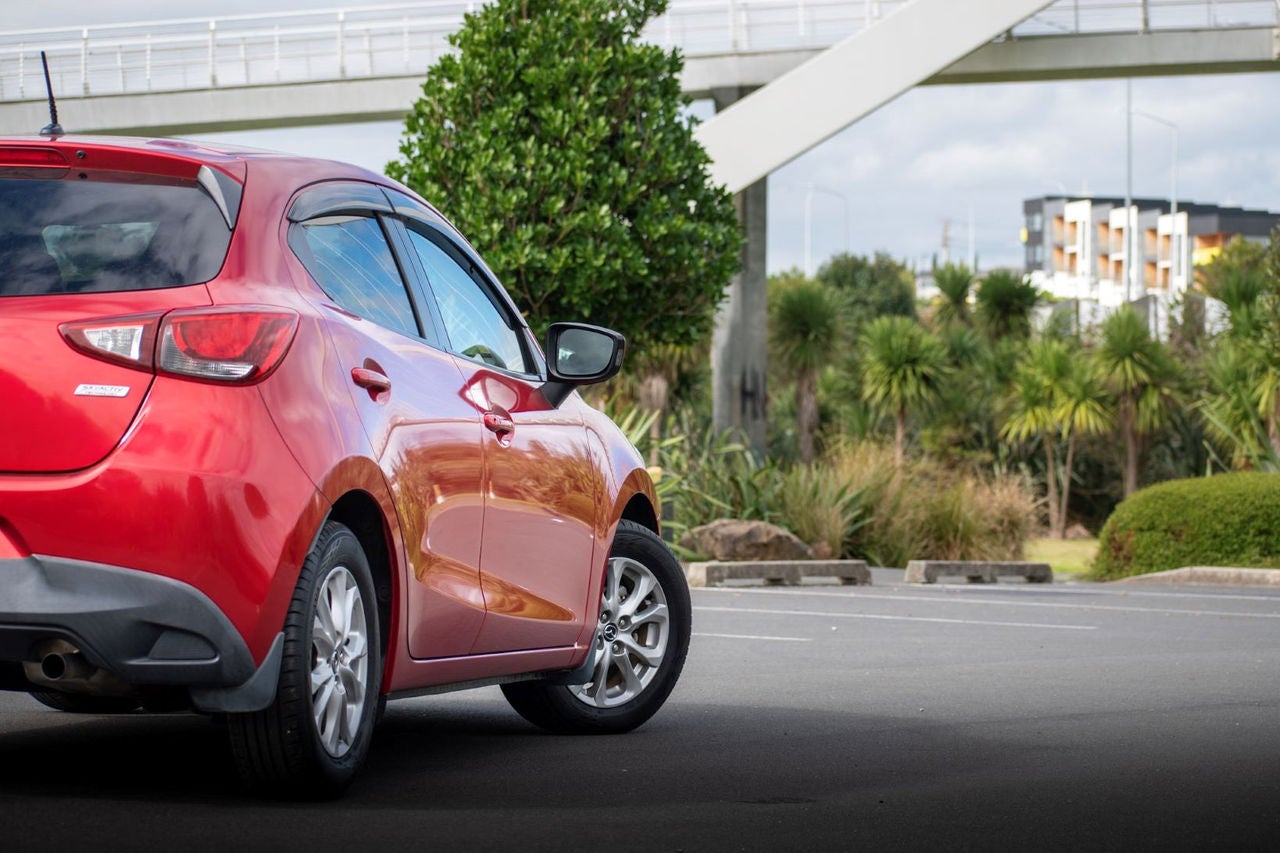
Front on shot of the Mazda Demio
Popular, reliable and affordable
Pros Cons
Fuel‑efficient engines with low running costs, making it ideal for daily commuting. The Demio often lacks service history due to being imported from Japan.
A strong reputation for reliability with Mazda’s Skyactiv engines. It's popularity with thieves can lead to higher insurance costs.
Priced slightly cheaper than the Mazda2 equivalent, despite being the same car.

The Mazda Demio is one of New Zealand’s best-selling used cars and has a strong reputation for reliability. Its widespread ownership means that for many people it is their first car or trusted daily commuter as it provides a sensible choice that is both safe and economical. 

While the Demio nameplate was originally used for the Japanese domestic market (sold new here as the Mazda2), it was very popular with Japanese buyers and now appears among second-hand imports to New Zealand, where it shares the road with the near-identical Mazda2. 

The history of the Demio

One of Mazda’s most successful hatchbacks, the Demio was sold across four generations from 1996 to 2019. The Mazda2 nameplate was used for the last three generations (2002–2019), and in 2019, Mazda retired the Demio name in all markets (including Japan) and adopted the Mazda2 name globally.

The current generation launched in 2014 and remains in production today – an unusually long run for a small hatchback. This reflects the strength of the original design and Mazda’s commitment to keep refining it rather than replacing it outright.  

Over the years, the Demio has received two facelifts. The 2019 update brought minor exterior and interior changes, new adaptive headlights, and revised suspension tuning. A 2023 refresh added new front and rear bumpers, a larger Mazda badge, a new key fob, and dashboard updates.

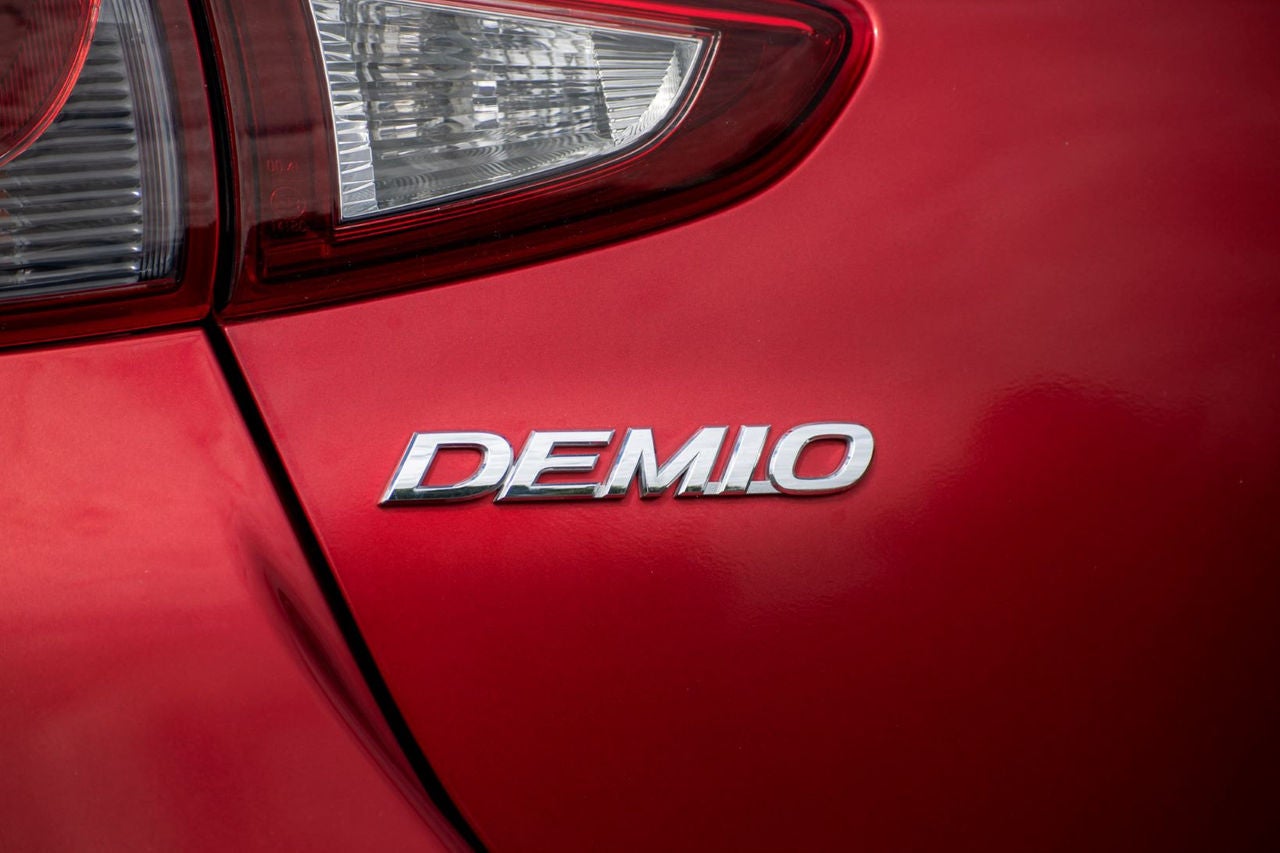
Demio badge
Currently known as the Mazda2

Compact and modern design

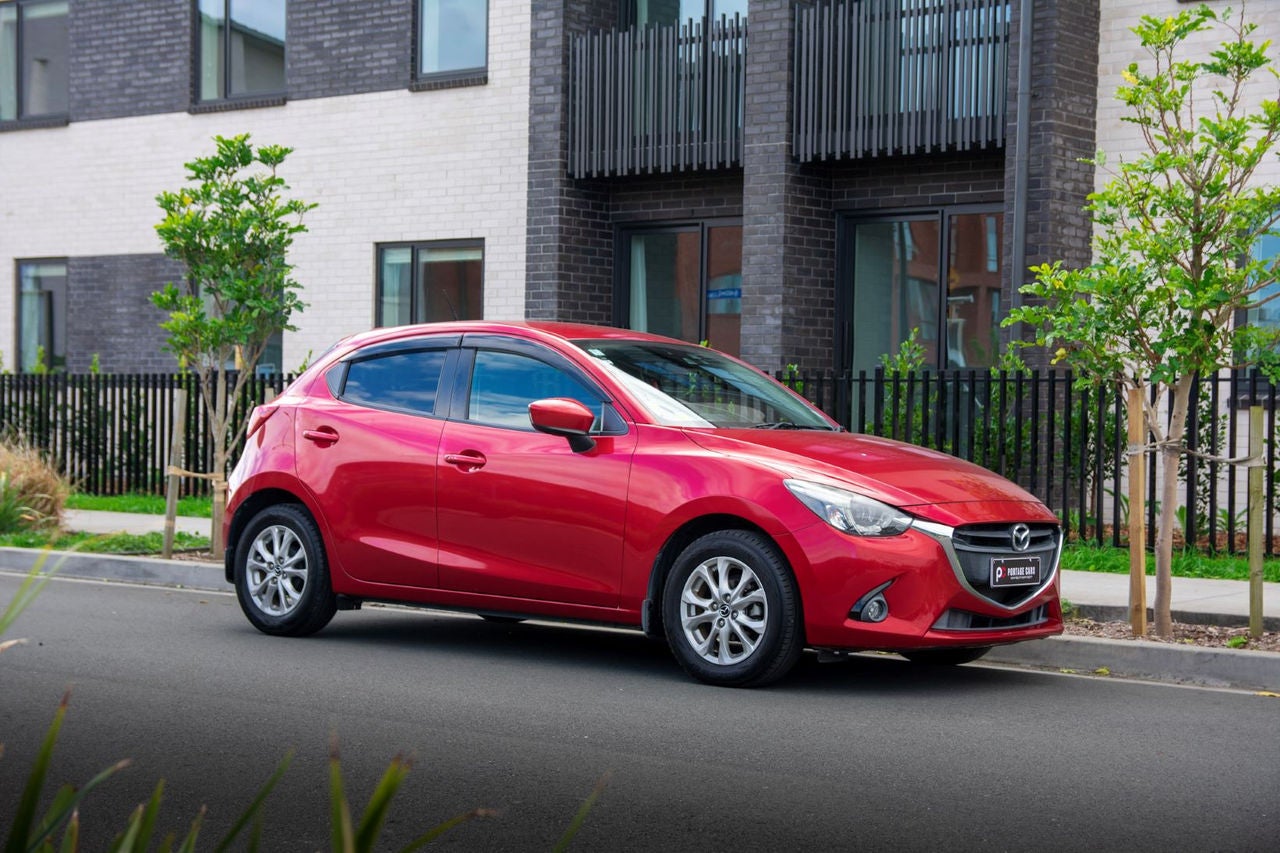
The fourth generation Demio has a lower, sportier stance than the more rounded styling of the previous two generations. The sharper lines and bold grille have aged remarkably well more and still look modern today – even a decade after it was launched. 

The Demio was designed using Mazda’s Kodo design philosophy, described as “breathing life into the car”. It takes a less-is-more approach, using clean lines to create a sense of motion. The result is a modern and distinctive look that is instantly recognisable as a Mazda.

The squared-off edges, wedge-shaped headlights, and large front grille give the Demio a confident look that appeals to a wide range of drivers. A character line along the lower doors adds a sporty touch that successfully reflects the Kodo design philosophy’s sense of motion.  

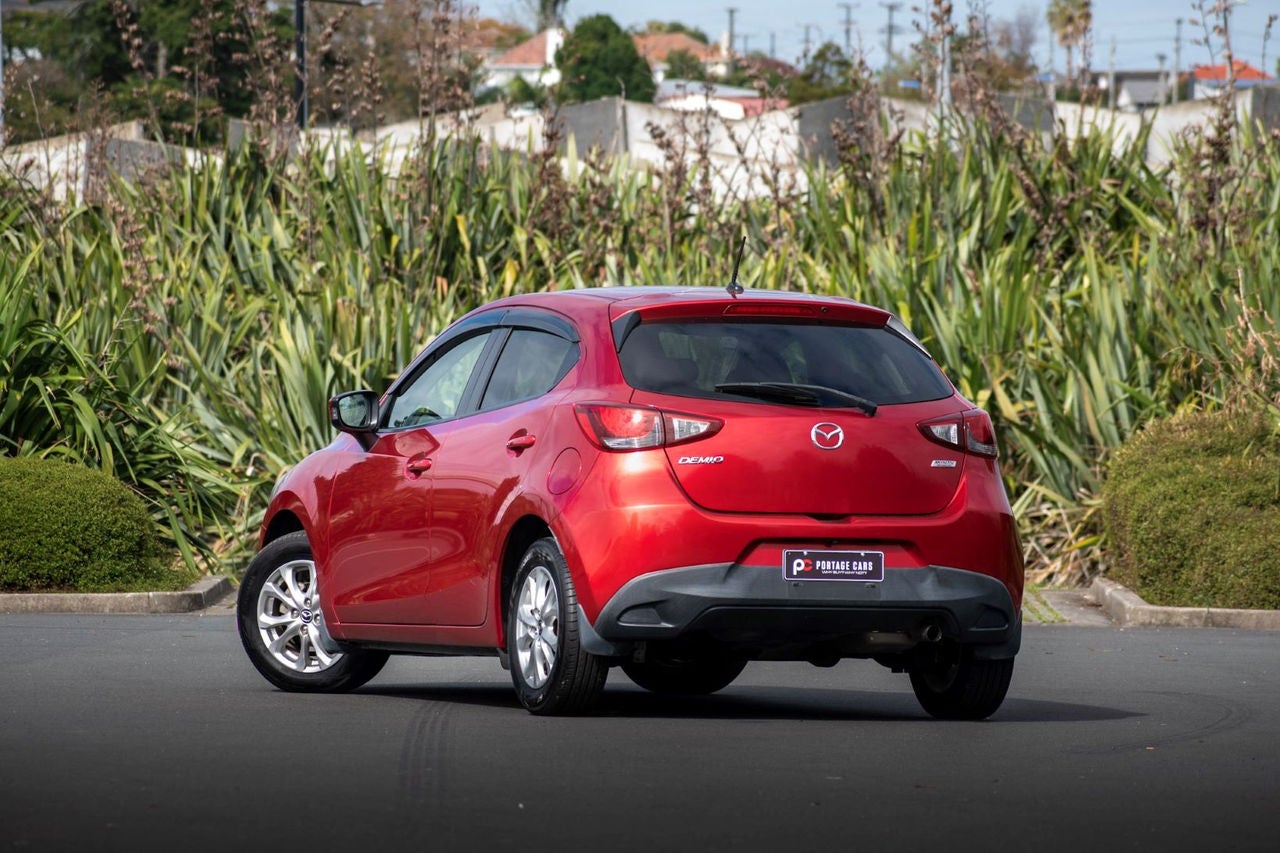
At the rear, the wheels sit close to the corners, reducing most rear overhang, making the Demio well suited to city driving. The design is clean and cohesive, with slim taillights that extend onto the tailgate. A small roof spoiler integrates with the high stop light and adds a subtle sporty finish.  

The Demio measures just over 4 metres long1.7 metres wide, with a wheelbase of 2.5-metres. These compact dimensions make it easy to navigate urban streets and fit into tight parking spots. 

A lower, sportier stance than previous generations.

What trim levels are there?

The current-generation Demio was offered is several trims. Most included USB charging/connectivity and i-stop start/stop technology as standard. Common trim levels are:

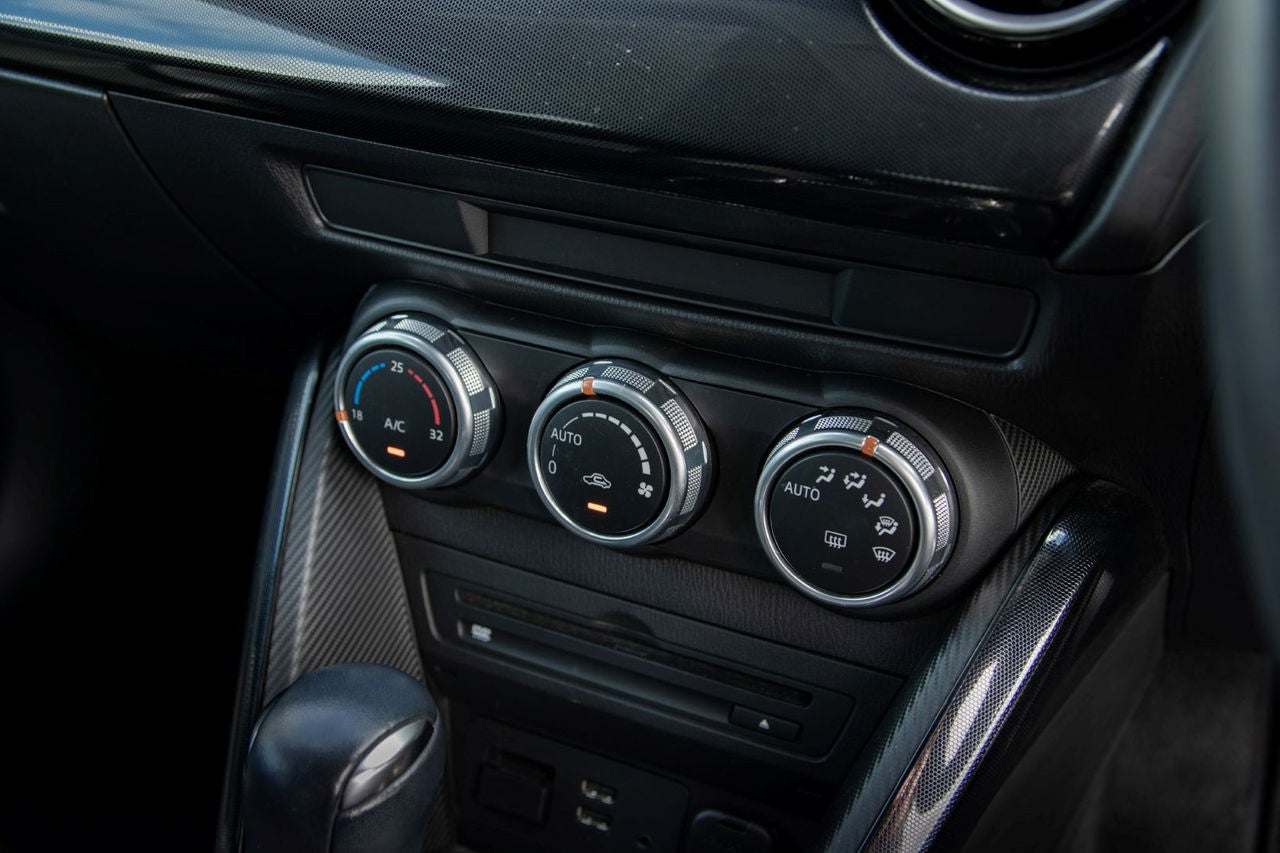
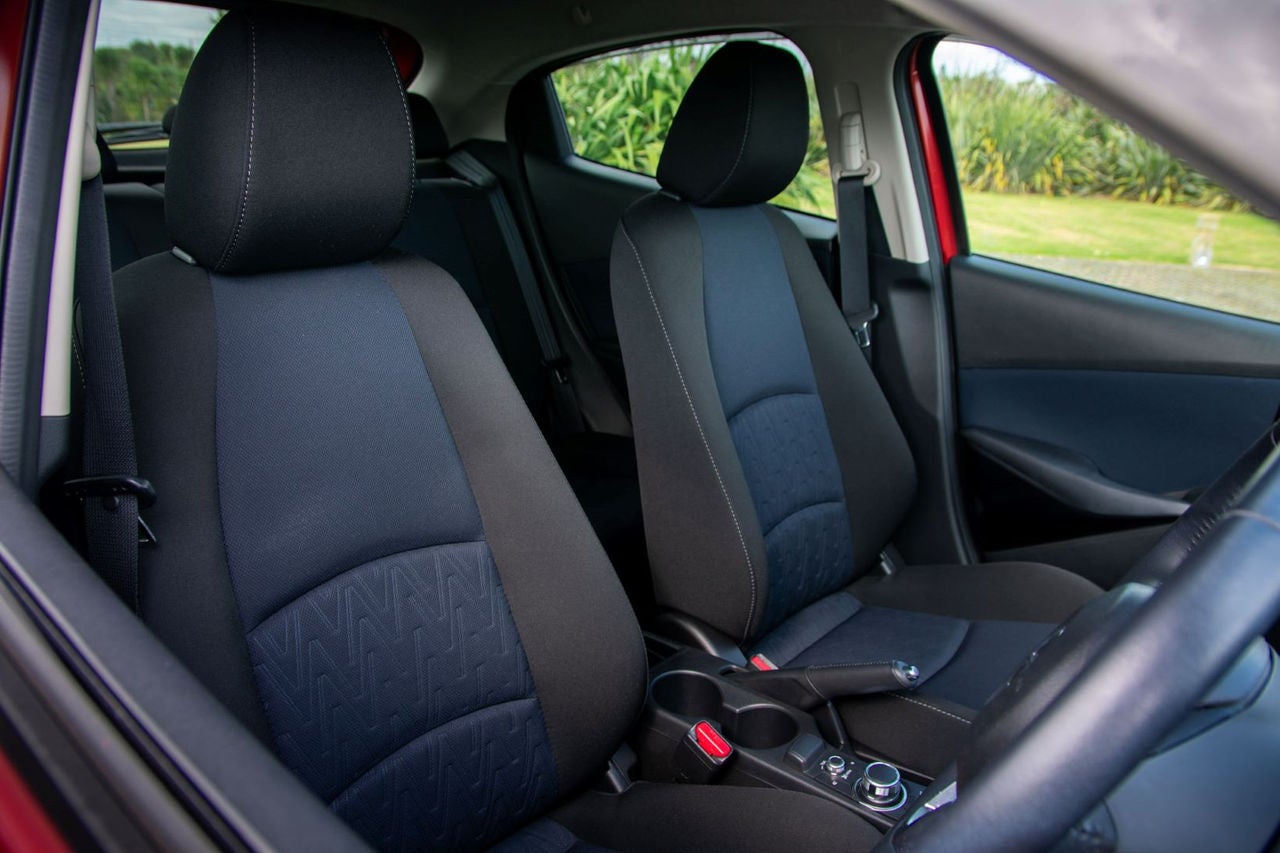
  • 13C/15C: Base trim focused on simplicity and value, typically with black cloth seats, manual climate control, and 15-inch steel wheels.  

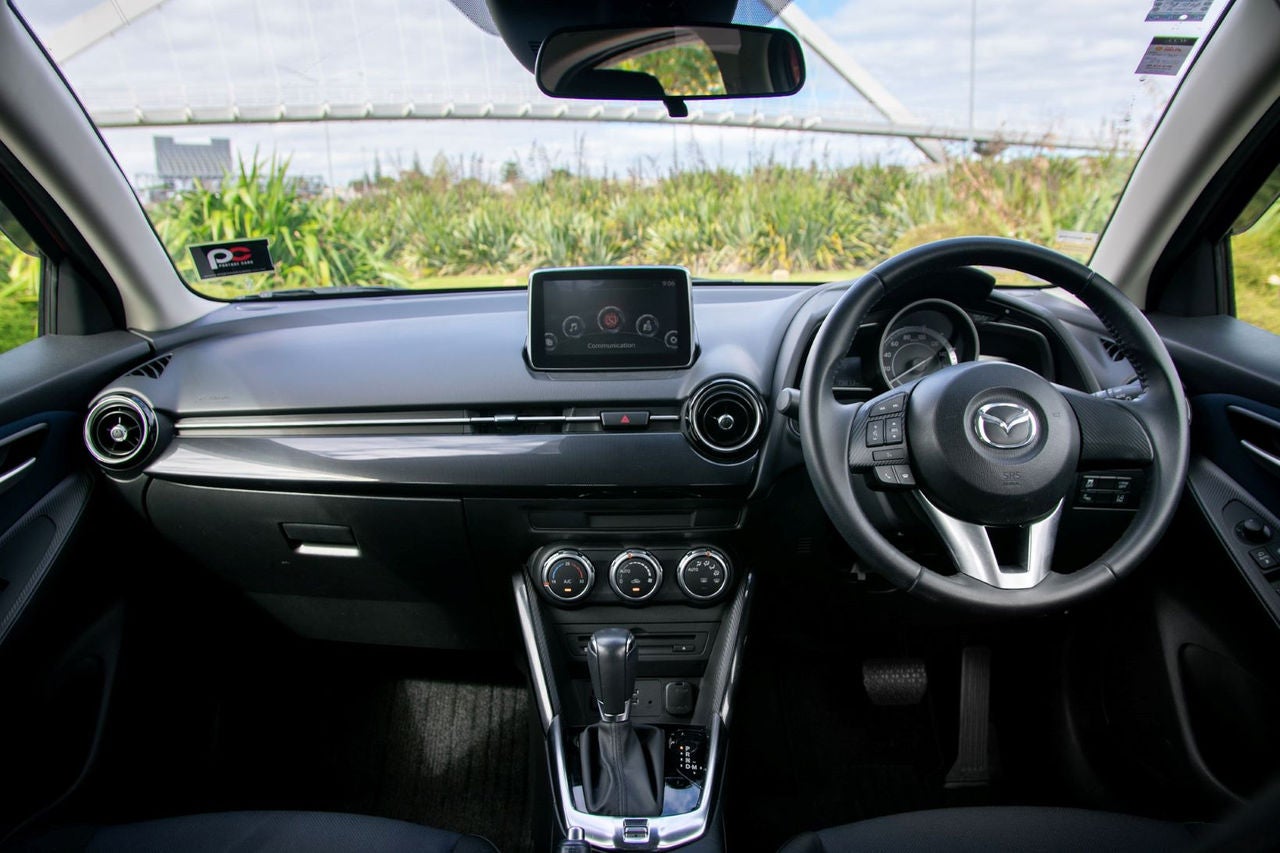
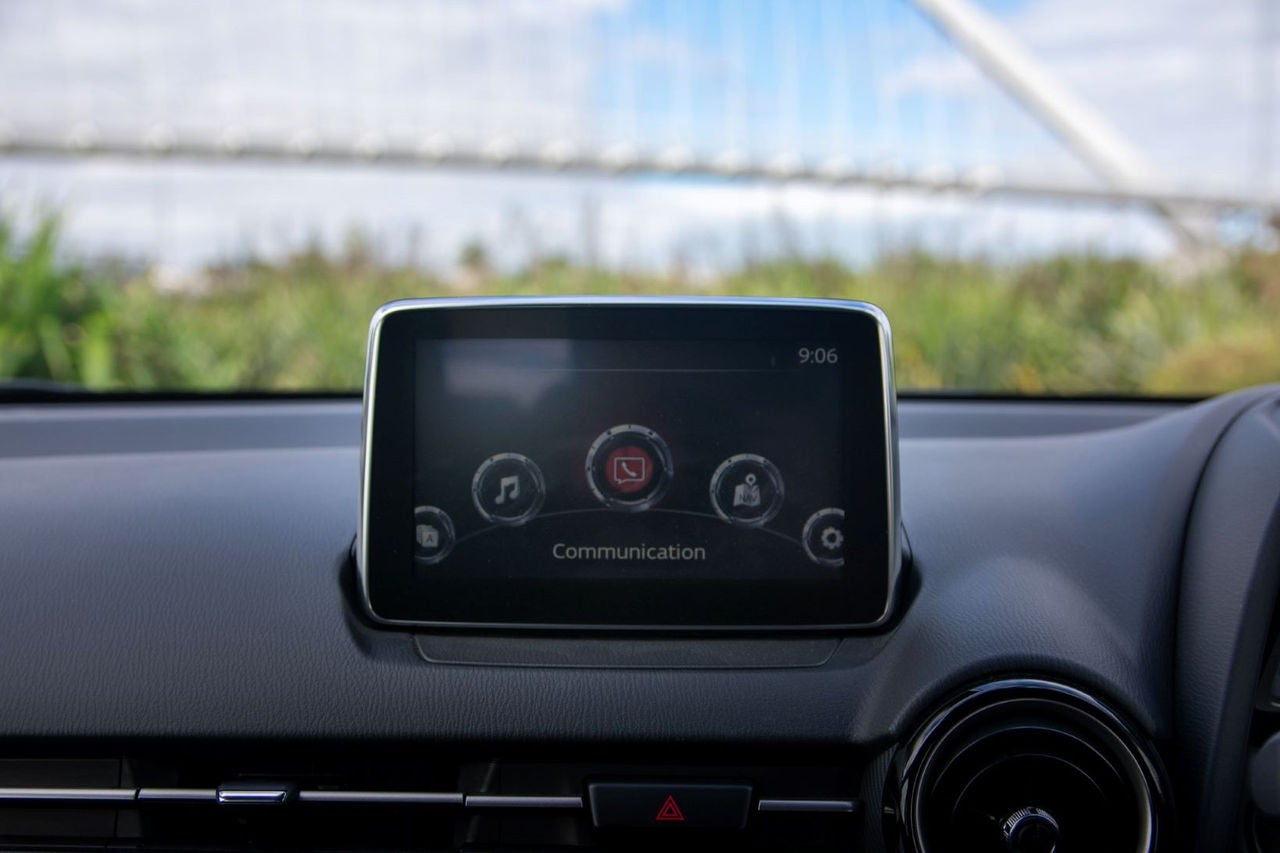
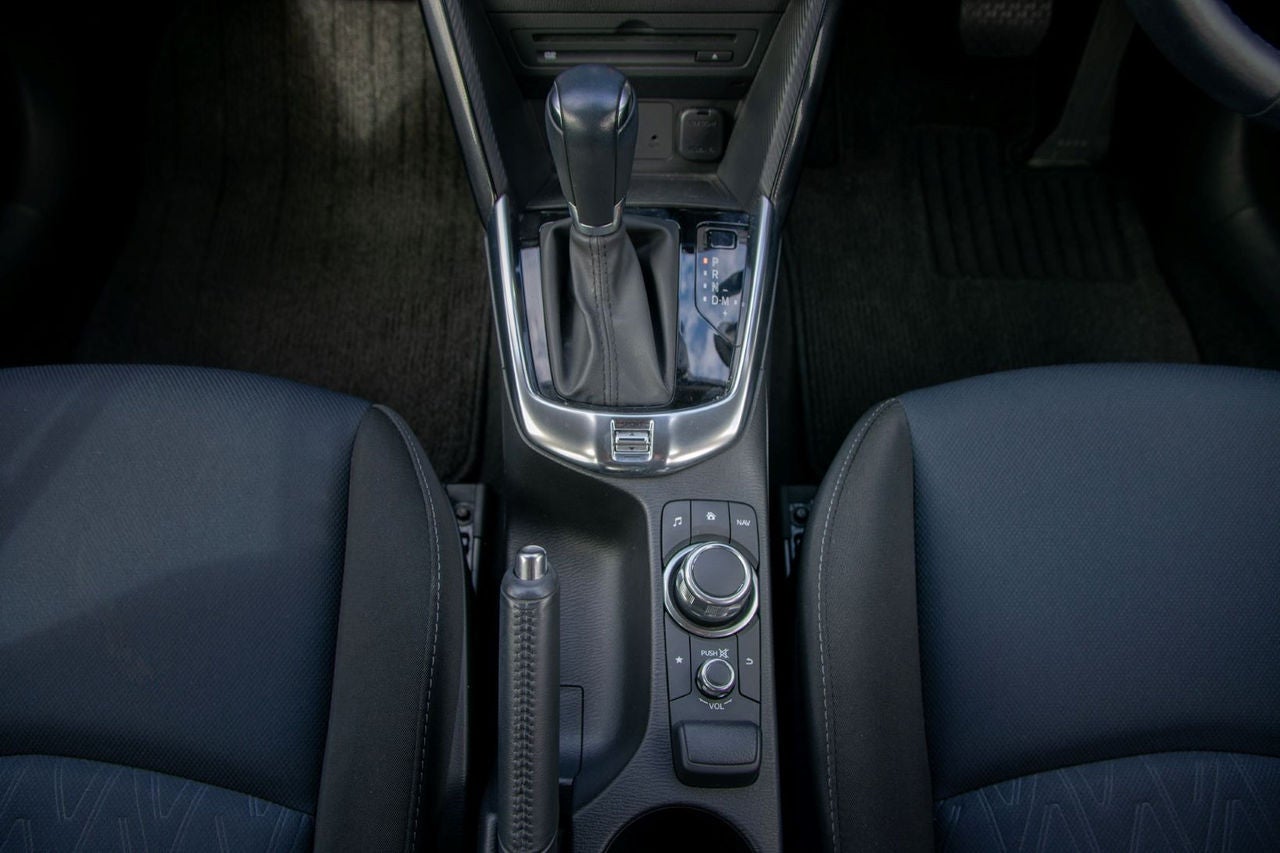
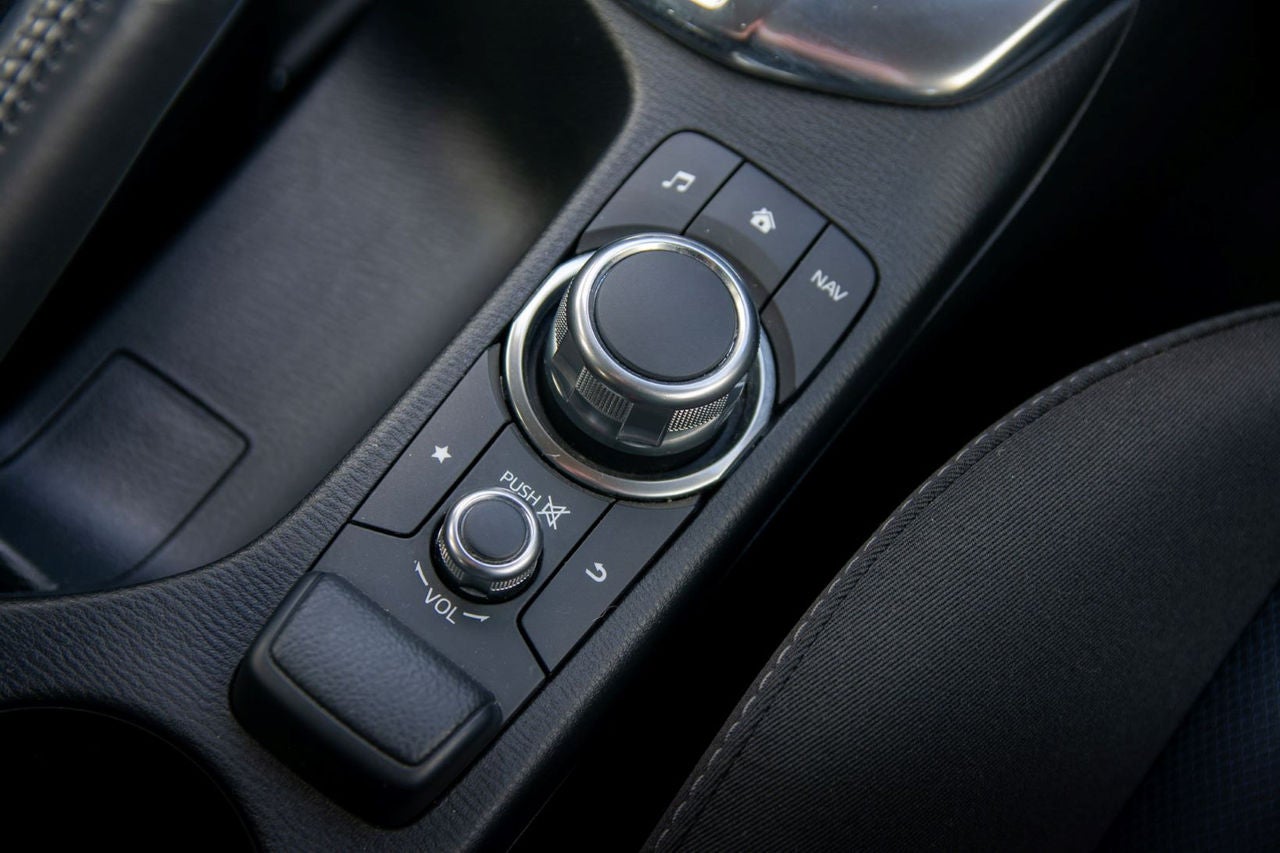
  • 13S/15S: Mid-grade option focused on comfort and technology. Often includes a 7-inch touchscreen infotainment system, auto climate control, steering-wheel controls, LED headlights, and 15-inch alloy wheels

  • 13S Touring/15S Touring: A more premium specification, typically adding a leather-wrapped steering wheel with full controls, heated front seats, and upgraded interior trim.  

  • L Package: The highest and best-equipped option, it features leather seats, a heads-up display, and larger 16-inch alloy wheels.

Depending on the trim, you may also find features such as lane-departure warning, a reversing camera, and parking sensors.

What engine does the Demio have?

The Demio most commonly features a 1.3‑litre or 1.5‑litre Skyactiv‑G petrol engine, or a 1.5‑litre Skyactiv‑D diesel. Mazda replaced the continuously variable transmission (CVT) with a conventional 6‑speed Skyactiv‑Drive automatic in the fourth generation, improving fuel efficiency and delivering a more responsive feel (including manual gear selection where fitted).  

The 1.3-litre Skyactiv in a Demio gives it a fuel consumption of 5L/100km, which is impressive even by today’s small car standards.  

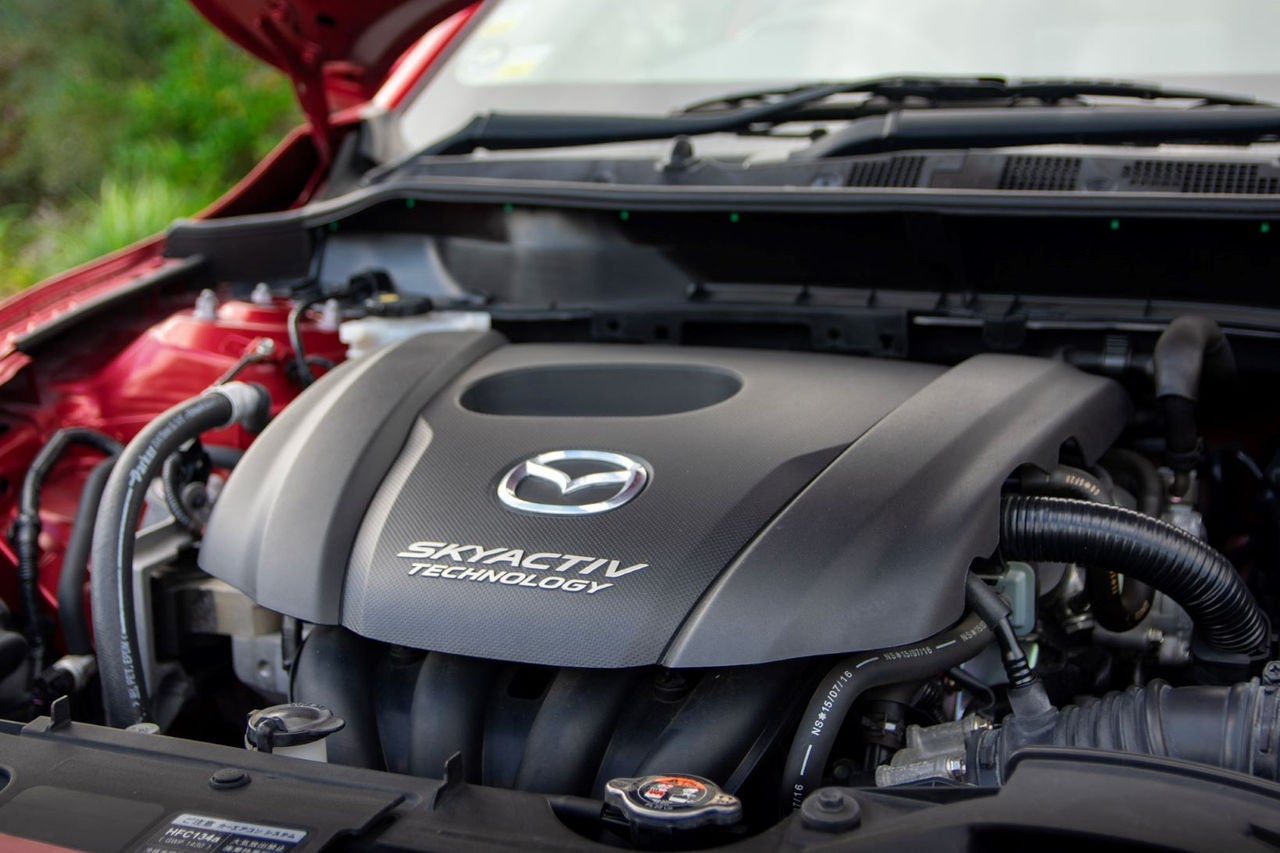
Skyactiv technology is Mazda’s engineering approach covering engines, transmissions, and chassis design. The goal is better fuel economy without sacrificing driving enjoyment. Mazda introduced Skyactiv to the third-generation Demio in 2011 and has been central to Mazda cars ever since. 

Skyactiv can include Mazda’s i-Stop stop-start system, which temporarily switches the engine off when the car is stationary to reduce fuel use. To reduce load on the battery, some models use i‑ELOOP regenerative braking to store energy and help power systems such as climate control and audio – technology that Mazda says can improve fuel economy by almost ten percent.   

Engine bay
Better fuel economy, without sacrificing driving enjoyment.

Are the Skyactiv engines reliable?

Mazda’s Skyactiv engines are generally considered reliable, provided they are regularly serviced. While some earlier turbocharged and higher capacity Skyactiv engines (2.0-litre and 2.5-litre) have known issues, the naturally aspirated Skyactiv engines found in the Demio are widely regarded as dependable.  

As with any vehicle, long-term reliability depends on how well it has been cared for, including regular servicing with the correct oil grade. Routine maintenance at AA Auto Centres can help keep a Demio run reliably for years.  

Ideally, a used Demio will come with complete service records. However, many Japanese imports have little to no service history. An AA Pre Purchase Inspection can help assess the vehicle’s condition and identify any issues before you buy. 

Is the Demio safe?

When the current generation was launched in 2014, the Mazda2 (the Demio’s NZ-new equivalent) received a five-star ANCAP safety rating. However, ANCAP ratings expire after six years, so they are less useful for assessing older vehicles today.

For current buyers, the Used Car Safety Ratings (UCSR) provides a more relevant measure of real‑world crash performance. According to Rightcar, the 2014–2019 Demio holds a four-star UCSR safety rating. This score is based on real crash data from New Zealand and Australia. A four-star result puts the Demio ahead of many close rivals and should provide confidence for everyday driving. 

A four-star UCSR safety rating.

Is the Demio easy to insure?

The Mazda Demio often appears on lists of New Zealand most stolen vehicles. Older examples are more likely to be targeted because they lack modern anti-theft technology found on newer cars (such as push button start). As a result, insurance premiums can be slightly higher than similar vehicles. 

We compared quotes from four major insurers for a 30-year-old male with no previous claims and a clean driver’s licence. The average cost for comprehensive cover was $1239.90 per year. That figure sits around the market average for car insurance and is still less than the Toyota Aqua. 

How much is it likely to depreciate?

Most depreciation happens in the first few years of a car’s life, so the Demio has already been through the steepest part of its depreciation curve. From here, the condition and mileage have the biggest impact on value. As a popular Japanese hatchback with a good reliability record, the Demio tends to hold its value well

The Demio typically sells for slightly less than an equivalent NZ-new Mazda2. For example, a 2014 entry‑level 13C Demio in good condition is valued at around $9,700, roughly $500 less than an equivalent NZ‑new Mazda2. Value is most affected by condition, mileage, trim level, and availability of service history. 

A good all-rounder car

The fourth generation Demio made a strong impact in the compact hatchback market, winning the 2014–2015 Japanese Car of the Year award, while its Mazda2 equivalent took the coveted Golden Steering Wheel (2014) award in Germany, where it was recognised for its quality.  

The Demio is a popular and well-regarded used car, known for its reliability and low running costs, it is strong option as a first car or economical daily commuter. With efficient Skyactiv engines, a solid used-car safety rating, and modern styling, it remains a sensible choice – and one that should hold its value well.