
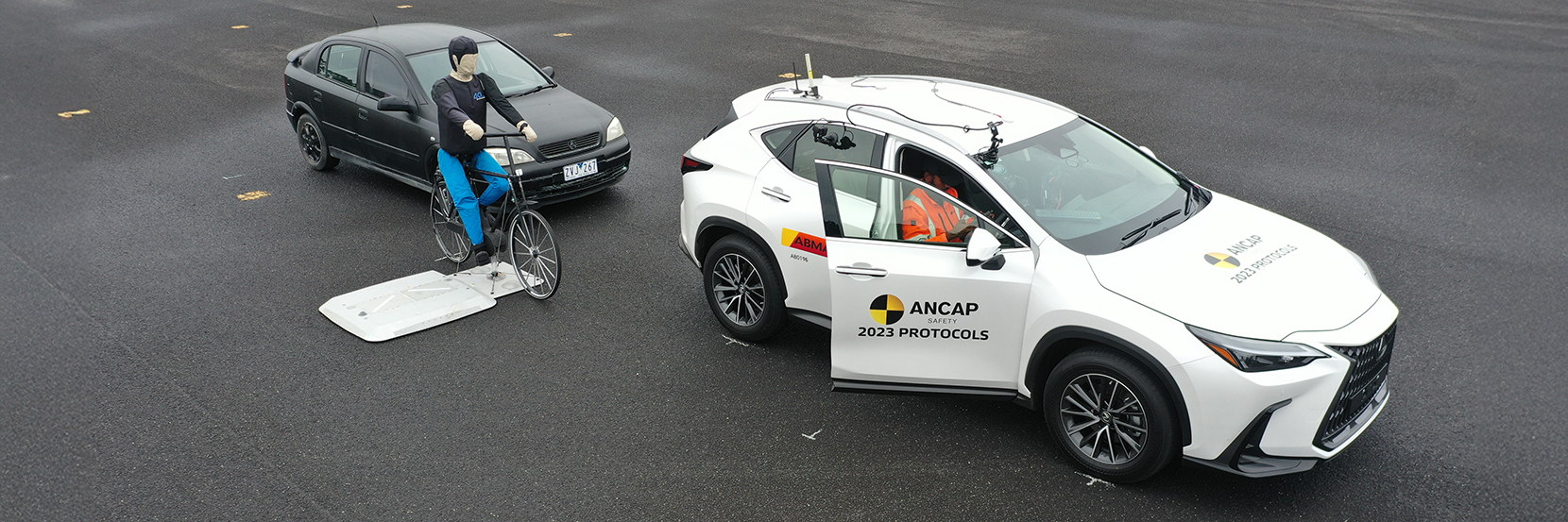
Behind the scenes of an ANCAP crash test
07 April 2026
We reveal the secrets of the ANCAP crash lab.
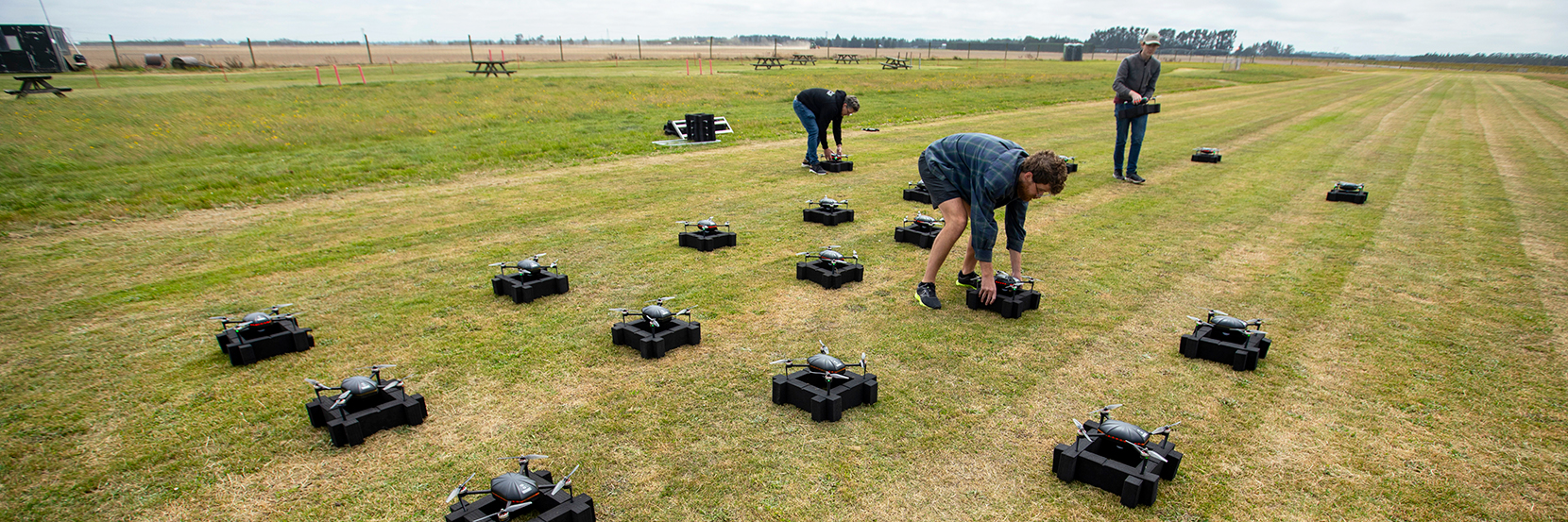
What goes into creating a high-tech aerial display using drone technology?
Manawatū primary school children will soon see their artwork recreated in the night sky. The pictures are going to form the basis of a drone display by a New Zealand company making waves in a sphere where science, technology, art and entertainment intersect.
A floating jellyfish, bouncing pig and twinkling star are among the competition-winning designs to be featured in the display organised by Droneshows incorporating 50 flying devices.
Making sure events like this run seamlessly on the night takes a huge amount of planning, not just on the creative side and in terms of aviation logistics, but right through to health and safety for those watching.
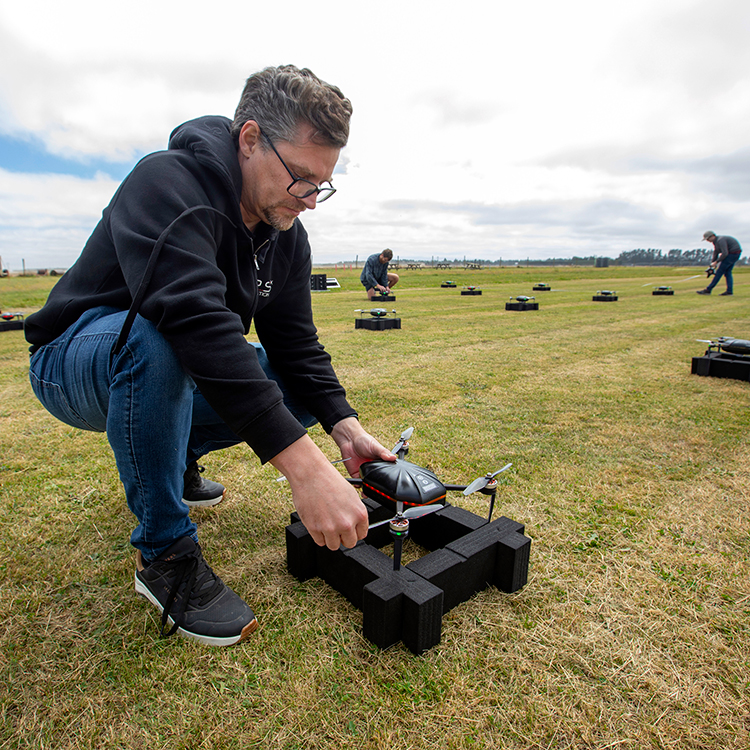
“We have an artist director Jacob Leaf who uses the illustrations to develop the concept and create a show file,” says CEO of Droneshows Dr. Isaac Henderson.
“To start with he works with standard 3D software like Blender. From there, more specialised drone lightshow software is used to programme the animations to create the drones’ movements and transitions.”
This information includes the coordinates to recreate the patterns, and commands for the LED lights like colour and brightness for each part of the presentation.
Droneshows has designed and manufactured its own specific hardware with internal batteries that are charged with the same USB-C cables used for cellphones.
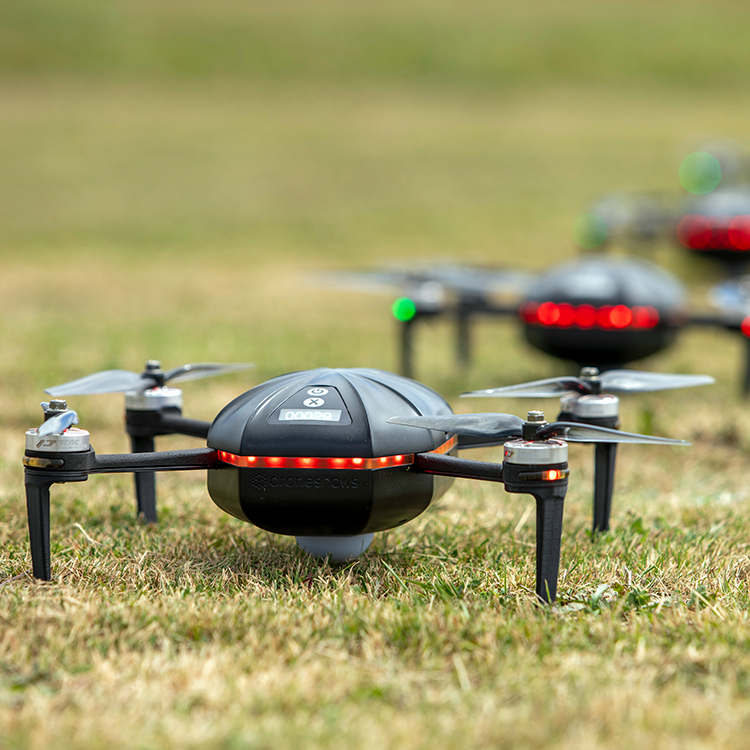
“Our model is very focused on small fleet shows of 50 to 200 aircraft, as opposed to tens of thousands like you might see out of China,” adds Isaac, whose team is spread across New Zealand.
“Shows can involve multiple directors. For an outdoor show of between 50 to 100 drones, for instance, there’d be multiple pilots, all with slightly different roles. There would be one in command who has ultimate authority, and a safety pilot, who would be the equivalent of a co-pilot on an airliner.”
The displays are automated and run from a laptop, plugged into multiple pieces of ground equipment.
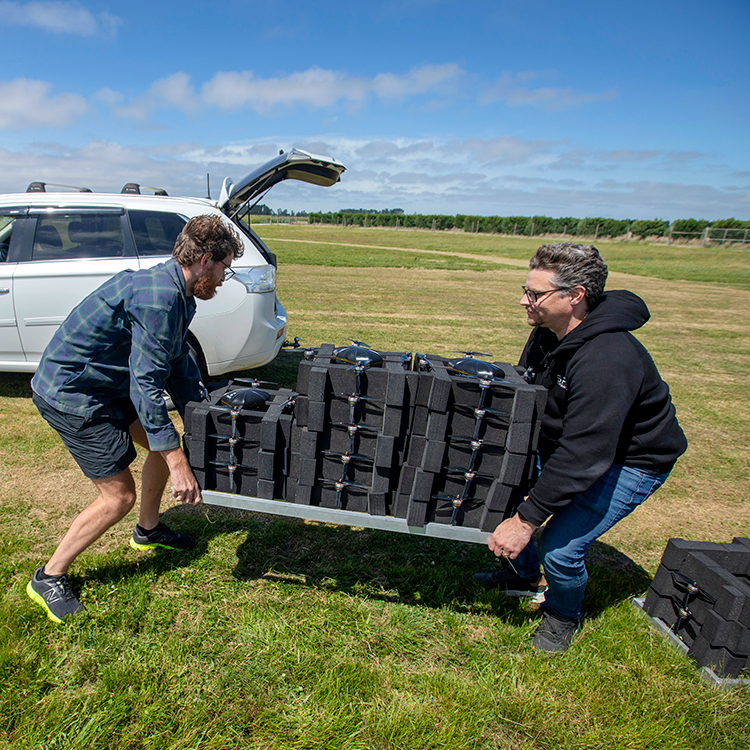
“The pilots are more monitoring what's going on and managing the systems, rather than the hand-on-stick flying you’d associate with a single drone,” Isaac adds.
Dry runs are practiced in advance, and staff visit the display location weeks beforehand to assess finer details such as entry and exit points that would need to be avoided for spectator safety. They also do a radio frequency spectrum analysis to confirm nothing else in the area is broadcasting at the same frequencies.
“All the different bits need to communicate with each other but it’s not until you actually put the aircraft out in the field that you know whether it’s going to run smoothly.”
Crunch time begins two days before the show when multiple rehearsals run on site.
One notable project for Isaac involved a series of 30 indoor shows at the Christchurch Innovation Expo and New Zealand Aerospace Summit in 2023, involving flying eight drones for an audience of 60 people at a time, in a darkened room.
“It was challenging because you can't use GPS in those sorts of environments, and the magnetic field changed across the room during the day, so we had to quickly turn off some components and use our secondary system of ultra-wide band.”
The team even involved a few volunteers, including some children, to help control the colour of the drones using hand gestures in front of a camera. “It was a real highlight to see their faces light up when they realised they were helping create the colours of the drones flying in front of them.”
This story is from the Autumn 2026 issue of AA Directions magazine.