Home profile: architect Richard Naish and the Living House
03 March 2026
We visit the stylish, low-cost, climate positive prototype of the Living House in Rotorua.

We take a tour of New Zealand's first 3D printed house.
What makes this stylish but low-key four-bedroom, two-bathroom show home in a Waiuku cul-de-sac so special? It looks like many other simple, modern houses – but this one is unique, because of how it was built.
Is ‘built’ even the right word?
In a first for New Zealand, this house was 3D printed. While building with concrete usually involves putting preconstructed slabs together, this method creates an entire house in one continuous pass of a massive printer.
Engineer and owner of Amcrete construction company Kirill Ilin imported the house printing machine two years ago and completed this show home late last year.
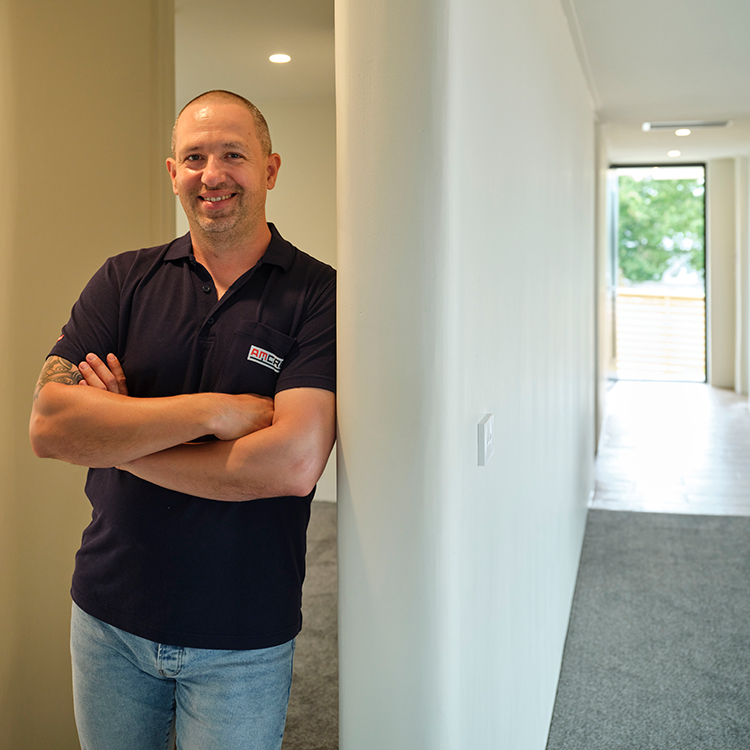
“I was watching what was happening around the world and seeing that 3D printed housing construction was commercially viable internationally, so I brought the machine in from Europe to apply it here.
“It’s a common way of building in Europe and in other places. In Dubai, for example, the plan is to have 30% of construction completed this way by 2030.”
‘This way’ involves an on-site computer-driven gantry delivering concrete of a specially developed consistency into a footprint area of 17 x 11 metres, patiently forming walls layer by layer. It takes between 20 and 30 days (depending on the weather; the machine can’t operate in the rain), with two or three people working with it.
“It can be any shape, as long as it fits within the printer’s working parameters,” says Kirill. “Design freedom is a huge advantage of this technology.”
The machine can print up to seven metres high, so although this show home is single storey, a second floor can be added to the plans. The one-storey design is for a 180sq metre house; double that for two storeys. Alternative designs on Amcrete’s website suggest neighbouring second and third structures connected by decks to create large homes.
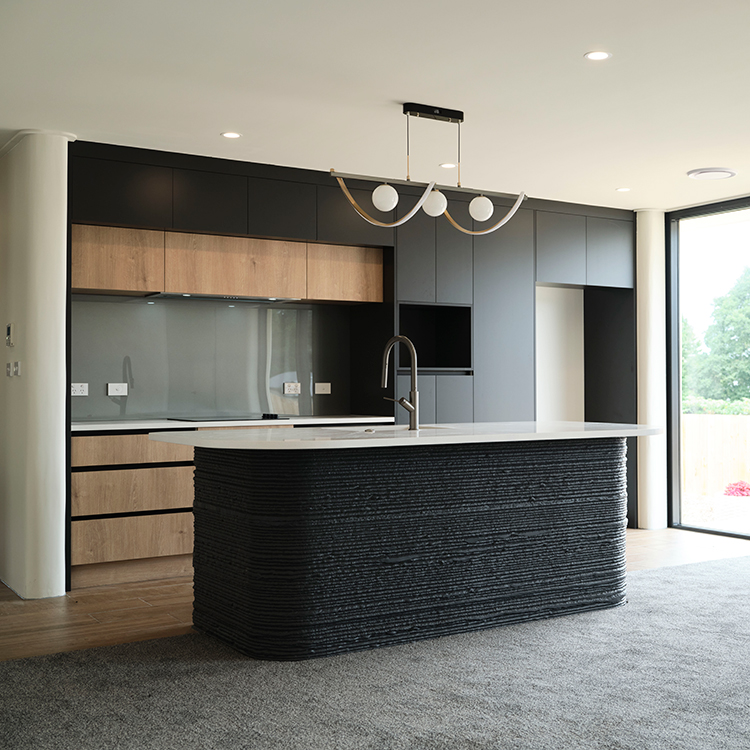
Aesthetically, the difference between this prototype and a standard concrete house is subtle. From the letterbox, it looks ordinary. But step inside and there’s a sense of tranquillity. It’s quiet, cocoon-like, thanks to its heavy walls. As well as softening the acoustics and steadying the indoor temperature, the 200mm-thick walls make for deep windowsills and softly rounded corners, contributing to a solid, vaguely art deco character.
Plaster on the walls hides evidence of the printer’s work – but there’s a clue left in the kitchen’s island bench. Here, the texture of concrete reveals the layering truth of the home’s bones. Each turn of the oozing concrete can be imagined, steady and sticky on its upward mission.
Electrical conduits and pipework are allowed for by the printer; such details are within the computer-driven pattern. Wooden doors, cabinetry and floor coverings soften the space, and any treatment can be applied to the plaster surface.

“This home has breathable paint over the plaster, but any surface can be applied – undulating, distressed; some people might like a Mediterranean feel,” Kirill says.
As well as being healthy, quiet and energy efficient – the thermal mass of the house keeps temperatures steady – there is no maintenance required, which impacts ongoing home ownership costs.
Build cost is relatively low, too, as fewer tradespeople are required and there is less waste.
But the real advantages kick in when considering durability, Kirill says. “It will last 150-200 years – three to four times that of a wooden counterpart.”
This story is from the Autumn 2026 issue of AA Directions magazine.