Meet the maker: Katie Brown, glass artist
01 July 2026
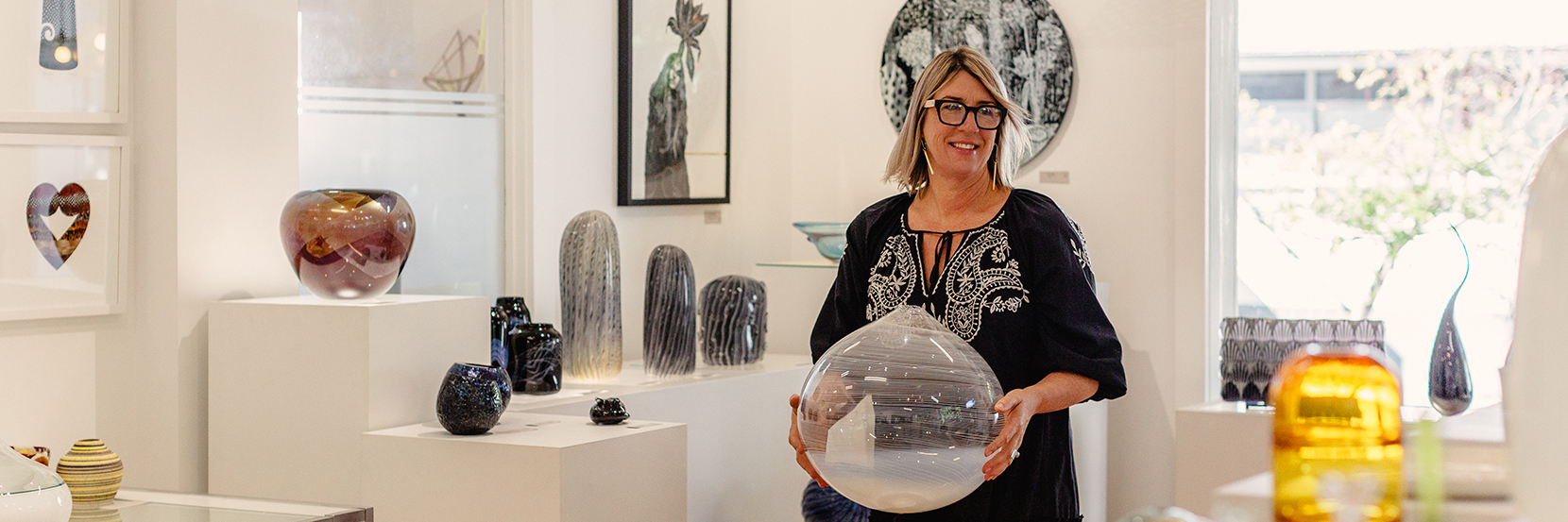
We talk to inspiring Whanganui-based glass artist, Katie Brown.
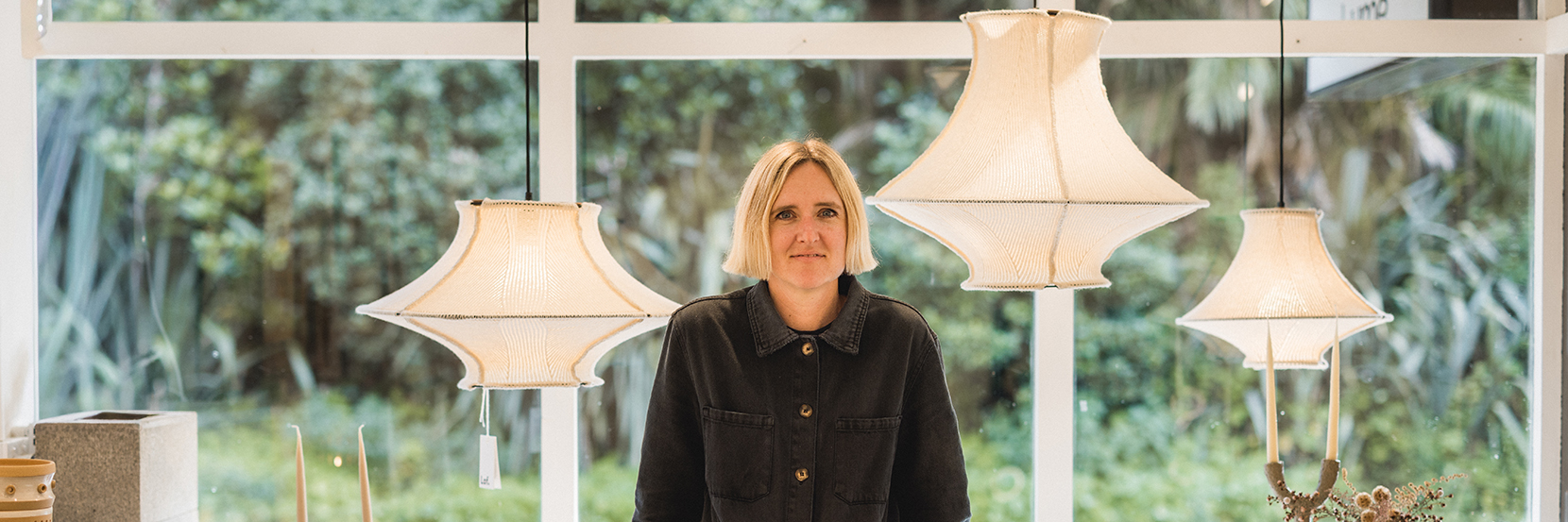
We chat to Sophie Poelman from Lof, a Waiheke Island lighting company making products as beautiful as they are sustainable.
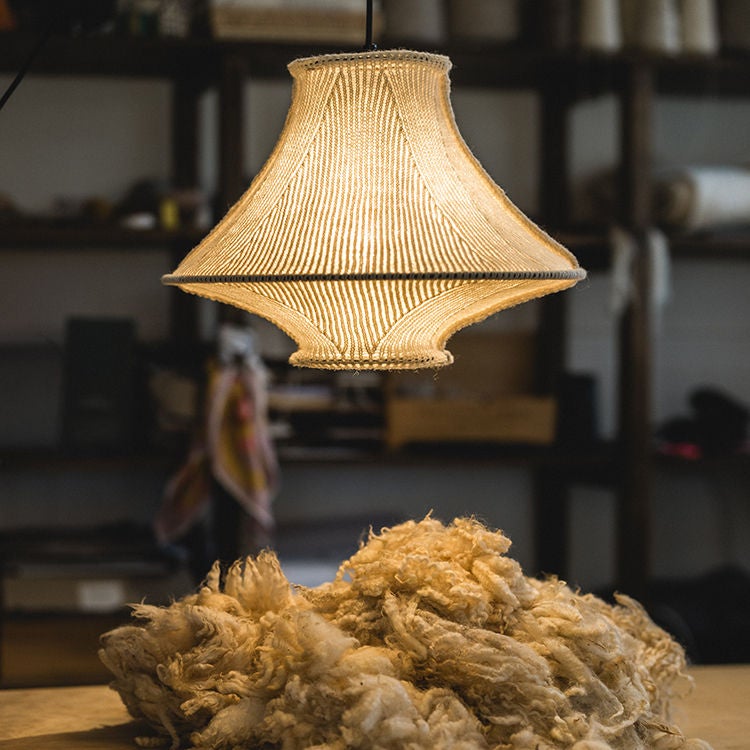
Wool is a wonder fibre. It’s sustainable, biodegradable and can be very beautiful. It’s a core raw material of New Zealand but has long been treated as a mere commodity.
Waiheke Island-based Sophie Poelman is a textile designer who saw a way to elevate wool by finding a new application through design.
“I spent several years overseas designing performance mountain apparel for ski and snowboard brands,” Sophie says. “I had primarily been working with synthetic and plastic fibres, and I always thought that wool was a far superior option.
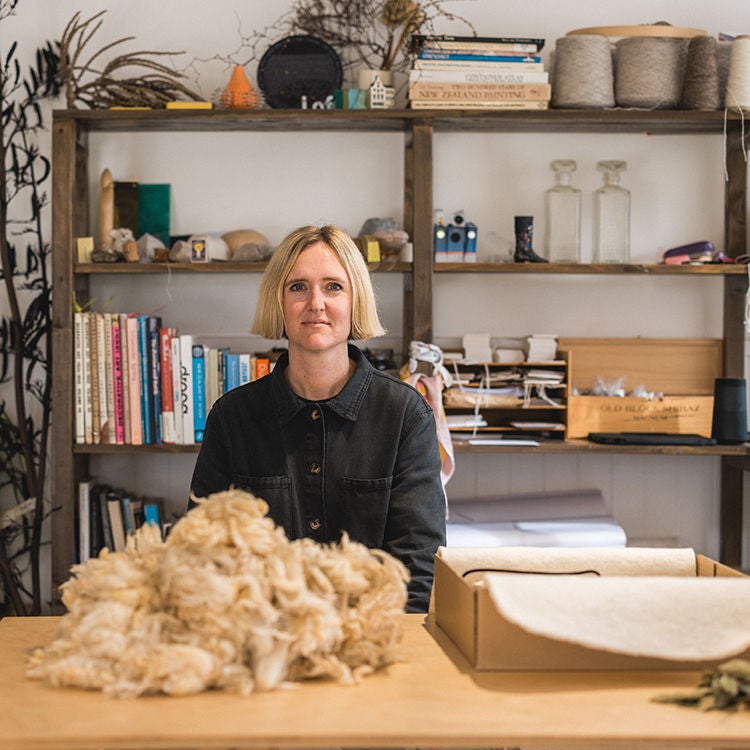
“About six years ago I returned to New Zealand and took a role designing for a merino company. I was surprised to learn that the New Zealand wool industry was in despair and didn’t understand why. My brain started ticking over. I wanted to find a design-led application for New Zealand wool, both to make it fairer for farmers, and because we have a growing environmental problem from synthetic textiles.”
After five years of rigorous research and development funded by a grant from MBI, Sophie and husband Alain Brideson, an industrial designer, came up with the idea for Lof.
“We realised that because of the diffusing properties of wool, lighting was a really interesting area to explore,” Sophie explains. “Alain designed the metal and wooden hard components. I worked on the textiles and fibre and knit – all the soft things.”
Lof launched in September 2024.
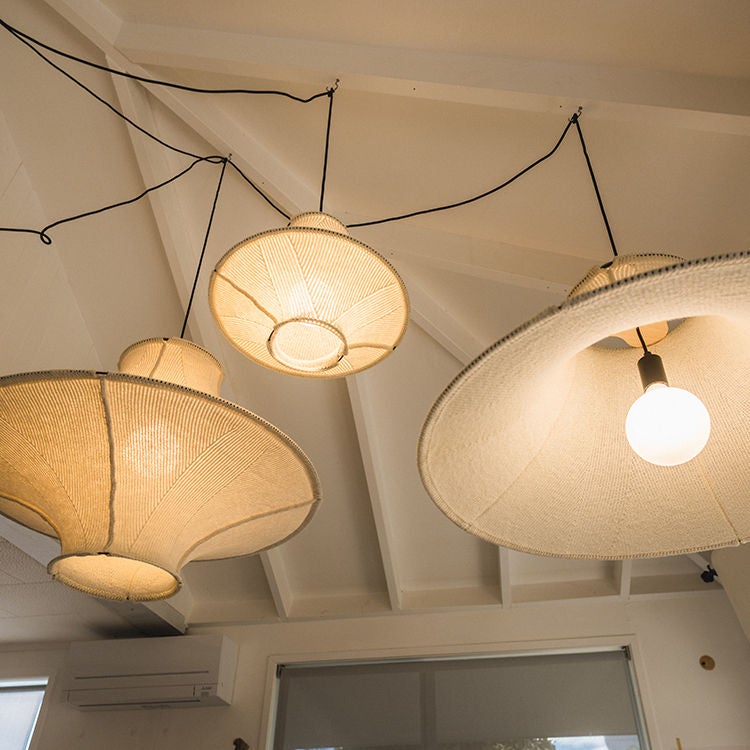
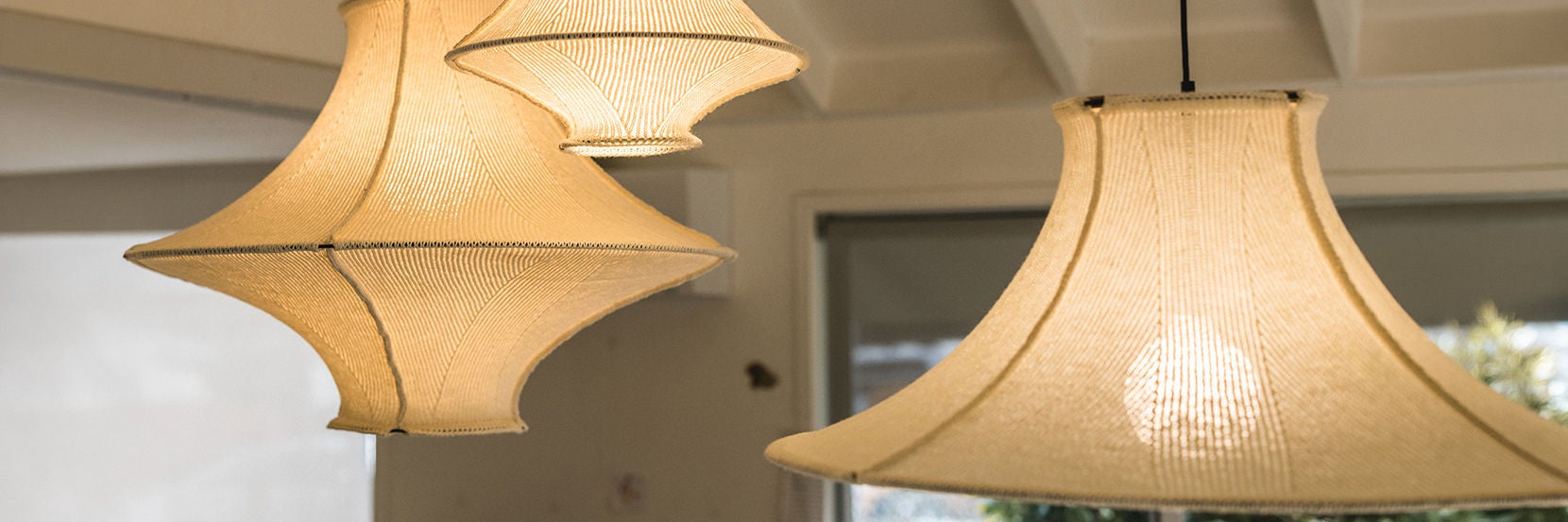
Producing three collections of pendant lights in different shapes and sizes, Lof designs are both beautiful and functional.
“Wool naturally has acoustic softening properties,” Sophie explains. “As part of our R&D process, we worked with the University of Auckland engineering department, and they tested our lights for the impact they have on reducing noise. It’s invisible, but it makes a space feel so much more comfortable.
“In a kitchen with lots of hard surfaces and people talking, woollen lights can absorb and soften that sound so you can have better conversations,” Sophie continues. “Many people from the hospitality industry want them; if you put several of our lights in a café it noticeably reduces the noise.”
Wool is also inherently sustainable. So much so that the entire Lof model is based on minimal waste and a circular design philosophy.
“Everything is grown or made in New Zealand,” Sophie explains. “The wool comes from Palliser Ridge farm in Wairarapa and gets processed in the North Island. It goes to our knitting partner, and the components then come to our Waiheke studio where we assemble the textile on the wire frames to give the lights their form.”
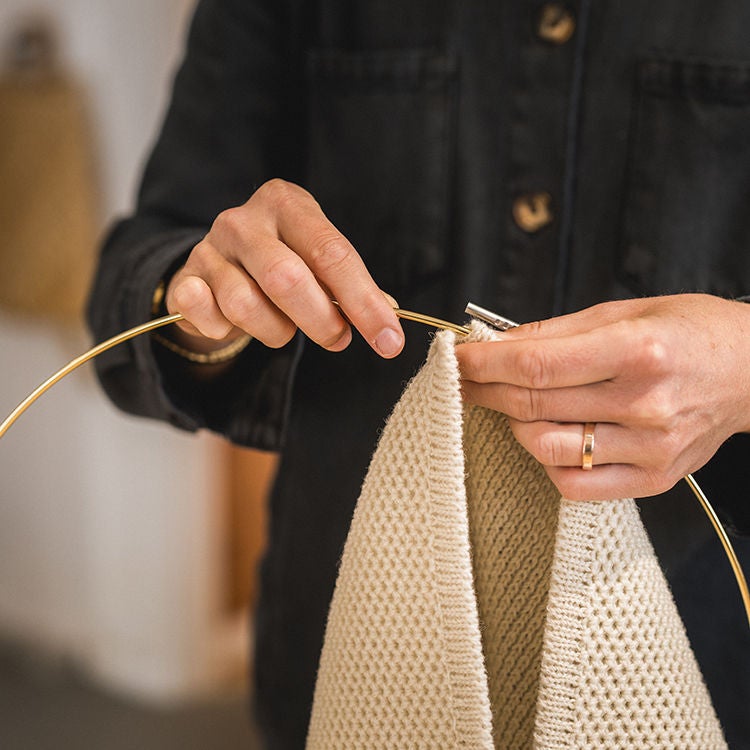
“Our packaging is cardboard with our own wool felt protecting the lights, so everything is biodegradable but far too nice to throw away immediately. We want people to reuse everything. I don’t want to turn things into compost immediately; there are many more uses before that point.
“Wool is such a long-lasting fibre, it’s easy to clean and its biodegradable at the end of its life,” Sophie continues. “It was also important to me that the pieces of each light are easily detachable, washable or replaceable. You can unclip the wire frame and wash the woollen textile or replace it after ten or 15 years, which is the length of time that we think our products will look good for.”
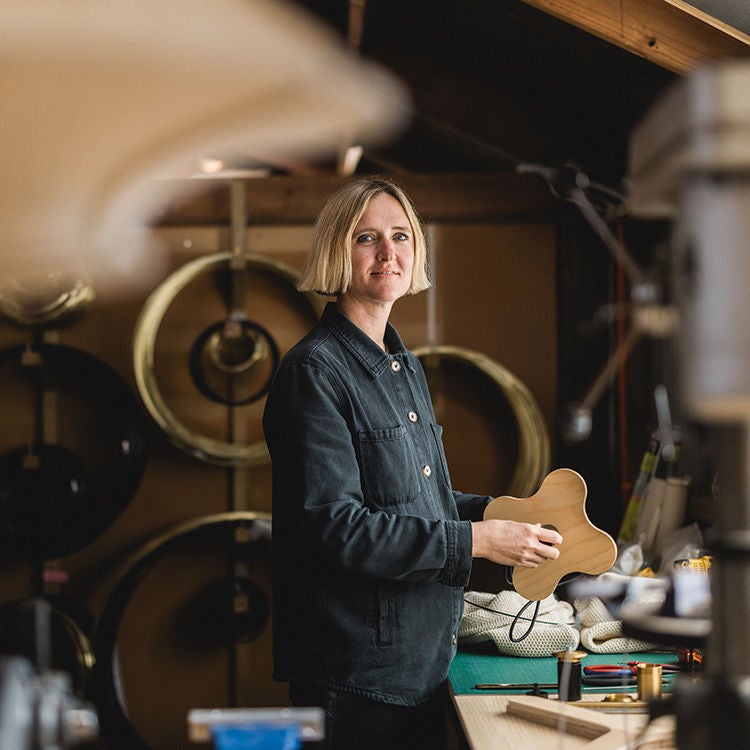
So, what’s next for Lof? “We’re working on new products, but still within the lighting space,” Sophie says. “I’d prefer to be a brand that does one thing really well rather than dilute what we do.
“We’re also looking at bringing in some colour. We’ve been working with dyes made from native plants, using things like harakeke to create a darker brown light shade. It didn’t seem right to dye with chemicals, because then you can’t return the components to kai compost.”
From sustainable production to comfortable living, Lof ticks many boxes. But Sophie’s main motivation has always been to create beautiful products with New Zealand wool.
“The raw materials we grow in New Zealand have been so undervalued. We need designers to help elevate them. We have to make things beautiful. It has to be world-class design to really showcase the amazing things that we produce here. I’d like our business to be a model for that – adding design value and taking it to the world. I feel quite patriotic about it.”
This story is from the Spring 2026 issue of AA Directions magazine.