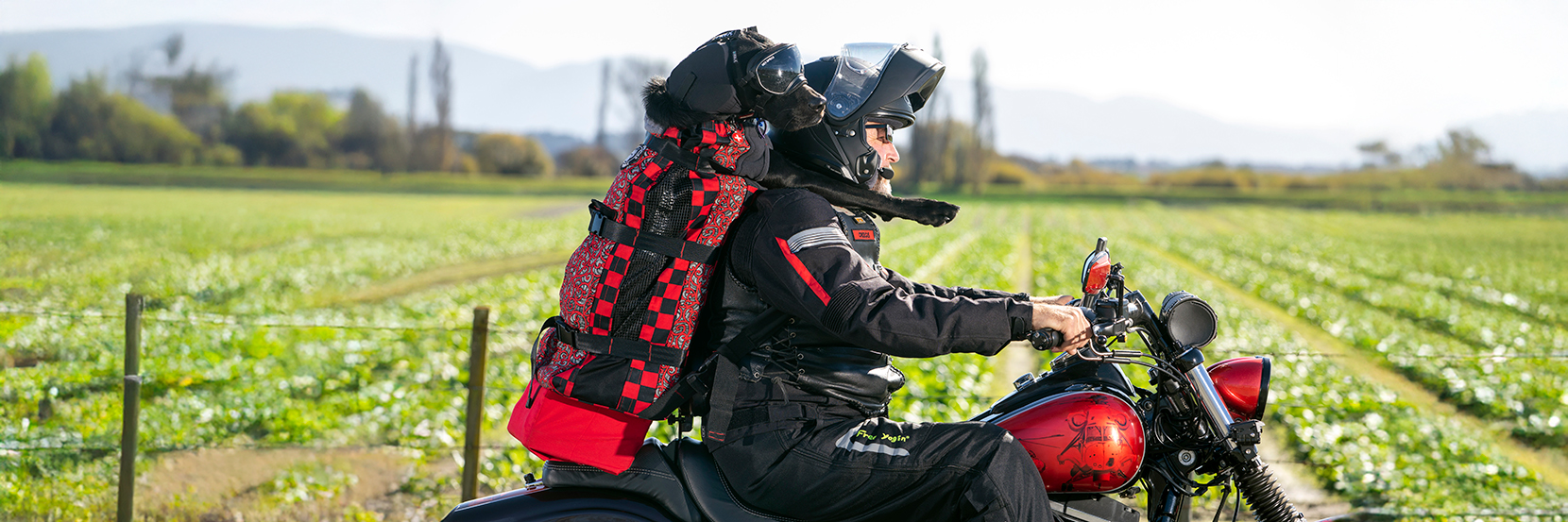
Meet Loki, the motorbiking dog
03 March 2026
We meet a special service dog who accompanies his owner on the back of his Harley-Davidson.
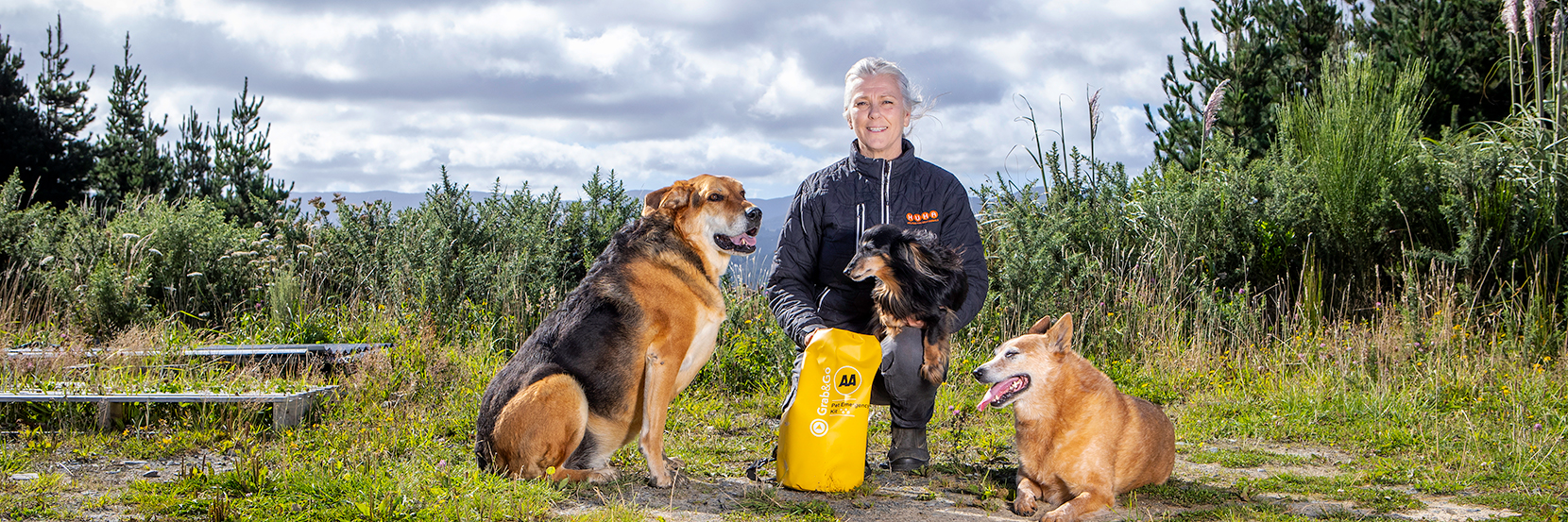
What would you do with your pets in the event of an emergency? We share advice on being prepared if crisis strikes.
Do you have an action plan to safely care for your pet in the event of a disaster like fire or flooding? What if your furry friend has a cut or bee sting?
Founder and Chief Executive of HUHA – Helping You Help Animals – Carolyn Press-McKenzie is well versed in crisis management, having been involved in hundreds of animal rescues across New Zealand and Australia.
She has witnessed firsthand how most New Zealanders don't have a level of preparedness, often displaying a ‘she'll be right’ attitude. The comment she hears most frequently from affected communities is "we didn't have time." That's why having an AA Grab & Go Pet Emergency Kit is so useful.
“You have to be strategic and look after yourself and your animals,” Carolyn says. “By having an AA Grab & Go Pet Emergency Kit, you’re organised and thinking ahead. It’s good for both large-scale and everyday emergencies. If your animal has a boo-boo, the kit has the things you need.”
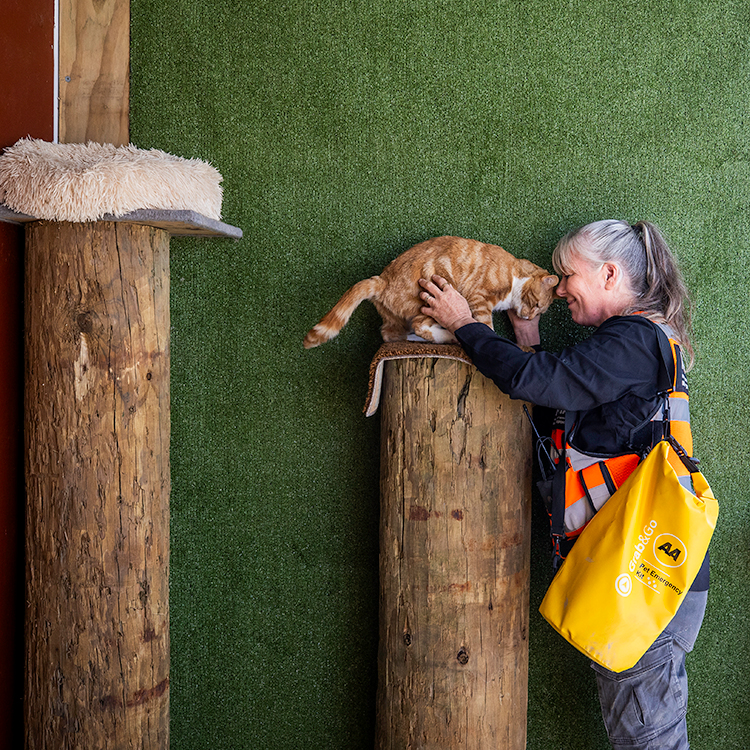
Launched this year and available online at AA Shop or in selected AA Centres, the kit features essentials including an emergency blanket, bandages and dressings, scissors and tweezers, a slip lead and folding bowl, plus recommendations on personalising the kit by adding useful things like your pet’s microchip number, a copy of their vaccine record and a photo of you and your pet together. HUHA has also prepared a comprehensive guide and checklist to help with emergency first aid and disaster preparedness, as well as YouTube tutorials explaining how to get the best from your kit.
Carolyn encourages pet owners to personalise theirs, including adding vet details, alternative contacts, and information about their animal’s specific needs. If you have a dog or cat, having a collapsible crate nearby is a sensible idea. Similarly, if you own a horse, keeping a halter in your home as well as in your shed is recommended.
“You’ll want to add some food your pet likes and extra water; medication if they need it, or details on your pet’s behaviour. If you’re grabbing and going because of a weather event and handing your pet over to HUHA, you'll likely be in such a flap, so having something prewritten about your pet is handy,” Carolyn says.
There are more than four million pets and 36 million farm animals in Aotearoa. Carolyn, a certified vet nurse, stresses the importance of having your animal micro-chipped and having that chip regularly checked to ensure it’s working correctly and all details are up to date.
“You can microchip horses, pigs, cows, cats, dogs, guinea pigs and bunnies. When microchipped animals are brought to HUHA, we can reunite them with their family straight away.”
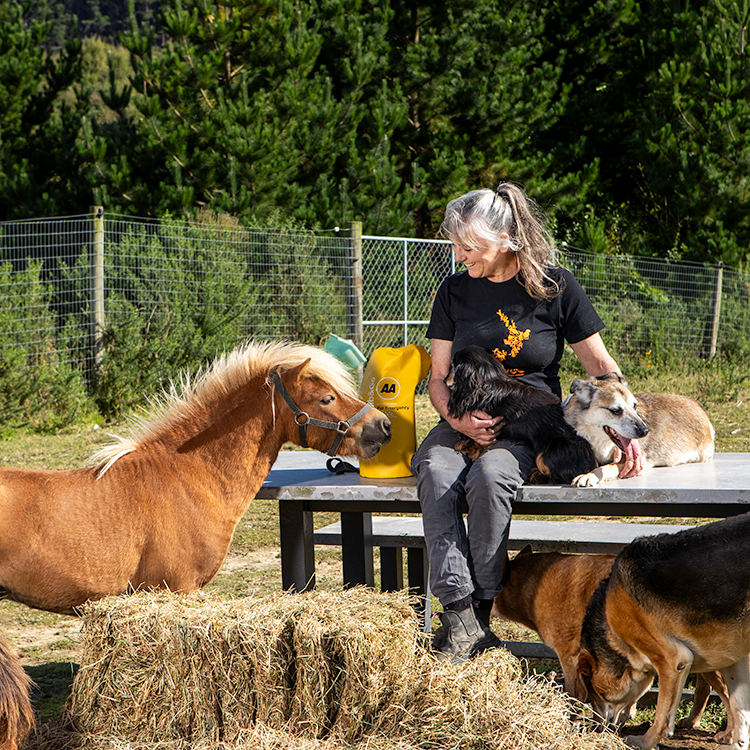
It’s also vital to have an evacuation plan in place in case of a major weather event.
“To have a plan that’s personalised for your family is important, because wrapped up in all the chaos, you can head for the people who you know can help you. Part of that is knowing that you have a vehicle and trailer that can transport your animals or stock, and that there are friends and family who have the capacity to take your family – pets included,” Carolyn says.
If there is no family support available, talk to your local council or Ministry for Primary Industries who can connect you with a community hub, vet clinic, transport service or HUHA.
Based in Wellington, HUHA leads advocacy, rescue, rehabilitation, rehoming and release work for thousands of animals of every kind each year. The charity also partners with animal welfare organisations and communities across Aotearoa and in nearby countries during crises.
Carolyn and her team have extended a helping hand in the Christchurch earthquake, Covid-19 pandemic and Cyclone Gabrielle. It assisted the Australian bushfires, hanging fruit skewers in trees for the wild animals and travelled across New South Wales building veterinary triage centres in the garages and spare rooms of wildlife rehab clinics. After the Kaikōura earthquake, HUHA worked with inmates at Rimutaka Prison to sew stretch-cotton swaddles to help ease animal anxiety post quake.
“It takes Kiwi ingenuity to look around for where there is the biggest need and build from that. That’s what we do at HUHA,” Carolyn says. “Every disaster is different, but the formula is the same. We shelter animals and do community rescues every day; we have a vet team we use daily. So, when we hit a crisis, it’s the same thing we do every day, just more extreme.”
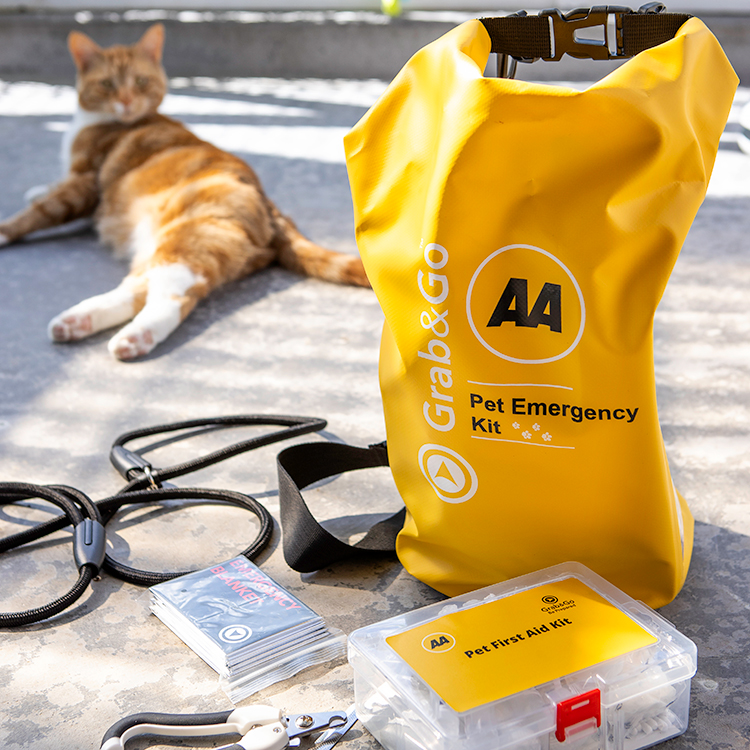
HUHA receives no Government funding and relies entirely on community grants, donations, fundraisers, animal sponsorship initiatives at its shelters, and its network of op shops. To help with this important work, 10% of the retail value of every AA Grab & Go Pet Emergency Kit sold is donated to HUHA.
Grab & Go co-founder Michael Anderson states that the kits support HUHA while simultaneously ensuring New Zealand pet owners are prepared.
“HUHA is a charity that does great work across all regions and communities in New Zealand and the South Pacific, providing a vital service that we can’t do without,” he says.
AA Retail Manager Jordan Blake encourages all Kiwis to have an AA Grab & Go emergency kit fully stocked, ideally with three days’ worth of supplies, in line with the Civil Defence recommendation for emergency preparedness. “And now, every pet can have its own AA Pet Emergency kit to go with it, so the whole family can be prepared for whatever comes their way.”
This story is from the Autumn 2026 issue of AA Directions magazine.