A dog-friendly Coromandel road trip
09 March 2026
We discover the benefits and challenges of taking a dog on a Coromandel road trip.
We take the whole family on a road trip from Auckland to Coromandel in an electric Volkswagen ID. Buzz GTX.
This is a road trip of epic proportions, from city to distant coast with two children and extended family, in a big electric van: The seriously smooth seven-seater Volkswagen ID. Buzz GTX.
Though it’s more like a spaceship than a van; the boys are quickly enthralled with the panoramic sunroof, delighted by how the smart glass dims and illuminates like the high-tech window shades in modern aeroplanes. The adults are absorbed by the massage function on the luxurious seats up front. Holiday mode: activated.
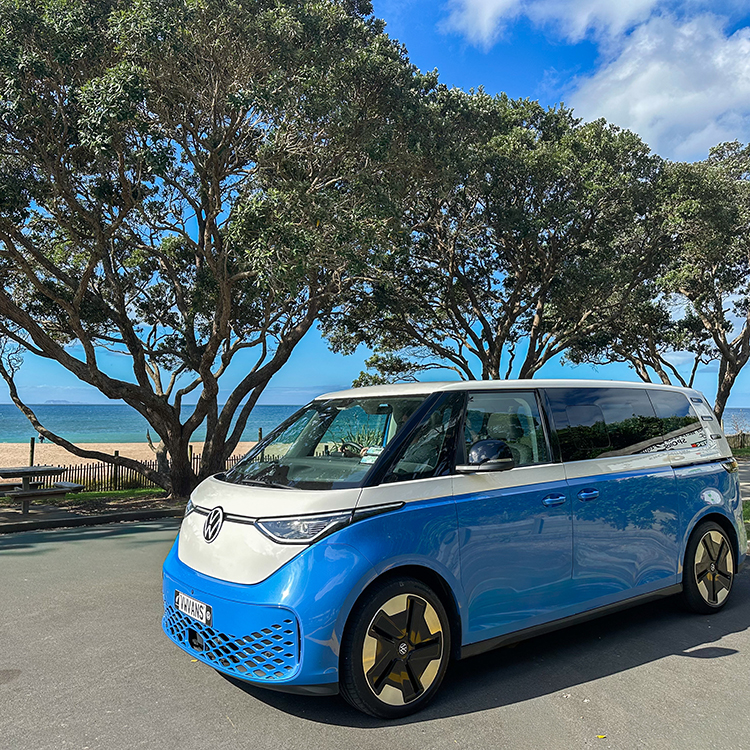
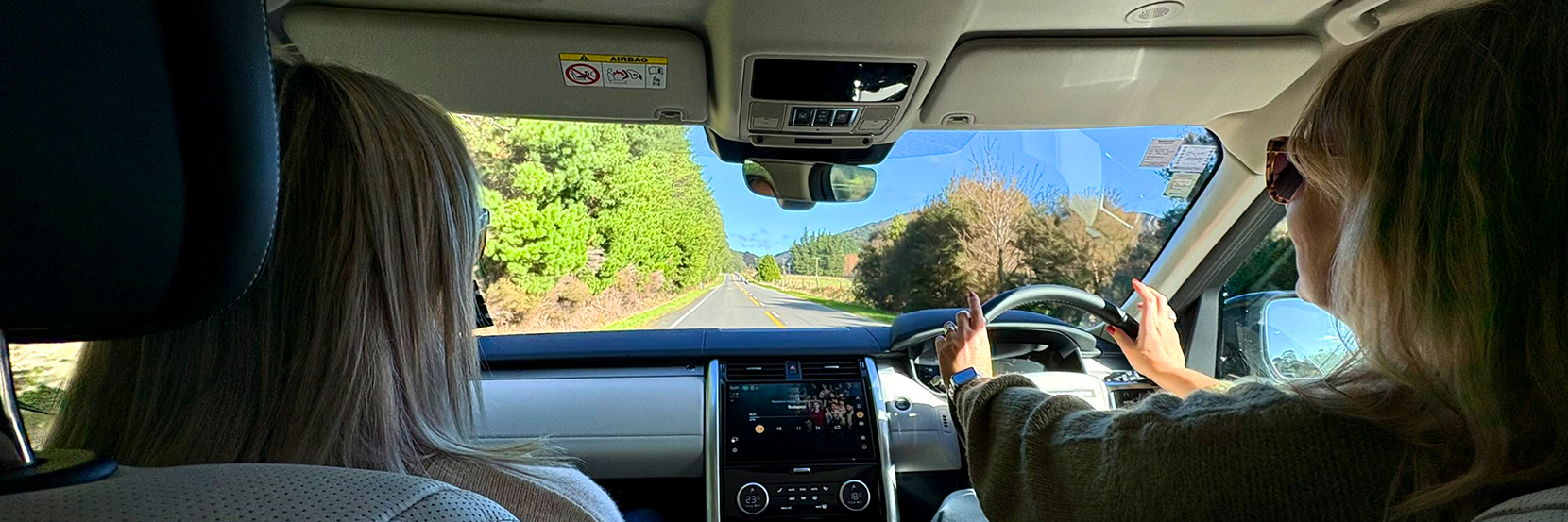
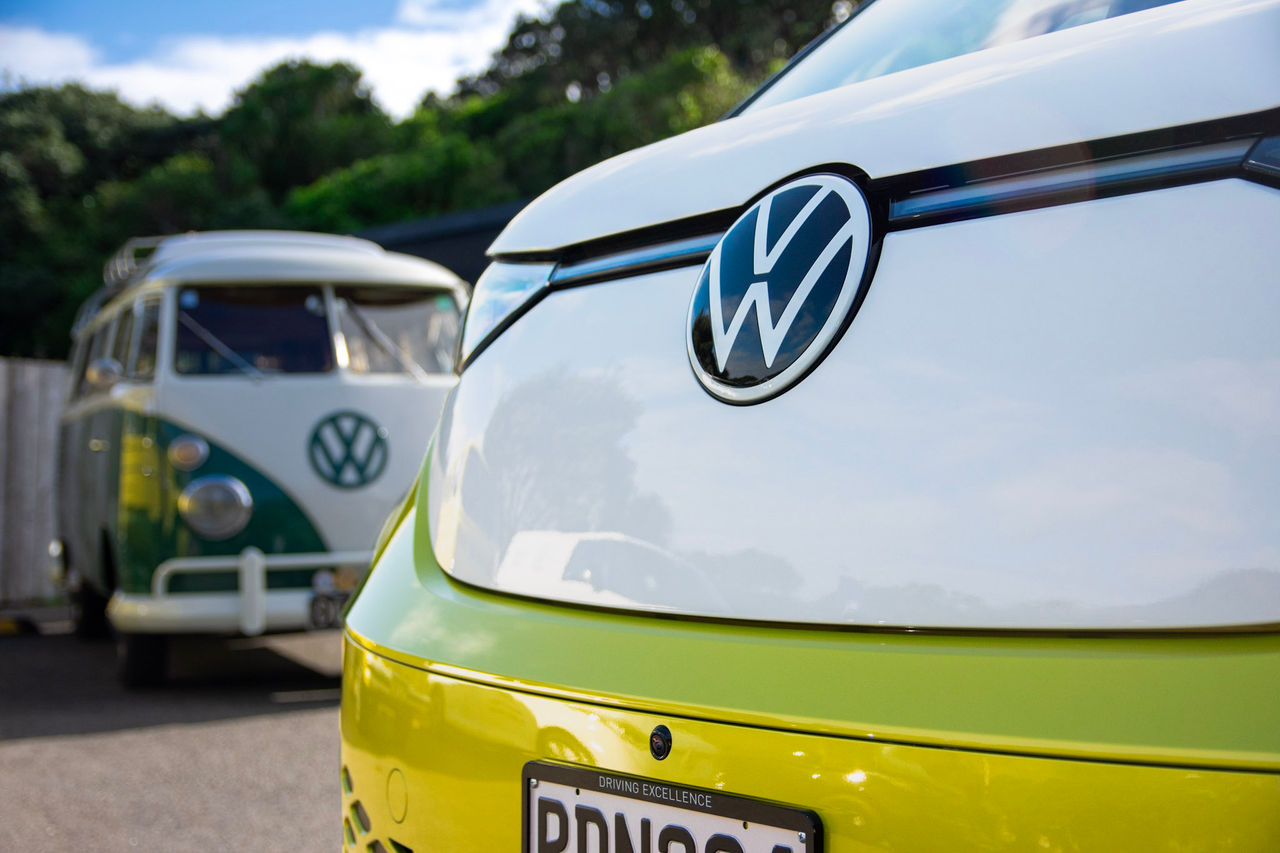
The ID. Buzz turns left onto Highway 2, as do the heads of other motorists spotting what is basically an old-school 1960s T2 Kombi reimagined.
Paddocks shimmer silver in the breeze. We pass country schools with displays about upcoming Ag Days and real estate signs asking townies like us if we’re ready to trade city lights for starry nights.
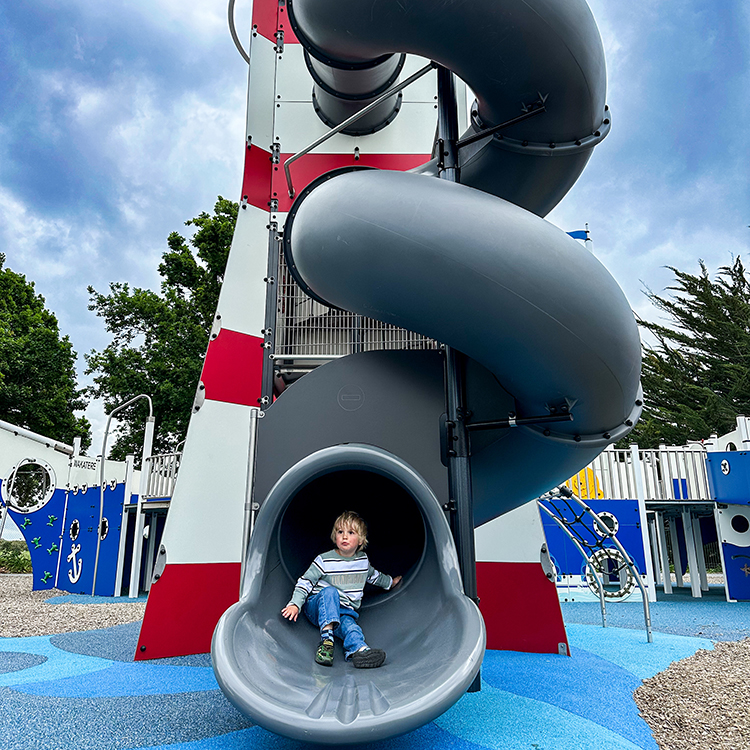
Driving through Thames, the recently upgraded Porritt Park playground catches bright eyes in the back seat. While the children recharge on swings and slides, the ID. Buzz gets an energy boost of its own.
Following the coast, we travel between rocky bays, home to clusters of classic weatherboard baches in Te Puru and Tapu. Seabirds perch in craggy pōhutukawa trees teetering over outcrops where watchful oystercatchers gather.
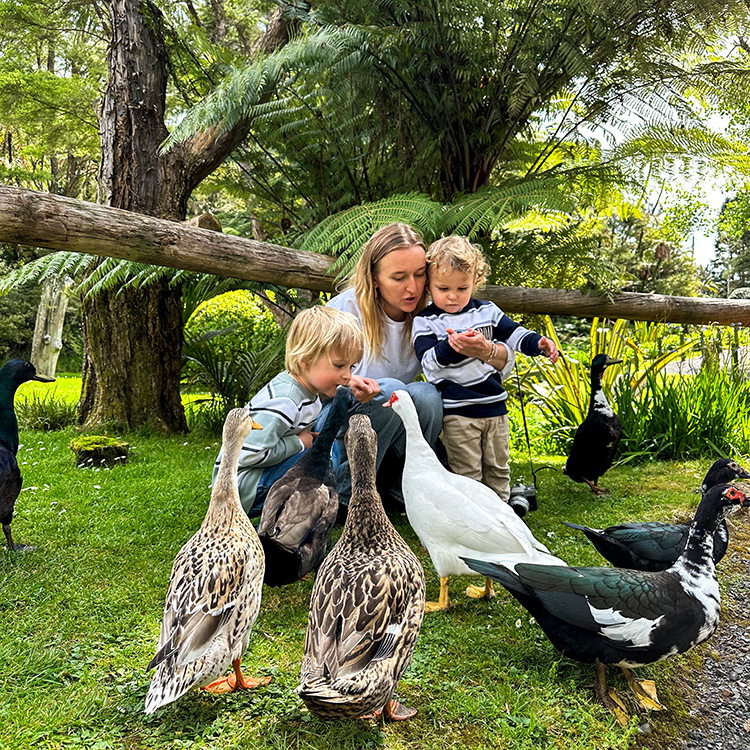
Detouring inland at Tapu Coroglen Road we stretch our legs again, this time at Rapaura Watergardens. Little fingers grip brown paper bags as we meander through the park, until we reach the resident ducks waiting to peck holes in the bottom of those tightly clutched bags. Seeds spill, children squeal, ducks gobble.
Recognised as a Garden of National Significance, Rapaura is thriving with bush, wildlife, exotic flowers and garden art. A stream leads to a terraced waterfall where we dip our toes.
Orange nasturtiums line the road as we venture further up the peninsula, known in te reo as Te Tara-o-te-Ika-a-Māui, the barb of Māui's fish. Its English name comes from the British Royal Navy ship HMS Coromandel, which arrived in the Hauraki Gulf in 1820 to harvest kauri for ship masts.
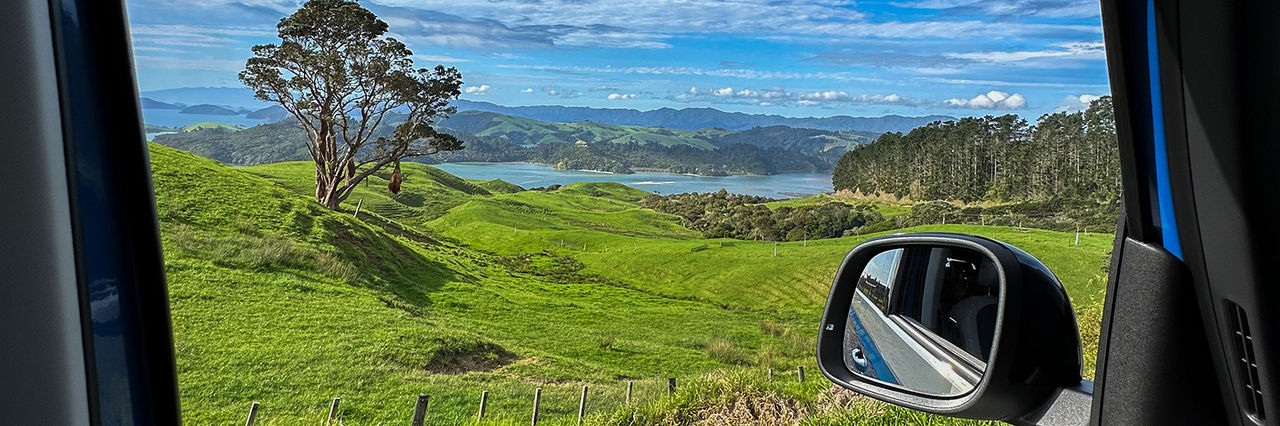
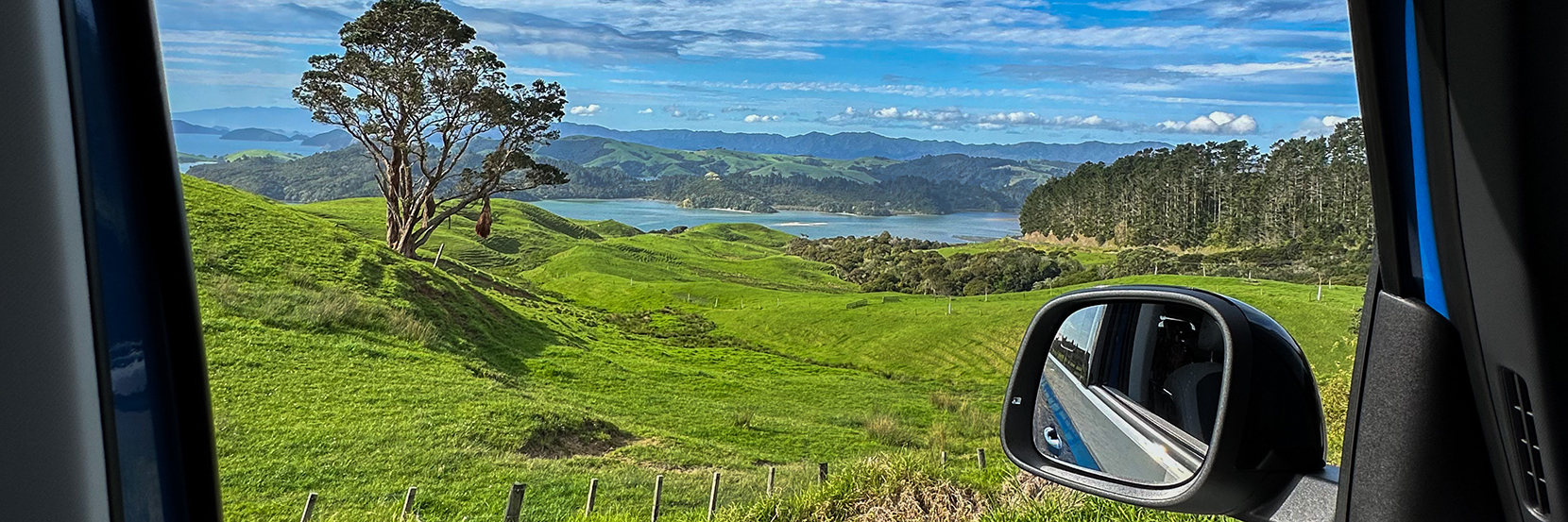
We pull over at one of the many viewing bays to appreciate the sweeping green pastures hugging emerald coves. Auckland looks so close it’s as though we could reach out the window and touch it.
As we pass through Coromandel town to Wyuna Bay, road signs ask motorists to be aware of native banded rail, signalling the special nature of this part of the world. Arriving at our accommodation, we discover its another gem: the aptly named Heavenly Escape, an expansive holiday home for families like ours. Bigger is better here, too.
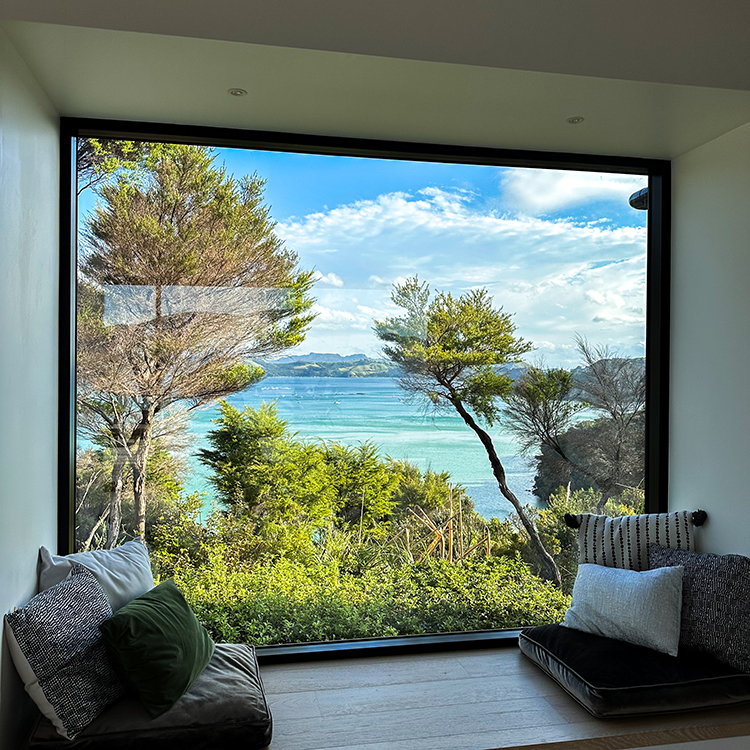
Exploring the house, beautifully designed by Idle Pursuits Interiors, is like a lavish treasure hunt. We all gravitate to corners of interest: for the chef in the family it’s the kitchen, for others it’s the library or the generous wrap-around deck with views which make me feel right at home – or rather make me want this home. We lose the children in a small but well-stocked playroom.
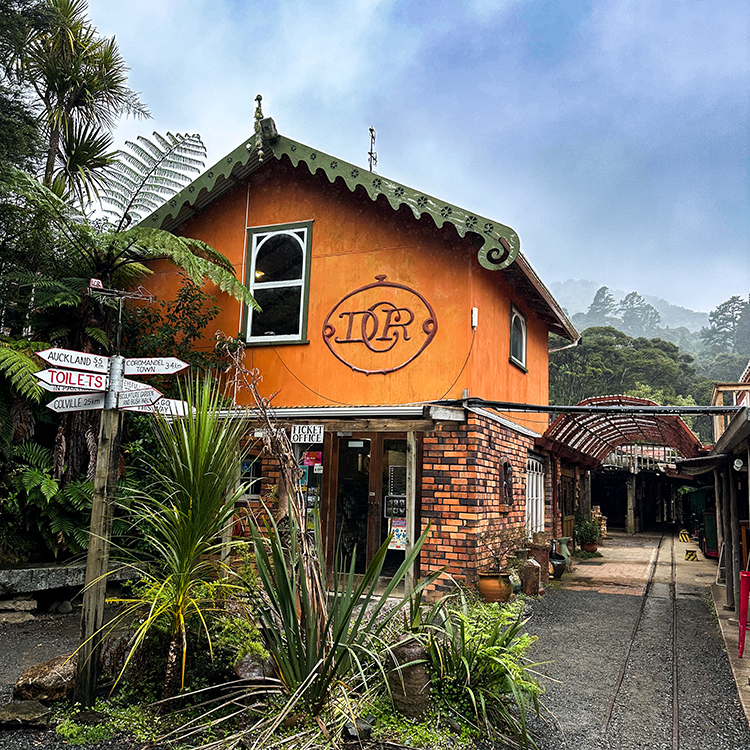
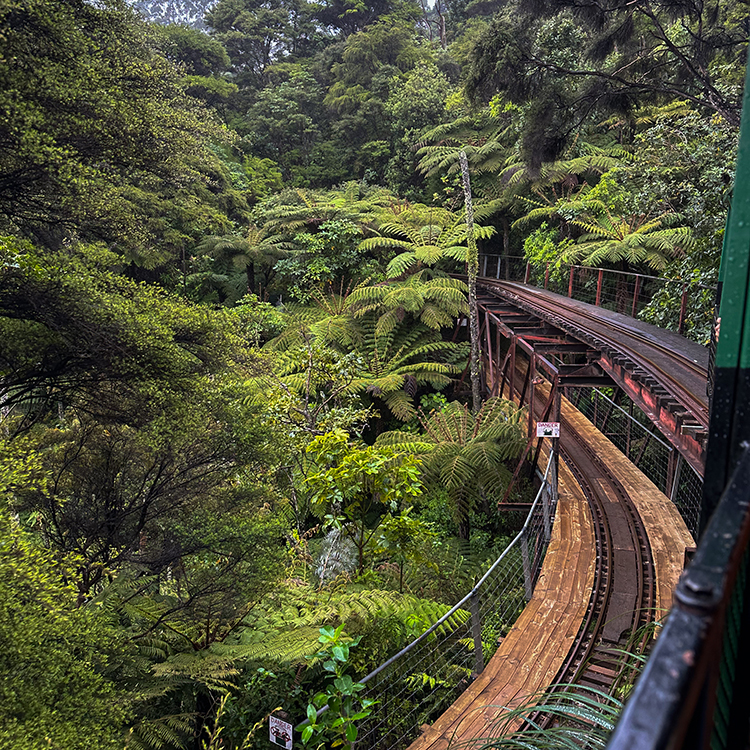
Droplets of gentle rain splash on our cheeks and hands as the rickety train snakes up the native bush-clad hills of nearby Driving Creek.
Here we find a railway complete with bridges and tunnels, dreamt up and built by New Zealand’s first full-time potter, the late Barry Brickell, to transport clay. The artist purchased the land here in 1973 and established a pottery co-operative for participants to learn and refine their craft under his tutelage and that of other influential potters. His ethos is upheld today through artist residencies and pottery classes.
Winding through the 24-hectare property and passing his final resting place, we are impressed by the Kiwi ingenuity and also inspired by the story of Barry’s radical pivot to achieve his dream. The young potter had arrived in Coromandel from Auckland to work as a school teacher but left the classroom after only two terms because he didn’t like it. He built Driving Creek’s wood-fired kiln with bricks from the demolished Star and Garter Hotel’s chimney, the same historic hotel on Coromandel’s main street where we’d enjoyed dinner the previous night.
The unanimous decision for this evening’s meal is to use the kitchen at Heavenly Escape. After a fish and chip lunch at Coromandel Oyster Company, we bought dozens of the freshly shucked shellfish to add to our menu.
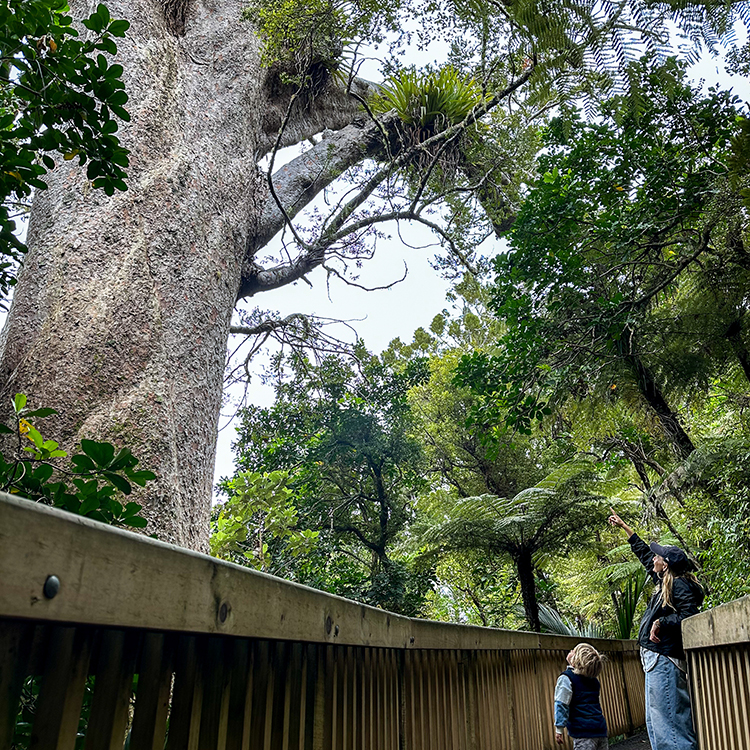
When we reach the entrance to Long Bay Kauri Walk the next morning, it’s our second attempt. On a visit the previous afternoon we couldn’t pull the children away from the playground at the nearby motor camp. Second time lucky, we skip along the boardwalk weaving through impressive kauri trees, including one that’s an astonishing 1,200 years old.
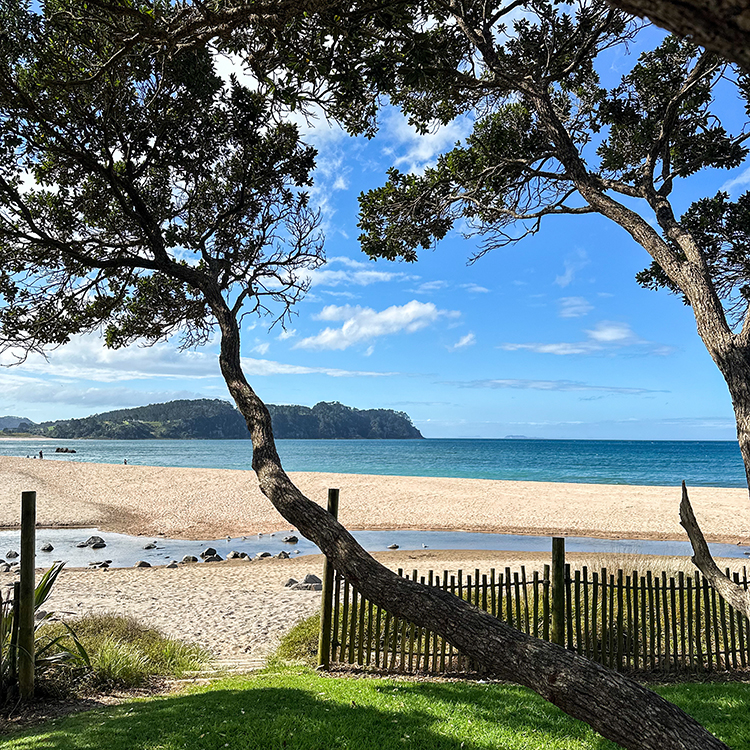
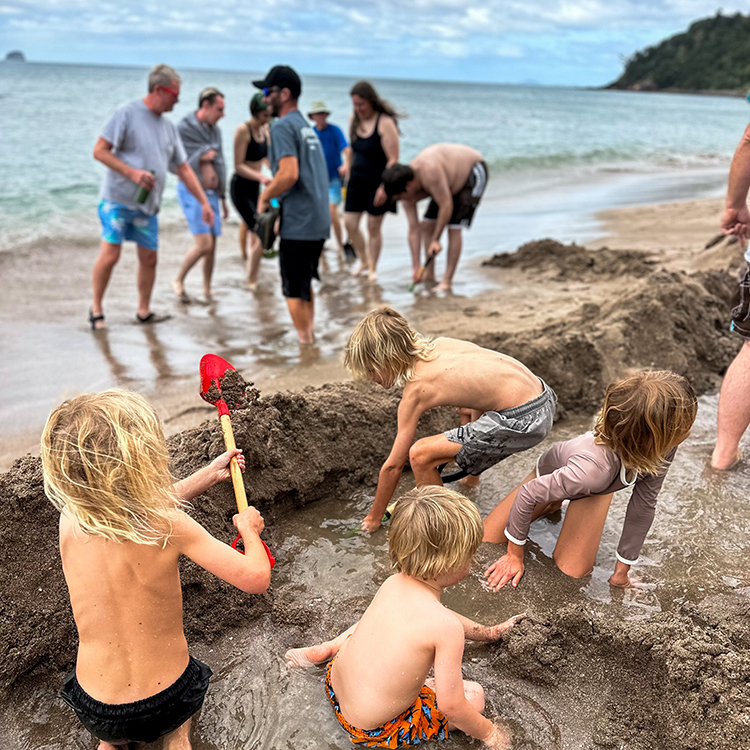
After a dose of forest air, we travel east along State Highway 25 on a timeline governed by tides. We must complete the 75-odd kilometre journey to Hot Water Beach within two hours either side of low tide to crack the geothermal hot spring under the sand and dig a spa pool with an ocean view.
Car sickness from the sharp bends is remedied by views across Whangapoua Harbour. Wooden roadside stalls sell fresh produce from the surrounding orchards, raw honey, $1 avocados, firewood.
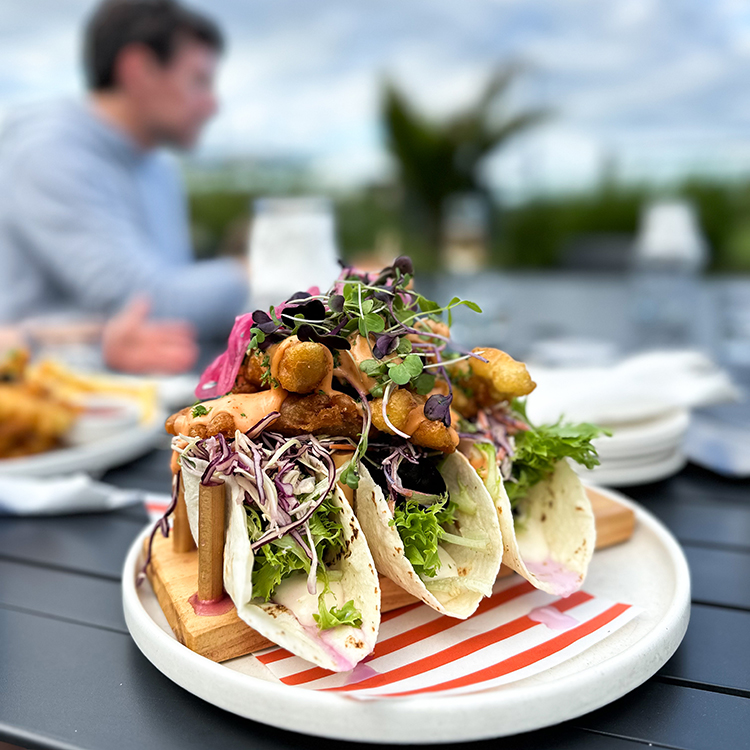
We stop at Basker in Whitianga to enjoy local seafood from the kitchen overlooking the water. We choose a table outside next to a playground and the children dart between climbing frames and the sandy shore of the waterways between bites of lunch.
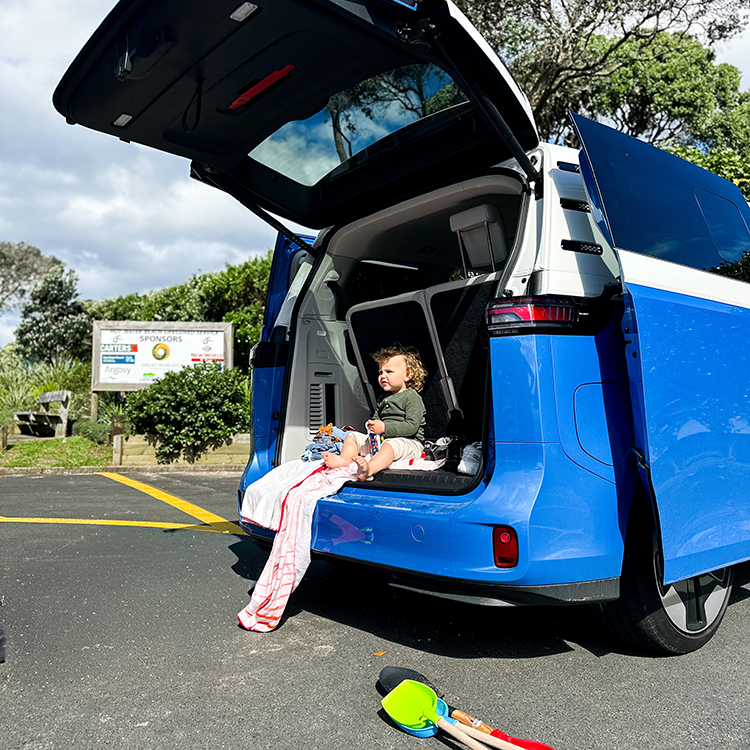
The ID. Buzz’s bright blue and white exterior matches the sky as we unpack spades, towels, hats and togs, and cross the estuary to join the crowds of other beachgoers. My expectation of a private hot pool is shattered when I see it’s more a case of all hands – or rather spades – on deck to collectively maintain one big public pool for everyone to enjoy.
Despite being much sandier on its return voyage, the ID. Buzz still manages to catch attention. We promise another stop at the playground in Thames but are met with unusual silence from the backseats. Two sets of sleepy eyes have drifted shut after a fun few days.
The writer stayed at Heavenly Escape courtesy of Major Domo and travelled in the ID. Buzz GTX thanks to Volkswagen New Zealand. Complete with 250 kW of power, the 400-KM range is easy to maintain on the network of ChargeNet fast charges around the country.
This story is from the Autumn 2026 issue of AA Directions magazine.