Three wonderful Waitākere walks
29 July 2026
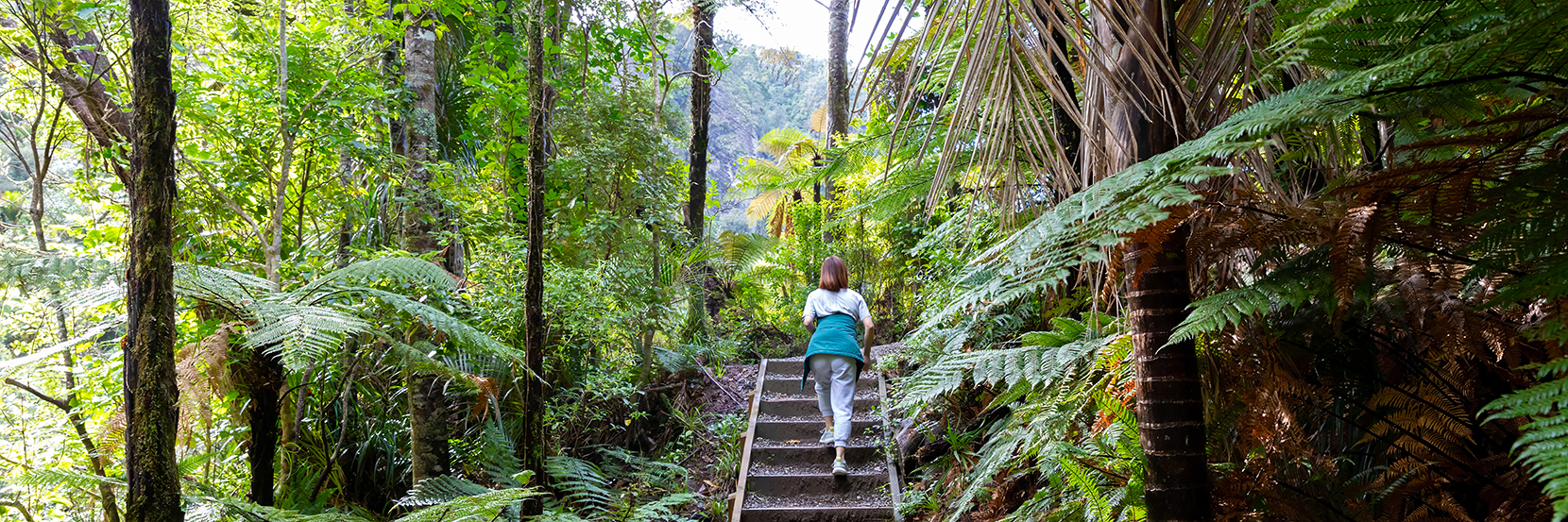
Take a day trip into Auckland's Waitākere Ranges to experience these three great short walks.
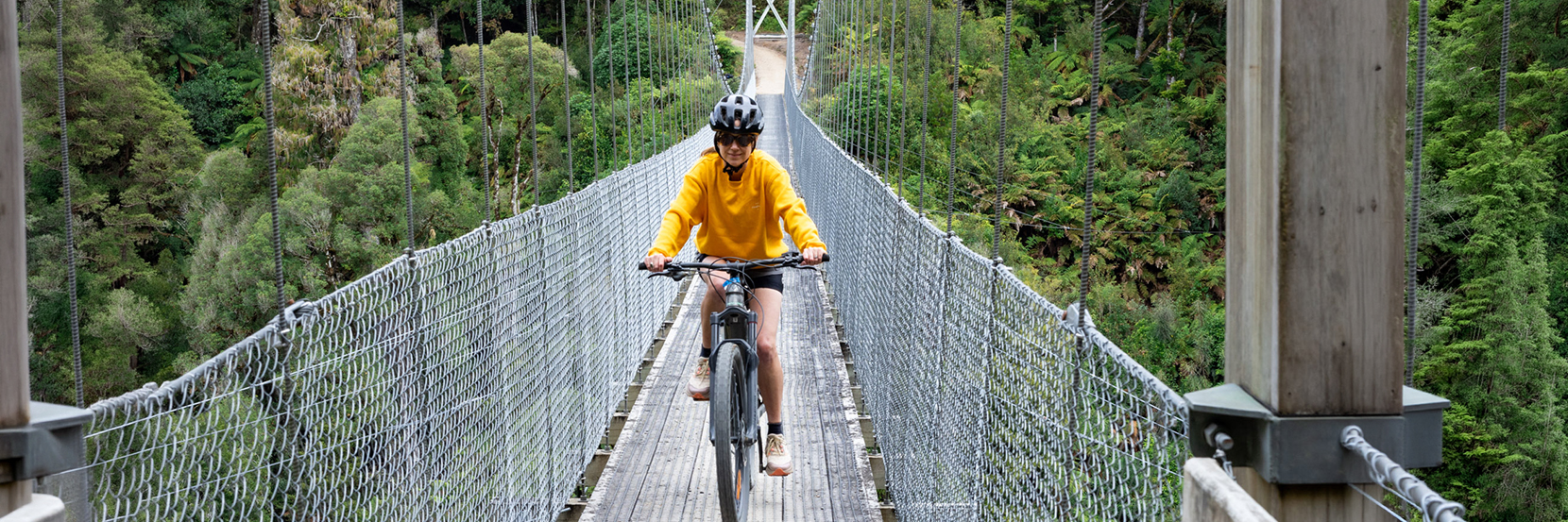
The Timber Trail is an 84km, two-day ride through the stunning Pureora Forest in the Central North Island.
Since the opening of the Timber Trail in 2013, wilderness-seeking mountain bikers and hikers have been answering the forest’s call in increasing numbers. The trail sees around 20,000 riders per year, and I am its newest fan.
The 84km, two-day ride carves through Pureora Forest’s 78,000 hectares, offering lessons in history and natural wonderment along the way.
Our Pureora experience started with an afternoon transfer from the trail’s end car park in Ongarue to the Timber Trail Lodge in Piropiro. Lodge manager Russell Malone chatted about the history of the area as we drove past once booming, now sparsely populated logging settlements scattered along the forest’s perimeter.
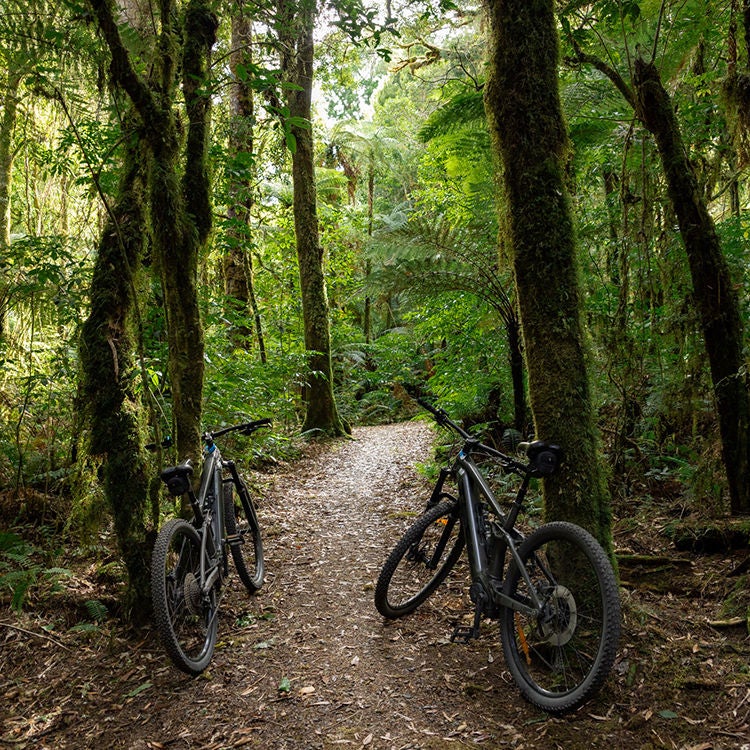
Pureora was the site of anti-logging protests in the 1970s, which ultimately led to the end of native forest logging in New Zealand. Russell explained that where an extractive industry once provided the bulk of employment, many locals now work for accommodation and transport providers servicing the trail.
The Timber Trail Lodge sits at the halfway point and is the perfect place to break up the two-day ride. Opened in 2017, the off-grid mountain lodge sleeps up to 45 guests. Meals are served communally, giving you a chance to meet fellow travellers and share trail stories. This was an unexpected highlight for my husband, Andrew, and me. We quickly realised how intrepid many of the other riders were. One group was on day seven of Tour Aotearoa, cycling from Cape Reinga to Bluff. They aimed to complete the journey within a month, averaging around 100km per day.
Neither Andrew or I had ridden e-bikes before, but we gratefully accepted the offer from the Timber Trail Lodge to try them out. On a ride like this, immersion in nature is the priority so sweating it out for the fitness prize can take a back seat.
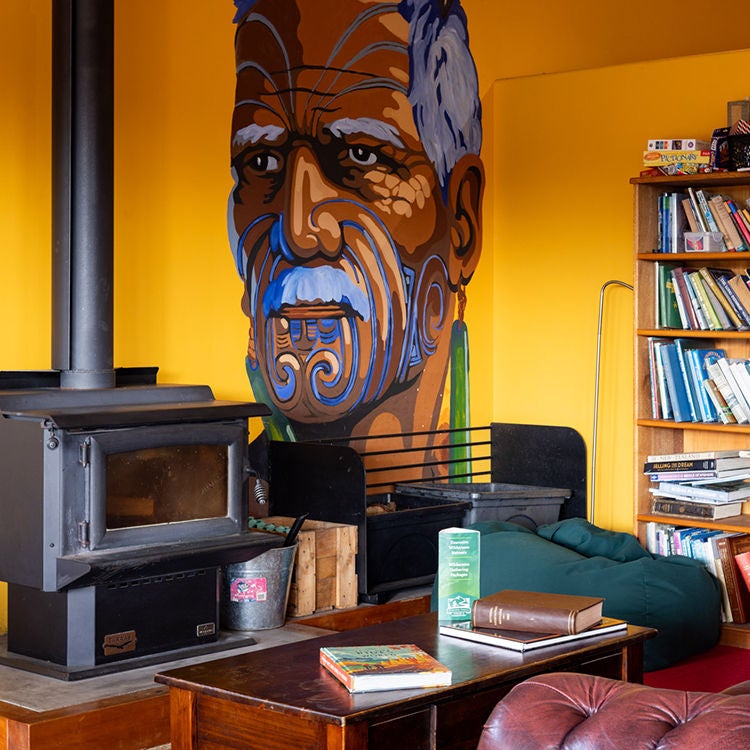
We started at the northern end of Pureora, cruising under a green canopy, surrounded by birdsong. The track soon became a steady uphill climb; after 15km we reached the trail’s highest point 971m above sea level, near the peak of Mount Pureora. We felt a noticeable drop in temperature as we rode at elevation, the track sidling around the mountain.
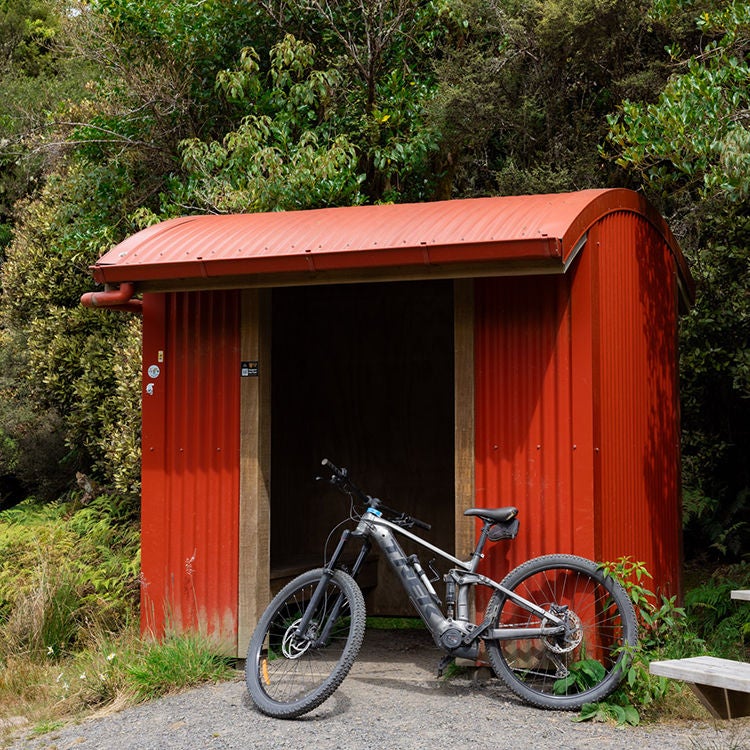
We stopped for lunch at a picnic table beside a small red tin shelter that was iconically Kiwi. We chuckled at the messages graffitied inside. One read: “Do this s##t while you’re young and still can.” I’d say they were preaching to the converted if the reader had already made it 20km into the ride.
The Timber Trail is famed for its many bridge crossings – 35 in total, eight of which are suspension bridges. We had been told the most impressive were on day two, but we were wowed by our first encounter. I dismounted and walked to the centre to see the valley scooped out beneath me, vast and green. A kererū bustled its way into the branches of a giant tōtara. This is the New Zealand we love: wild, remote and full of wonder.
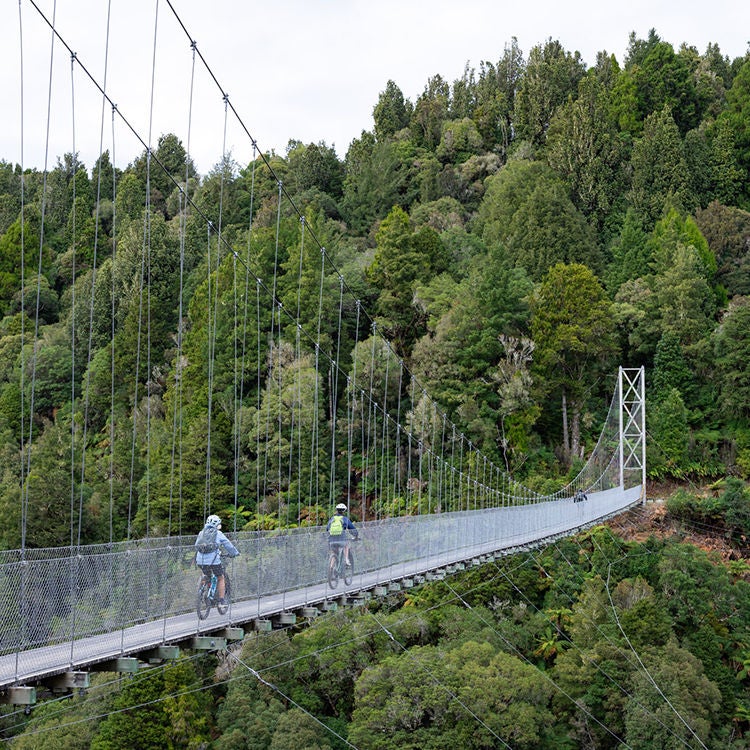
We continued along the trail as it dipped into valleys and clearings toward Piropiro. On the final push to the lodge, I heard Andrew call out: “Put it into beast mode!” I figured he meant ramp up the e-bike power. We had been so conservative that we’d only used one and a half of the five battery bars, so I was surprised by the ease of the hill climb in full power.
Day two is where Pureora’s history really comes into view. Russell had given a talk at dinner the night before, explaining how evidence of the eruption that created Lake Taupō 1,800 years ago can still be seen along the trail. Ancient, charred logs and blackened rock faces bear the marks of volcanic fallout.
Not far into the ride, we reached the famed Maramataha Bridge. At 141m, it’s the trail’s longest suspension bridge and offers a jaw-dropping view into a 5m ravine. Lush greenery blankets the Jurassic-scale landscape below. Gazing down to the riverbed, any sense of modern life and human intervention disappeared, apart from the engineering marvel carrying us across the valley.
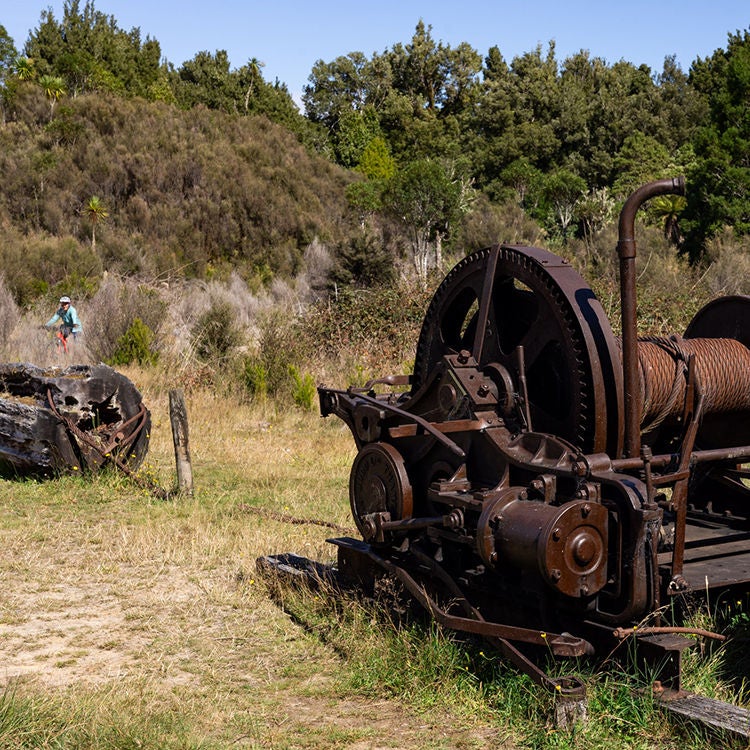
Reminders of the bygone timber trade days are more prominent on the second half of the trail. Much of this section follows tramlines created during the logging era. Industry relics dot the route, including a steam-powered log hauler, tramline junctions, rail sleepers and workmen’s cooking equipment. We enjoyed riding through cut-out sections and alongside rocky cliff faces, though ominous ‘No stopping – rockfall’ signs resulted in zero photos.
Reaching the trail’s end by mid-afternoon meant we had plenty of time for a leisurely drive home. We skirted the forest perimeter once more, keen for a last glimpse of Mount Pureora, and contemplated which of New Zealand’s Great Rides we’d tackle next.
This story is from the Winter 2026 issue of AA Directions magazine.