Staying safe: scam alerts

As an AA customer, it's important to stay vigilant. Always take a moment to check that communications are genuine before clicking links, entering personal information, or making payments. If something doesn't feel right, trust your instincts and verify it through official AA channels.

Cybercriminals are becoming increasingly sophisticated, and phishing scams can be difficult to spot. Phishing scams are designed to trick you into sharing personal or financial information. Phishing is when someone tries to steal your money, or your identity, by getting you to input personal information (for example credit card numbers, bank information, or passwords) on a phishing website. It is an easy trap to fall into as cybercriminals often pretend to be reputable organisations and companies.

If you are ever unsure whether any communication from the AA is legitimate, please feel free to contact us for reassurance. 

Stop. Check. Protect.

If you receive an unexpected message claiming to be from AA:

  • Don't click links straight away.
  • Check the sender's email address or phone number.
  • Visit the AA website directly rather than using links in messages.
  • Contact AA if you're unsure whether a message is legitimate.

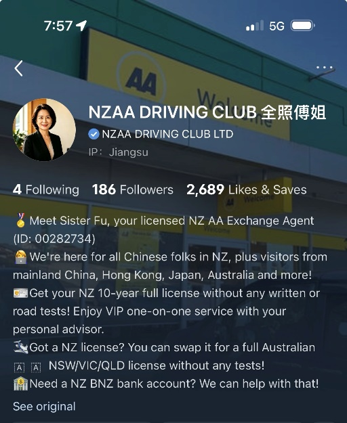
Please be careful of social media accounts and pages falsely claiming to be affiliated and working with the AA and offering driver licence services. The AA would never ask for driver licence details or personal information through social media.

Learn more

For the latest information on current phishing scams involving the AA and what to do, please see below.

A scam account on RedNote is impersonating the New Zealand Automobile Association (AA) by using the AA name, logo, branding, genuine AA Driver Licensing photos, and what appears to be an AA booking confirmation. The post falsely suggests it can help people obtain a 10-year New Zealand driver licence and International Driving Permit (IDP) without completing the required tests, creating the misleading impression that the service is endorsed or delivered by the AA.

Fake AA survey email offering a free breakdown and safety kit, with a button prompting users to start a survey. Potential phishing scam.
Phishing Scam of AA Breakdown & Safety Kit Survey

We are aware of phishing emails claiming that recipients can receive an AA Breakdown & Safety Kit in exchange for completing a survey.

These emails are not from the AA and should be treated as fraudulent. Do not click any links, provide personal information, or submit payment details if you receive one of these messages.

If you receive a suspicious email claiming to be from the AA:

  • Do not interact with the email or any links within it.
  • Delete the email from your inbox.
  • Report the email as phishing through your email provider where possible.

For information on current scams and how to protect yourself, please refer to our scam alerts and security advice.

We are aware of scam emails currently circulating that falsely claim to be from the AA. These emails appear in several formats and reference products such as a “Free Rescue Tool / Glass Breaker & Seatbelt Cutter”, “2‑in‑1 Car Safety Tool”, or “2‑in‑1 Rescue Tool”.

If you have received this email, please do not click any links or open any attachments. Delete the email immediately.

We are conscious that these emails can evolve over time so it’s important to stay vigilant. Even if one sign of a scam is present, please treat it as such.

If you are ever unsure whether any communication from the AA is legitimate, please feel free to contact us for reassurance. 
Scam email from smartfuel hackers
hacked smart fuel email address

Scam email from smartfuel hackers
hacked smart fuel email address

We are aware of an email scam circulating posing as AA Insurance and using a false Smartfuel email address – the email may also mention a fake Garmin partnership.

The AA Smartfuel programme ended in January 2024 and no longer sends out any customer communications.

If you have received this email, please do not click any links or open any attachments. Delete the email immediately.

We are conscious that these emails can evolve over time so it’s important to stay vigilant. Even if one sign of a scam is present, please treat it as such.

If you are ever unsure whether any communication from the AA is legitimate, please feel free to contact us for reassurance. 

Scam image
Scam image

If you received/opened these emails please; 

  1. Delete the email without clicking the link.
  2. If you have clicked the link, please scan your device for malware.
  3. If you have provided your Credit Card details, contact your bank immediately to arrange for credit card to be replaced.
  4. If Credit Card details were provided, contact CERT and fill an individual report for a data breach Report an incident - business and individuals | CERT NZ

We’re aware of a scam message that is currently circulating encouraging AA Insurance customers to join a cryptocurrency training course. Please know, this is a scam.

The AA would never ask for personal details, passwords, PIN numbers, or request payments via text or WhatsApp.

If you have a received a message along these lines, please delete it immediately and block the number. If you have entered your credit card details into any associated links, contact your bank immediately.

If you are ever unsure of the legitimacy of a communication from the AA, please do not hesitate to contact us for assurance. 

    AA Insurance scam email

    We have been made aware of a scam email circulating, claiming to be from AA Insurance requesting recipients to click a link in order to receive a refund.

    The scam email is designed to trick recipients into thinking it is from AA Insurance and to click the link (and probably then enter their bank account details).

    If you have received this email please refer to this article on AAI's help centre I have received a letter, email or text asking me to complete a form for a No Claims Bonus benefit error. Is this a scam?

    If you received/opened this email please; 

    1. Delete the email without clicking the link.
    2. If you have clicked the link, please scan your device for malware.
    3. If you have provided your Credit Card details, contact your bank immediately to arrange for credit card to be replaced.
    4. If Credit Card details were provided, contact CERT and fill an individual report for a data breach Report an incident - business and individuals | CERT NZ