
- 1 in 4 (24%) of AA Members had missed a WoF renewal because they forgot the due date.
01 December 2025
AA Members’ views on vehicle safety and Warrants of Fitness
Insights from AA Members on vehicle safety, maintenance, and WoF inspections
The New Zealand Government consulted in late 2025 on changes to the Warrant of Fitness (WoF) system, including proposals to extend inspection intervals and modernise the inspection process.
To help respond to the consultation, the AA surveyed its Members about how they maintain their vehicles, how they use WoF inspections, and what support they may need if the system changes.
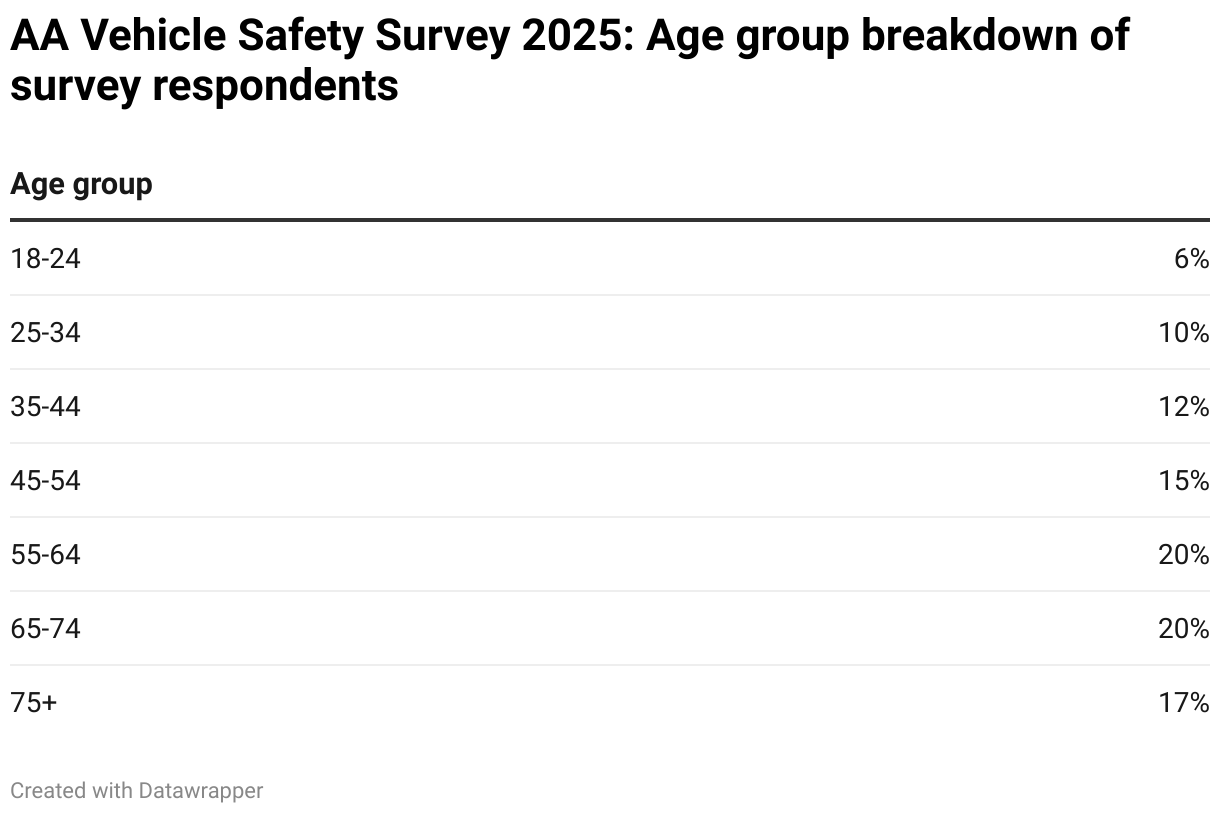
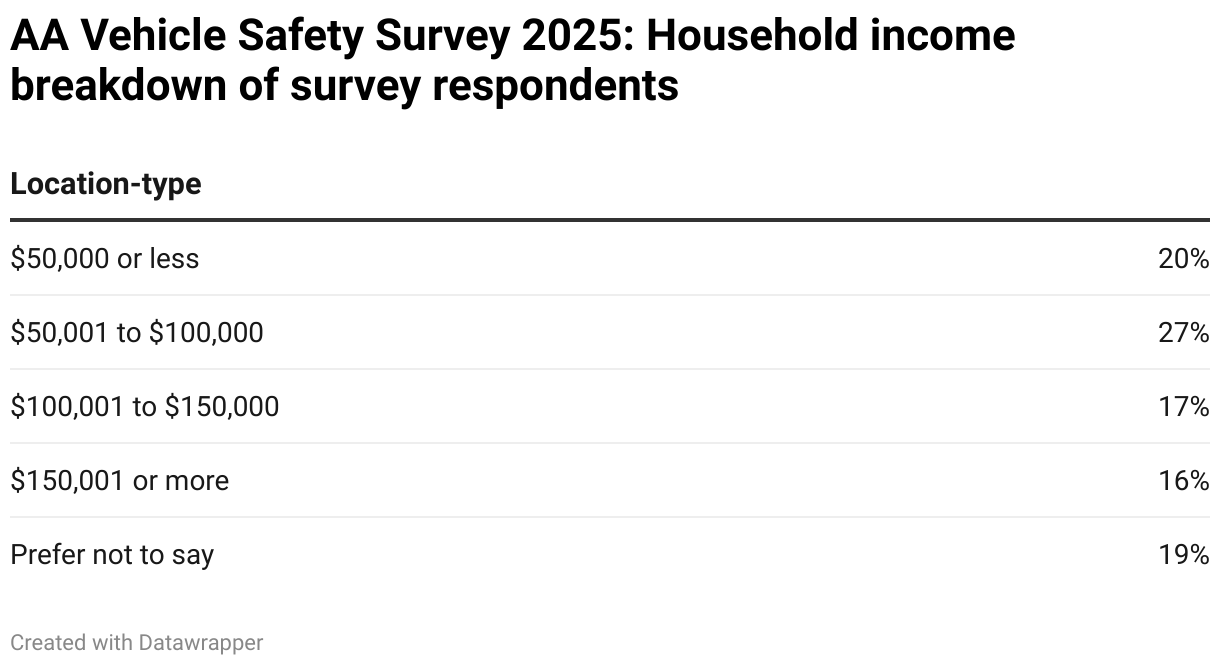
This page highlights findings from 2,068 AA Members who completed the AA’s 2025 Vehicle Safety Survey, alongside relevant insights from the AA’s recent fines and penalties surveys.
Key findings
How concerned are AA Members about vehicle roadworthiness?
Most AA Members are concerned about the roadworthiness of NZ's vehicles
We asked how worried Members are about the roadworthiness of New Zealand’s vehicle fleet.
- 6 out of 10 (62%) of AA Members are concerned about how roadworthy vehicles on New Zealand’s roads are – just 12% are not concerned.
"Many vehicles on the road that don't have a WOF, registration. or have been illegally modified. How do we deal with these?" - AA Member
“There are too many vehicles on NZ roads that have no registration or WoF. You only have to look through the supermarket car park and any street in town to notice the condition of some vehicles.” - AA Member
How well maintained are vehicles?
Vehicle maintenance between inspections is inconsistent
We asked AA Members how regularly they perform basic safety checks.
We found that vehicle maintenance habits vary widely, and a notable proportion of AA Members drive with issues that could compromise safety.
- 1 in 4 (26%) do not check their tyre tread/pressure between WoFs.
- 4 out of 10 (42%) rely on dashboard alerts to identify safety issues.
- 8 out of 10 (80%) service their vehicle according to the manufacturers’ recommendations – 16% do not.
How important are WoFs for vehicle safety?
WoFs are seen as an effective safety tool
We asked AA Members how effective they believe the current WoF system is and how much they rely on inspections to detect safety issues.
We found that WoFs are seen as effective for preventing crashes and identifying faults.
- 6 out of 10 (57%) AA Members think that WoFs prevent crashes – 17% think that they do not.
- 7 out of 10 (73%) think that the current WoF system is effective at identifying vehicle safety faults – 7% do not.
WoFs help identify faults that owners may miss
WoFs are a critical safety backstop, with many relying on inspections to detect faults they may otherwise miss:
- Nearly 6 in 10 (59%) rely on their WoF to identify vehicle faults.
- 4 out of 10 (42%) have failed a WoF due to a safety issue they weren’t aware of.
This illustrates that any reduction in inspection frequency must be supported by robust education and clearer expectations for vehicle upkeep.
What are the rates of WoF and vehicle safety compliance?
Some AA Members report driving vehicles with overdue or likely-to-fail WoFs
We asked AA Members about their experience driving vehicles with an overdue WoF or known safety issues.
- Over 1 in 10 (13%) of Members reported that they had driven a vehicle that had a WoF overdue by a month or more.
- Nearly 1 in 10 (9%) of Members had driven a vehicle more than once when they knew it would likely fail a vehicle inspection.
These findings were similar in our Unsafe Driving Survey:
- 1 out of 10 (8%) of AA Members reported driving with an expired WoF in the past 4 weeks – 59% think that this is unsafe, while just 3% think it is safe
- 4% of Members knowingly drove with worn tyres in the past 4 weeks, despite 96% thinking that this is unsafe.
These behaviours highlight that a meaningful minority already take risks, indicating that stronger enforcement and clearer responsibilities may be necessary if inspection intervals are extended.
“Living in Oamaru and often out walking I am horrified by the numbers of cars I see without either a WOF or registration many of them shown as being without WOF or registration for months or years.” – AA Member
How effective is WoF enforcement?
AA Members question the effectiveness of WoF enforcement
In our 2024 Unsafe Driving survey, we found that:
- 1 in 3 (31%) of AA Members viewed the chance of a WoF ticket from a parking warden as ineffective at discouraging unsafe driving.
- 27% think the chance of a police ticket is ineffective.
- 94% of Members had never had an infringement.
“WOF's are a point in time check - more emphasis on owner responsibilities for keeping vehicle in WOF compliant condition is required with suitable penalties if found to be unsafe in-between WOF checks." - AA Member
“Should be greater police checking of unroadworthy vehicles.” -AA Member
“Unsafe vehicles should be impounded if discovered on a public road.” - AA Member
“Many vehicles do not have WoFs particularly in certain parts of the country despite the fact they are meant to be mandatory. The owners of vehicles found not to have WoFs or current regos should be dealt with more severely than at present.” - AA Member
Taken together, our findings show that AA Members generally see current enforcement as weak, reinforcing the Government’s view that stronger deterrence will be essential to maintain safety if inspections occur less often.
What impacts WoF compliance?
Costs can make it difficult to maintain a WoF
To understand how financial pressures affect compliance, we asked AA Members whether cost is a factor in missing or delaying a WoF.
We found that cost pressures can make it difficult for some Members - especially younger and lower-income groups - to maintain a current and safe WoF.
- 1 out of 6 (16%) reported that the cost of repairs, maintenance, and/or servicing makes it difficult to maintain a WoF for their vehicle, and 10% had delayed a WoF due to the cost.
Cost pressures are concentrated among specific groups:
- A third (31%) of AA Members aged 18-34 struggle with WoF-related costs.
- 1 out of 5 (22%) of those earning $50,000 or less.
“The increasing costs of owning a motor vehicle are leading to an increased number of vehicles without a WoF. One only needs to look at vehicle stickers in supermarket car parks to understand this.” - AA Member
The findings show that cost pressures are significant for some groups. Reduced inspection frequency may help affordability - but could also increase the risk of delayed repairs unless supported by education and enforcement.
AA Members depend on reminders to remember their WoFs - particularly in-vehicle stickers
The Government is considering digital alternatives to the physical WoF stickers in vehicles. We asked Members how they currently remember their WoF due dates, to understand the implications if reminders were delivered digitally rather than through a sticker.
We found that most AA Members depend on reminders - especially paper stickers. Missed renewals are commonly due to forgetting the WoF expiry date.

Forgetting WoF renewals is common
Paper stickers are important memory aids
- Over half (55%) use their sticker to remember when their WoF is due.
- 8 out of 10 (81%) would prefer both a physical sticker and digital reminders.
- Just 25% said they would remember their WoF due date without a paper sticker.
- 7 out of 10 (71%) would be concerned if physical stickers were removed entirely – 22% would not.
Here is what AA Members had to say about WoF stickers:
- “No to digital WOF expiry notification because not everyone has cellphone or email technology” - AA Member
- “WOF stickers are useful to identify that the vehicle you are getting into at least has a current WOF.” - AA Member
- “Paper stickers are a key memory aid.” -AA Member
- “Email/apps notifications are just noise now, they're not robust.” -AA Member
Digital reminders are widely used and supported
- 1 in 10 use the NZ Waka Kotahi app to remind them when their WoF is due.
- 58% get reminders from their garage or mechanic, and 12% use other reminder systems.
- Only 6% don’t get any reminders.
- 8 out of 10 (81%) said digital reminders would help them remember when their WoF is due. 14% said they would not.
- “No need for paper WoF stickers. Please advocate for public digital record of historic WoF failures, much like the UK's online MOT History – this incentivises honesty in the trade which helps overall safety.” – AA Member
- “I appreciate reminders for my WoF and Rego.” – AA Member
Support for changes to the WoF scheme
AA Members think increasing the vehicle inspection interval raises safety risks
We asked Members whether they support the idea of longer gaps between WoF inspections and how they perceive the associated safety risks.
We found that AA Members are cautious about extending inspection intervals, with many worried about increased safety risks:
- Nearly half (47%) think that increasing the time between vehicle inspections could increase safety risks.
- AA Members are divided on whether the time between inspection intervals should be increased from 6 months to 12 months for older cars. 38% support this, 31% are opposed and 31% were neutral.
“Strongly agree that older vehicle WOF be extended from Six to twelve months based on mileage travelled. I have a 1998 Pajero used for towing a caravan only which does less Than two thousand kms in a 12 month period.” - AA Member
AA Members support increased enforcement if vehicle inspection intervals increase
We asked Members whether they support increased roadside checks or stronger enforcement if inspection intervals are extended.
We found that most AA Members believe roadside checks or stronger enforcement would be needed to maintain safety if inspection intervals increase:
- Nearly half (47%) think that if the time between WoF inspections increases, roadside checks should be introduced. 18% oppose this.
AA Members support modernising the WoF system
The reform also proposes expanding the inspection scope to include checks of advanced safety technologies.
We found that there is strong support for updating inspections to reflect modern technology, emissions concerns, and vehicle usage patterns.
- 7 out of 10 (71%) support updating the WoF system to include checks on modern vehicle technology and safety features (e.g. ABS, lane assist) – 9% are opposed.
- Just over half (53%) support WoF inspections being expanded to test for polluting gases coming from the exhaust – 22% oppose this.
- Just under half (48%) support the WoFs being based on distance travelled instead of time – 1 in 4 (26%) are opposed.
- 8 out of 10 (78%) support commercial passenger vehicles (e.g. taxis, rentals) being checked more frequently than private vehicles. 4% oppose this.
About the AA Vehicle Safety Surveys
The Vehicle Safety Survey (October 2025) examined AA Members’ vehicle maintenance habits, views on roadworthiness, and WoF compliance.
It also included vehicle safety technology, and their support for making certain features compulsory for new and used imports.
The survey had a response rate of 55% (n=2,068 of 3,821), with a margin of error of ±1%.
Results have been weighted to reflect the AA Membership by age, gender, and AA district.



Two surveys were conducted in early 2025 with the AA Member Voices Panel to understand AA Members’ experience with fines and penalties for unsafe driving, and their views on what updates are needed.
Detailed survey information is available at: AA Members Fines and Penalties Survey 2025.
These results helped inform the AA’s submission to the Government’s consultation in December 2025 on proposed updates to the vehicle safety technology that should be compulsory in new and used vehicle imports, as well as ongoing advocacy promoting vehicle safety.
We use Member feedback to guide our advocacy and ensure that our positions reflect the real experiences and concerns of AA Members. Alongside survey results, we also consider research evidence, our own policy analysis, and input from AA District Councils across New Zealand when responding to consultations and promoting improvements to transport policy.
Media contact and further information
- For media enquiries, please contact the AA Manager of Research, Safety & Communications Dylan Thomsen, +64 4 931 9991
- For information about the survey or further results, get in touch with our team at membervoices@aa.co.nz.
- Visit the AA Transport Surveys to find out more about the survey programme.