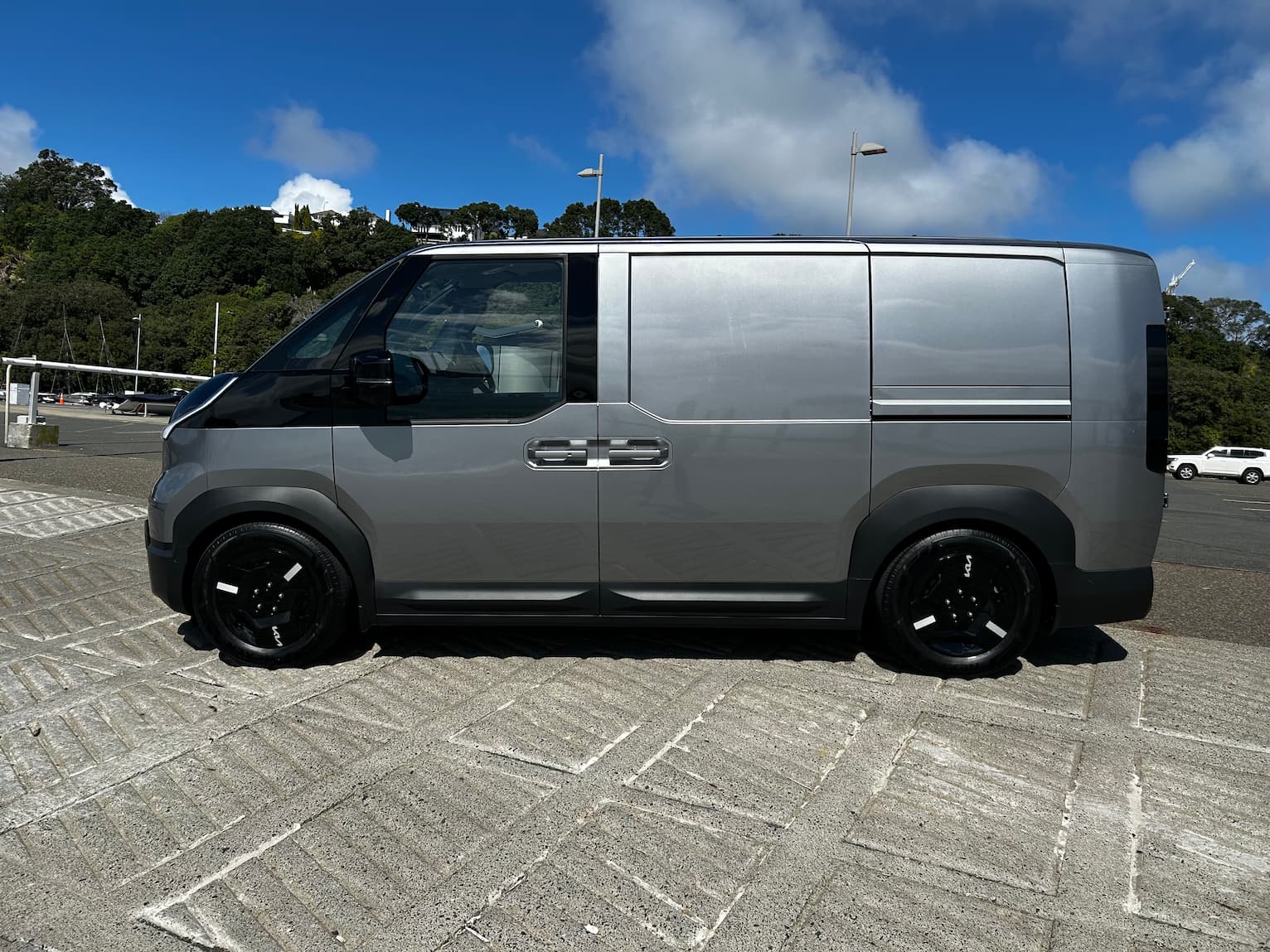
Side profile of a silver Kia PV5 electric cargo van parked outdoors on a concrete surface under a blue sky.

Kia PV5 Cargo electric van review

Allister Wade

By Allister Wade
Allister Wade is AA Motoring’s Technical Support Lead, known for no-nonsense, real-world advice backed by over three decades in the motoring industry . A regular on radio and TV, he helps Kiwis make smarter calls about car care, safety, and what actually matters behind the wheel.

05 October 2026

Throughout my career in the motor industry, I've driven almost every type of commercial vehicle available in New Zealand; from basic diesel work vans to large delivery vehicles and everything in between. I thought there weren't too many surprises left in the commercial market.

That was until I got behind the wheel of Kia's new PV5 Cargo electric van.

While countless manufacturers are focusing on electric passenger vehicles and SUVs, commercial operators have been left waiting for practical electric alternatives. The PV5 looks set to change that.

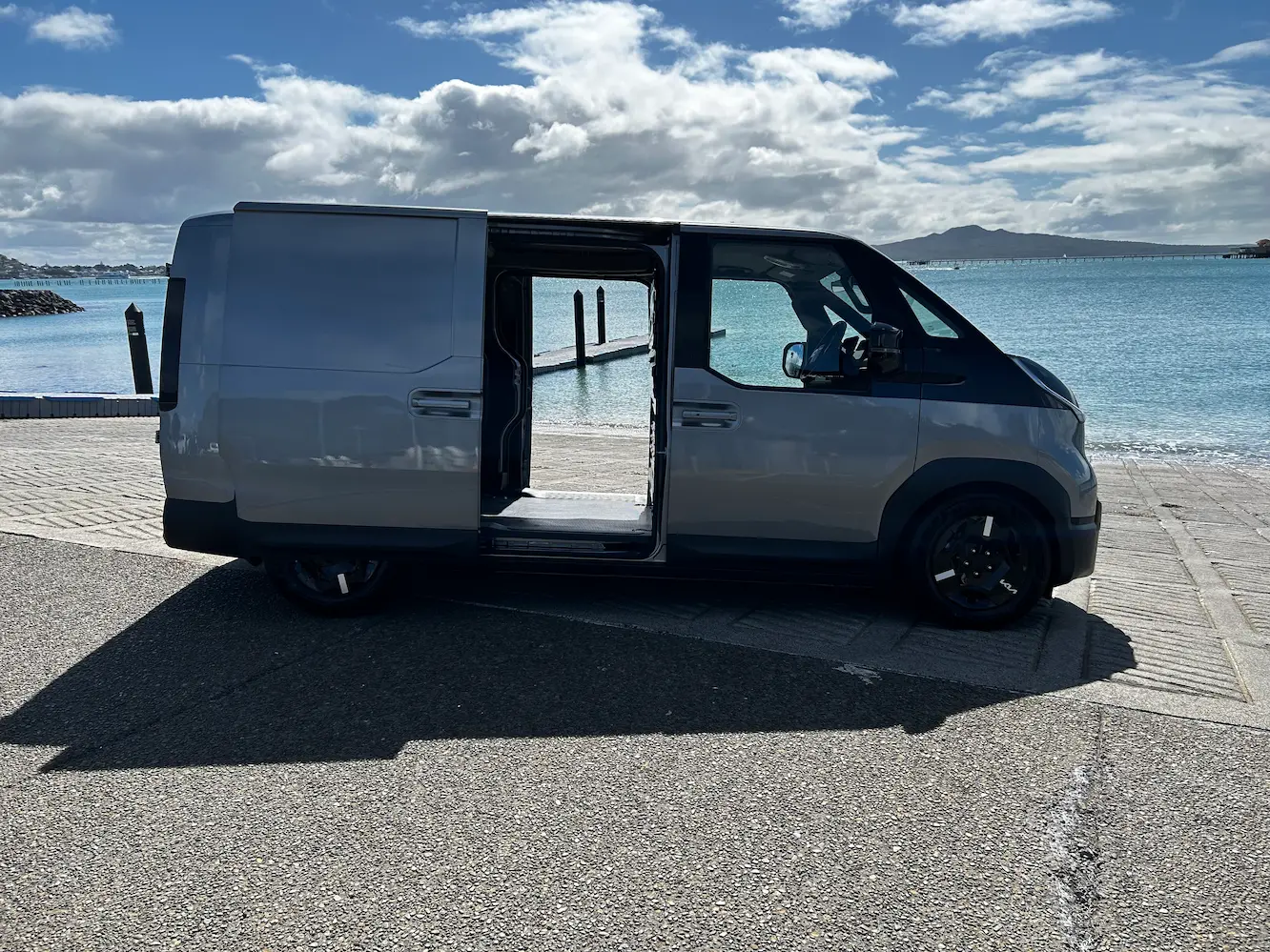
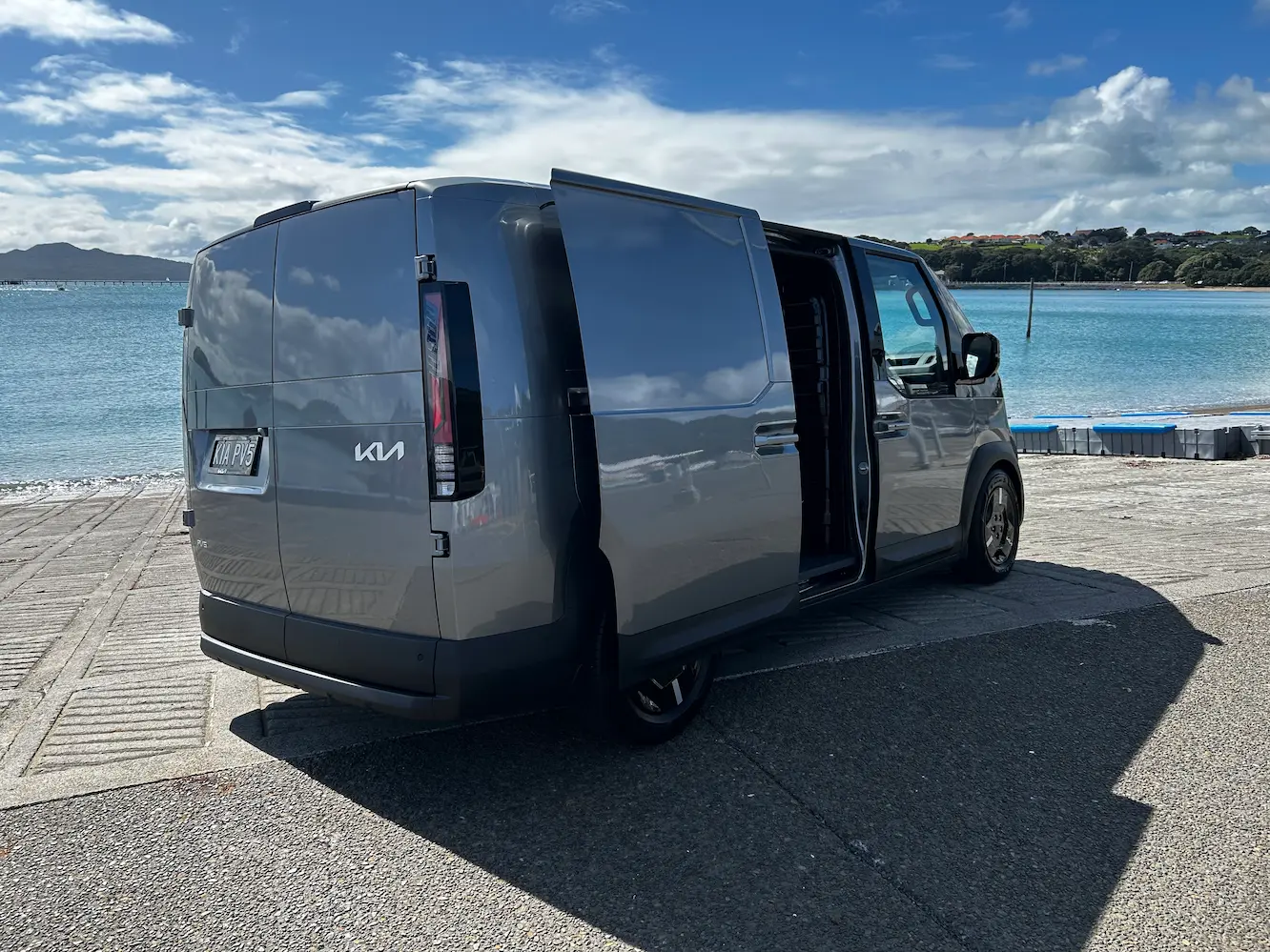
Side view of a Kia PV5 electric cargo van parked beside the water, with the sliding side door open to reveal the cargo area.

The biggest surprise? I kept forgetting I was driving a van.

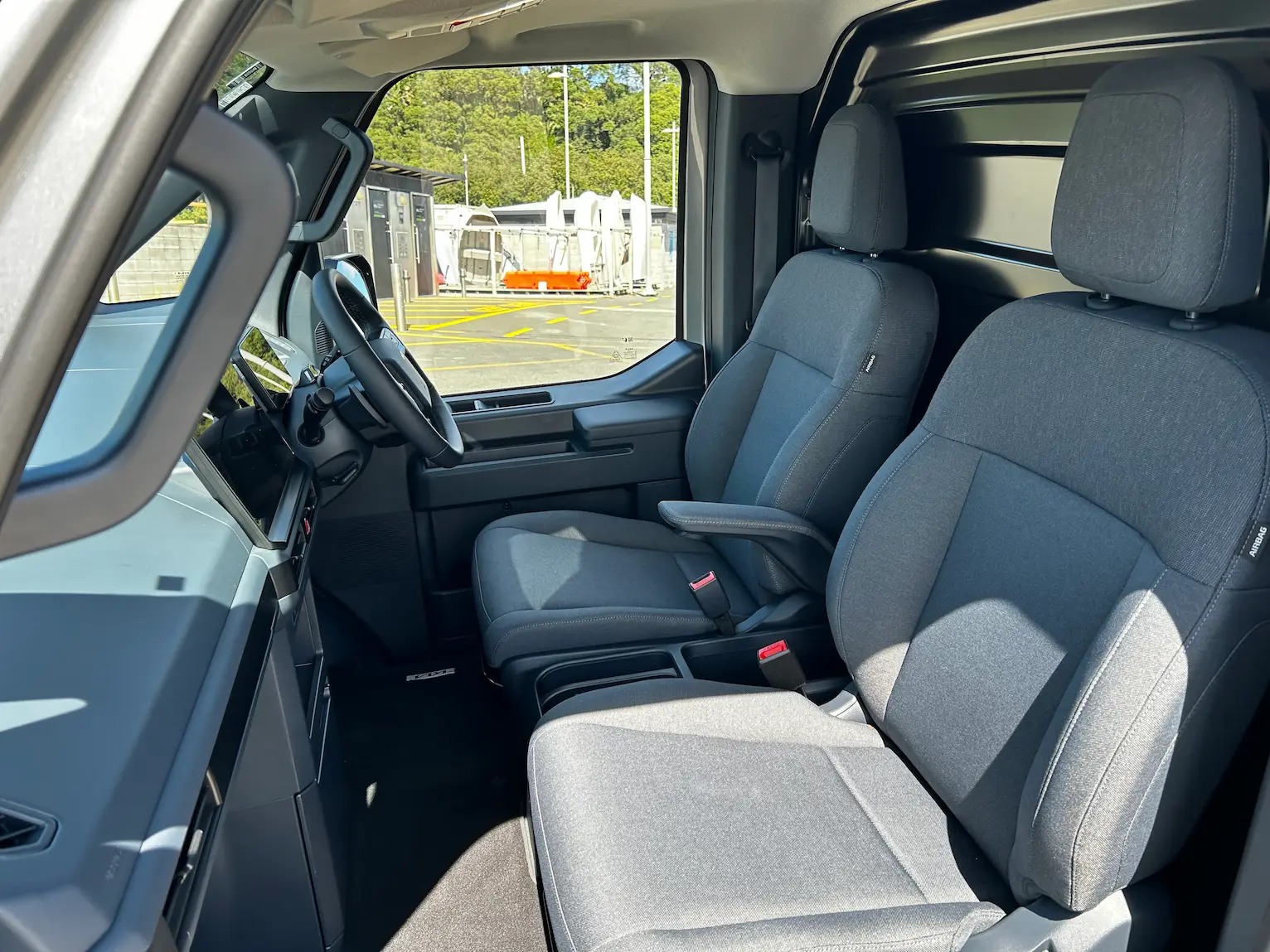
The PV5 feels incredibly car-like. The steering is light, visibility is excellent and the driving position is comfortable. Around town, it feels more like driving a modern crossover than a commercial vehicle. For tradespeople, couriers and business owners who spend hours behind the wheel every day, that will be a significant shift.

The smooth, silent performance of the electric drivetrain adds to the experience. Power comes from a front-mounted 120kW electric motor producing 250Nm of torque, driving the front wheels through a single-speed transmission. Performance is more than adequate for daily commercial duties, with instant torque making city driving and merging into traffic effortless.

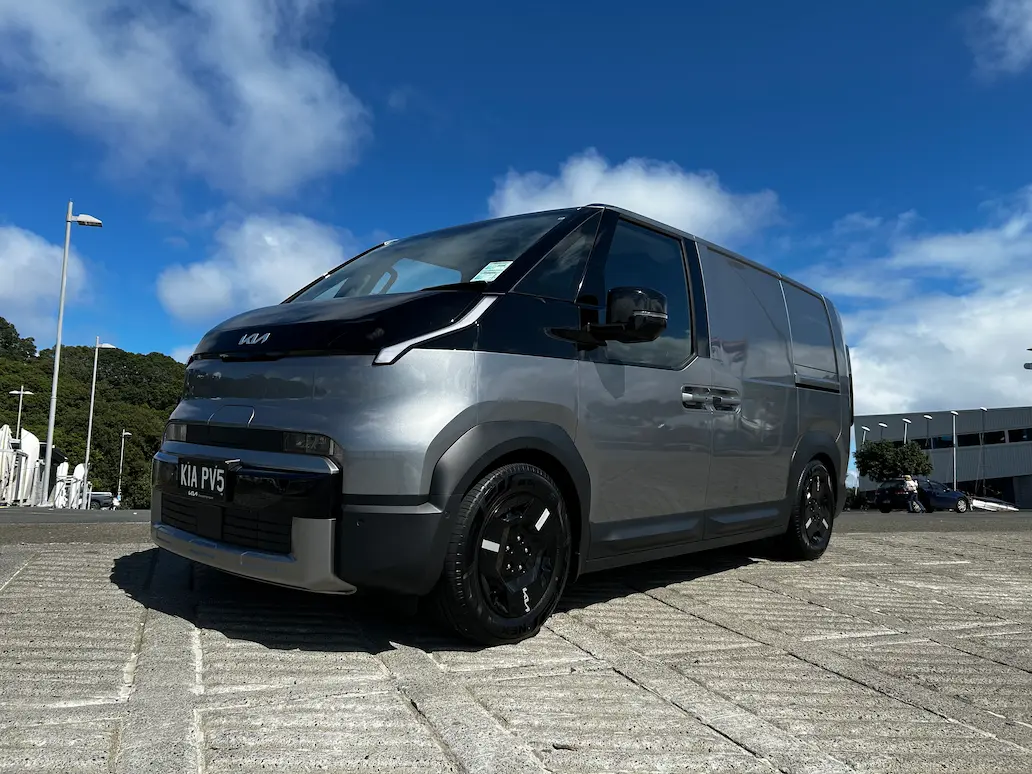
Front three-quarter view of a silver Kia PV5 electric cargo van parked outdoors under a bright blue sky.

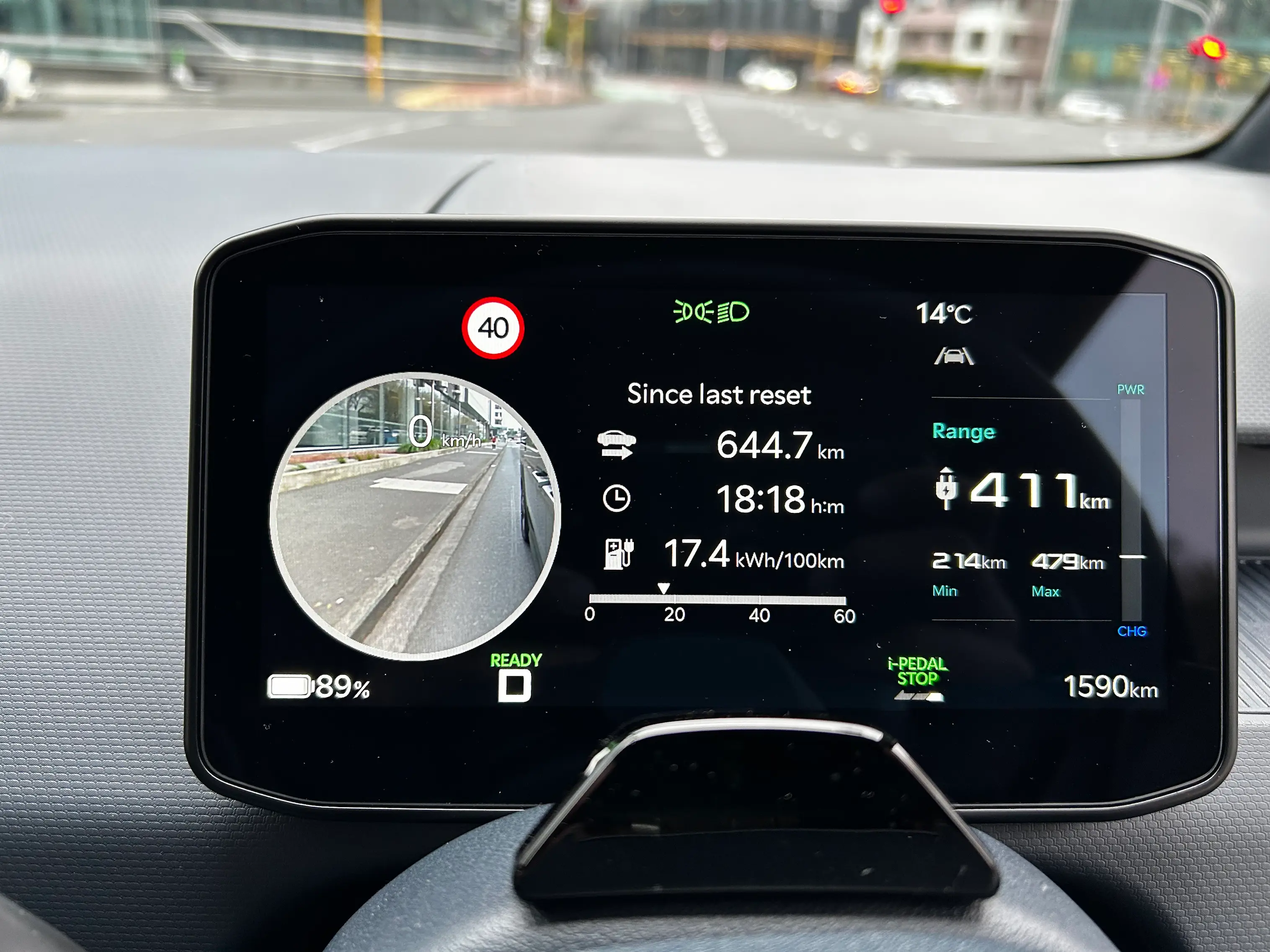
Power is supplied by a 71.2kWh battery pack, providing a claimed WLTP driving range of up to 416 kilometres. For many businesses, that's enough for several days of operation before requiring a recharge. When charging is needed, the PV5 can replenish from 10% to 80% in approximately 30 minutes with a suitable DC fast charger, helping minimise downtime.

Practicality is where the PV5 really starts to shine.

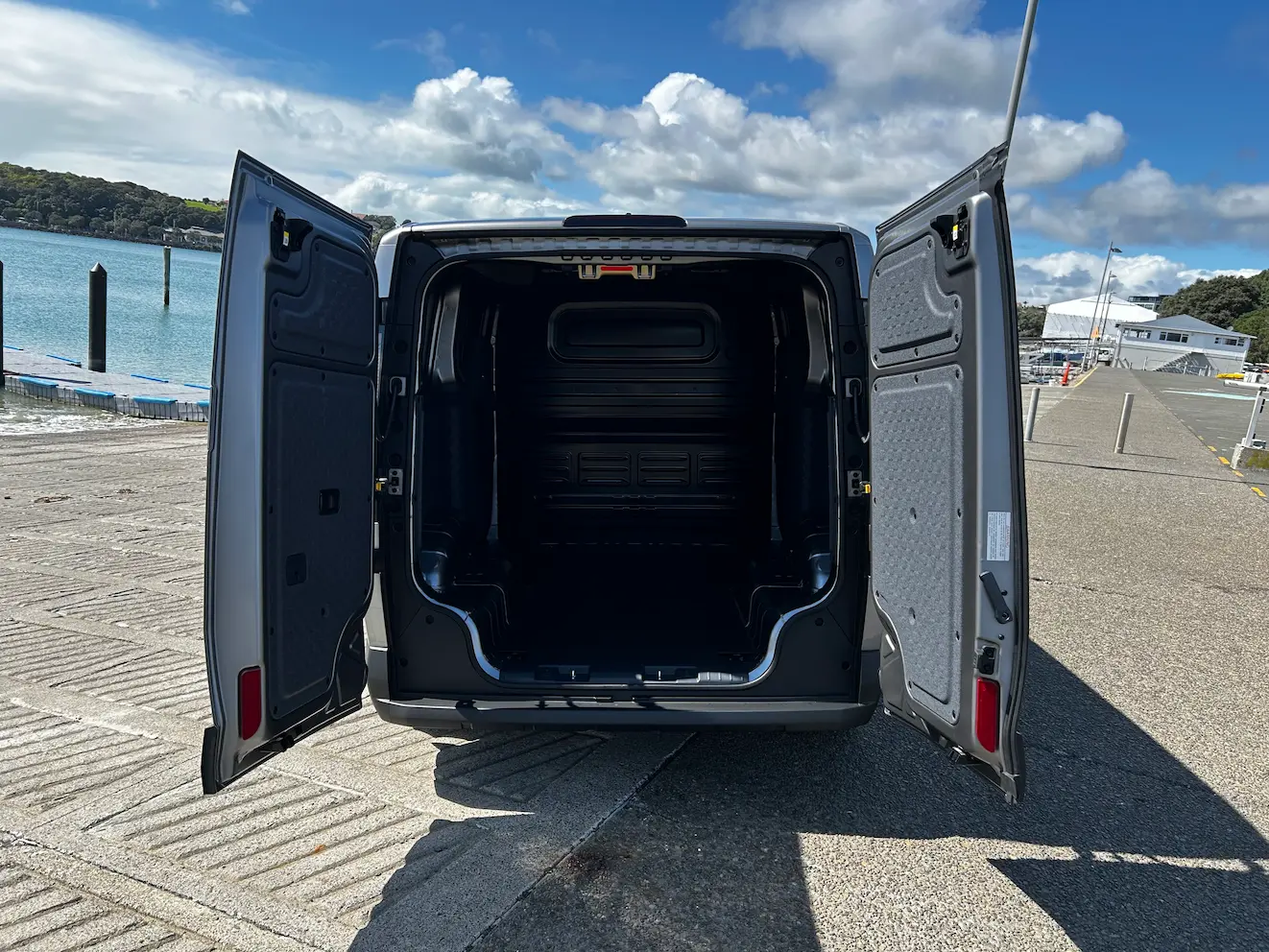
Kia has listened to what commercial operators need. One feature I particularly appreciated was sliding doors on both sides of the cargo area. Too many vans still require operators to load from one side only, which can become frustrating depending on how and where the vehicle is parked. Having access from both sides dramatically improves usability. The rear barn doors are equally practical, providing excellent access to the cargo area.

Rear view of a Kia PV5 cargo van with both rear doors open, revealing an empty cargo bay beside a waterfront.

Cargo capacity is generous, with 4,420 litres of load space and a payload rating of 690kg. Kia says the cargo area can accommodate two Euro pallets, making it a realistic option for a wide range of trades and delivery operations. Despite its substantial carrying capability, the vehicle's overall dimensions are manageable, so urban driving and parking is much less intimidating than in some larger commercial vans.

Another standout feature is the vehicle's Vehicle-to-Load (V2L) capability. For many tradespeople, this could become one of the PV5's most valuable selling points. With integrated 240-volt power outlets available both inside the cargo area and externally through an optional adapter, the van effectively becomes a mobile power station. Whether you're charging tool batteries, powering equipment on a worksite, or running temporary lighting, the PV5 offers versatility that traditional diesel vans simply cannot match.

The cabin layout is clean and intuitive. After spending plenty of time behind the wheel, it's clear the focus has been on reducing driver fatigue. Given how many hours commercial vehicle operators spend driving, this is something that shouldn't be underestimated.

Ownership costs also look promising. Service intervals extend to two years or 30,000 kilometres, whichever comes first, helping reduce maintenance interruptions. Kia backs the PV5 with a seven-year, 150,000-kilometre vehicle warranty, while the high-voltage battery receives separate coverage for eight years or 160,000 kilometres. This will provide peace of mind for businesses making the transition to electric vehicles.

Grey Kia PV5 electric van parked beside a waterfront boat ramp, with the side sliding door open and blue water and clouds visible in the background.

Of course, no vehicle is perfect.

The traditional rear-view mirror is largely redundant due to the fully enclosed cargo area, providing little useful visibility. A camera-based mirror system would have been a welcome addition. I also found it unusual that the driver's window does not lower completely into the door, something many drivers still appreciate at drive-throughs, toll booths or even scanning into a car park.

My biggest concern, however, is towing capacity. With a maximum braked and unbraked towing rating of just 750kg, some operators may find this limiting compared with conventional diesel alternatives.

Pros Cons
Drives remarkably like a passenger car Rear-view mirror is not practical
Excellent cargo space Driver's window does not fully lower
Useful V2L power capability Towing capacity may be restrictive for some users
Long service intervals

Verdict

The Kia PV5 Cargo represents a glimpse into the future of commercial transport. It combines the practicality businesses demand with the comfort and technology modern drivers expect. Most importantly, it proves that moving to an electric van no longer means compromising on usability.

For urban delivery operators, tradespeople and businesses looking to reduce running costs and emissions, the PV5 deserves serious consideration. Kia has made an excellent first step into New Zealand's electric commercial vehicle market, and if this is what the future PV7 and PV9 models will be like, the future looks very promising indeed.

Related Articles