
Meet the maker: Lof lights
02 October 2026
We chat to Sophie Poelman from Lof, a Waiheke Island lighting company making products as beautiful as they are sustainable.
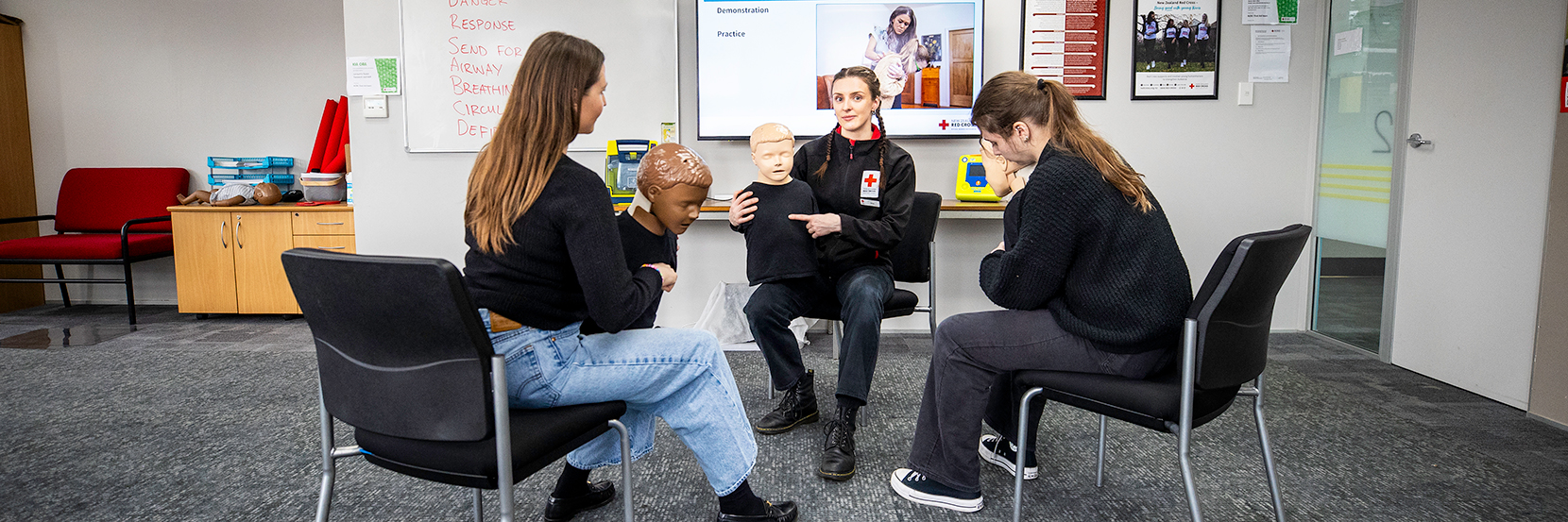
Do you know what to do in the case of an emergency with a baby or toddler? We take a First Aid course to learn some vital skills.
The people gathered in the training room represent a range of backgrounds – parents like me, expectant couples, caregivers, nannies, babysitters and educators.
We share a common objective: to build the skills and confidence to respond when an infant or young child experiences a first aid emergency, ensuring we are prepared to navigate the unthinkable.
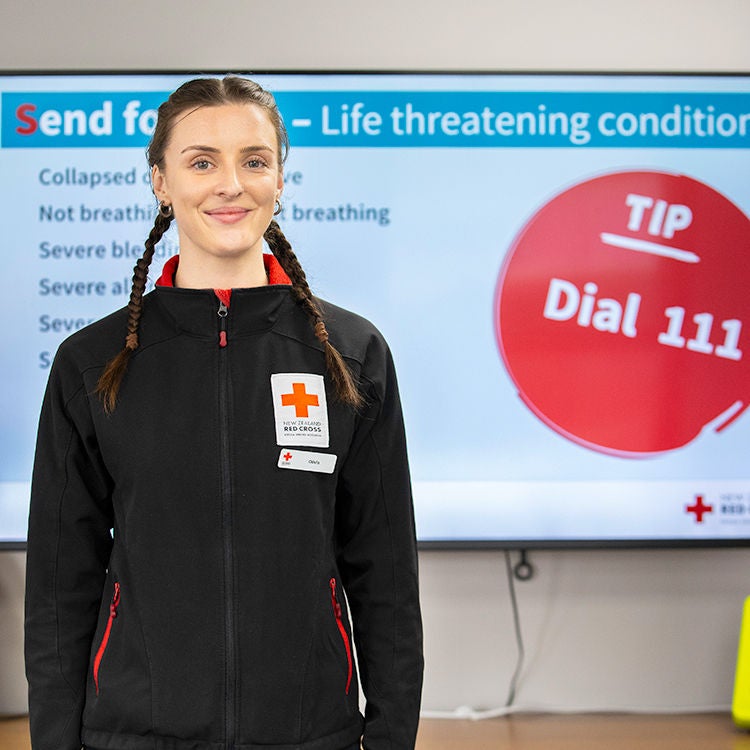
“Perhaps you’ve had your own lived experience, or it’s your worst nightmare,” says Olivia, out First Aid Instructor.
Drawing on her background in surf lifesaving and paediatric nursing, Olivia highlights the course’s relevance for parents and caregivers: “It focuses on the essential facts needed in the early years of parenthood,” she says. “It’s more tailored and provides a comfortable space to ask questions.”
The choking management module is a drawcard, addressing one of the biggest concerns for parents as their young children begin to explore new foods and objects by mouth.
Over four hours, the course delivers a child-specific framework for managing emergencies. Participants get hands-on experience including CPR, treating choking and the use of defibrillators (AEDs), alongside essential skills for handling shock, severe bleeding, seizures, fractures, burns, poisoning, asthma and anaphylaxis.
The course begins by defining first aid: immediate assistance provided by the first responder at the scene. Its core pillars are to preserve life, alleviate suffering and prevent further illness or injury. Promoting recovery is the goal but knowing when to call in professionals – a doctor or emergency services – is just as vital.
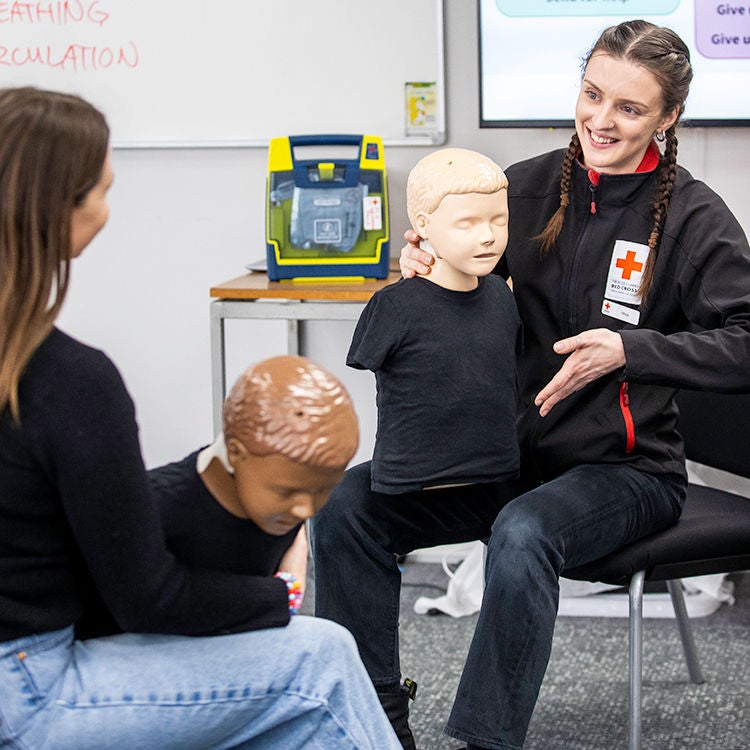
New Zealand emergency services can be reached even when dialling international numbers. Both 111 and the 0800 Healthline service now provide video calling options for better situational assessment.
On the course, we move through a response framework: assess the scene for danger, check for a response from the patient, call for help and evaluate the patient’s airway. Olivia calls the breathing assessment the ‘fork in the road’. If the patient is breathing normally, they go into the recovery position; if not, CPR is the immediate priority. While techniques vary slightly for infants and young children, the core principle of CPR remains the same: a cycle of 30 chest compressions followed by two rescue breaths.
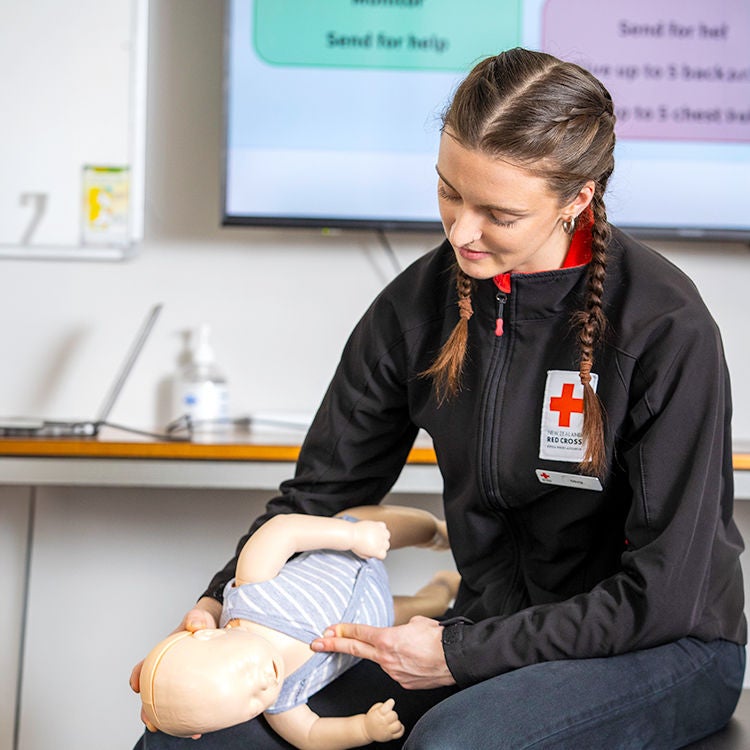
If a child is choking but can still cough effectively, encourage them to keep coughing. If they are unable to speak, cough or cry, call 111 and give up to five sharp back blows, checking after each one to see whether the obstruction has cleared. If the back blows are unsuccessful, give up to five chest thrusts, again checking after each one. Continue alternating back blows and chest thrusts while the infant or child remains responsive. If they become unresponsive and are not breathing normally, begin CPR.
Practicing these life-saving techniques on infant and child CPR manikins is definitely confronting; if it gets too overwhelming we’re encouraged to take a breather.
“In an ideal world, you would never need to use anything you have learned today,” Olivia concludes. Yet, as I leave the session, my trepidation has been replaced with a quiet confidence. While the unthinkable remains just that, I now have the essential tools in my parenting toolbox to act with clarity and purpose if they are ever required.
AA Members save 15% when booking first aid training with New Zealand Red Cross.
The AA has also partnered with New Zealand Red Cross to create a range of vehicle, home and travel first aid kits; see shop.aa.co.nz or your local AA Centre. AA Members receive a 10% discount on kits.
This story is from the Spring 2026 issue of AA Directions magazine.