New Zealand's road safety results
19 November 2026
The AA's Annual Road Safety Review looks at how road safety has changed over the past decade.

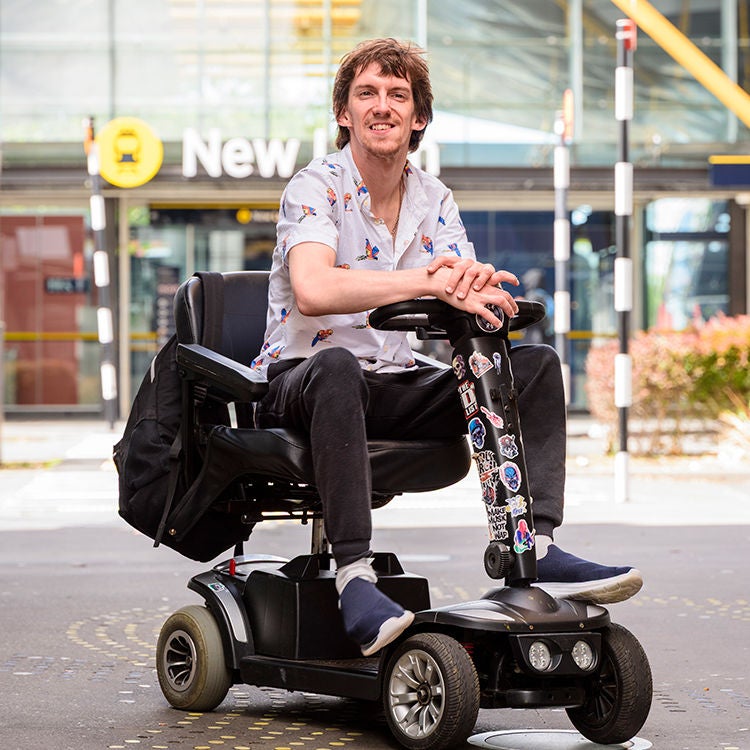
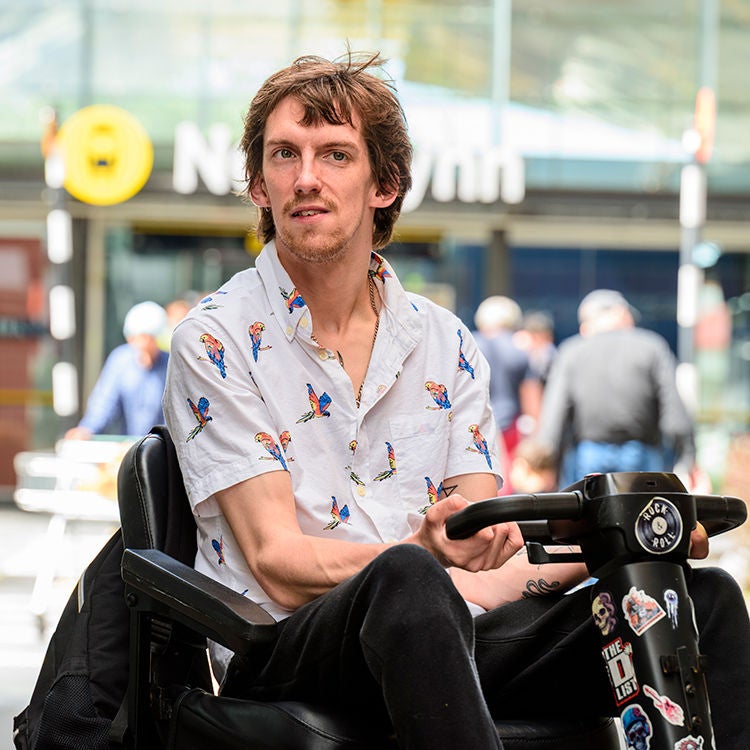
For Aucklanders who use mobility scooters or wheelchairs, accessible public transport remains inconsistent despite ongoing improvements. Disability advocate Marlo Schorr-Kon shares his experience navigating Auckland’s bus network, where uncertainty around boarding and scooter access has pushed him towards rail travel.
As a regular Auckland commuter with a disability, I’ve struggled using buses. I live in Titirangi and volunteer part time at 95bFM, a radio station on Karangahape Road.
Prior to the City Rail Link opening, my commute would be a bus to New Lynn, followed by another bus to Karangahape Road. I used to drive up the road on my mobility scooter to the bus stop. I don't do this anymore as I can't rely on the bus to a) stop for me, and b) accommodate my mobility scooter, even though it’s within the size requirements set out by Auckland Transport (AT).
I now catch the train to Karanga-a-Hape Station as I can rely on trains to accept my mobility scooter.

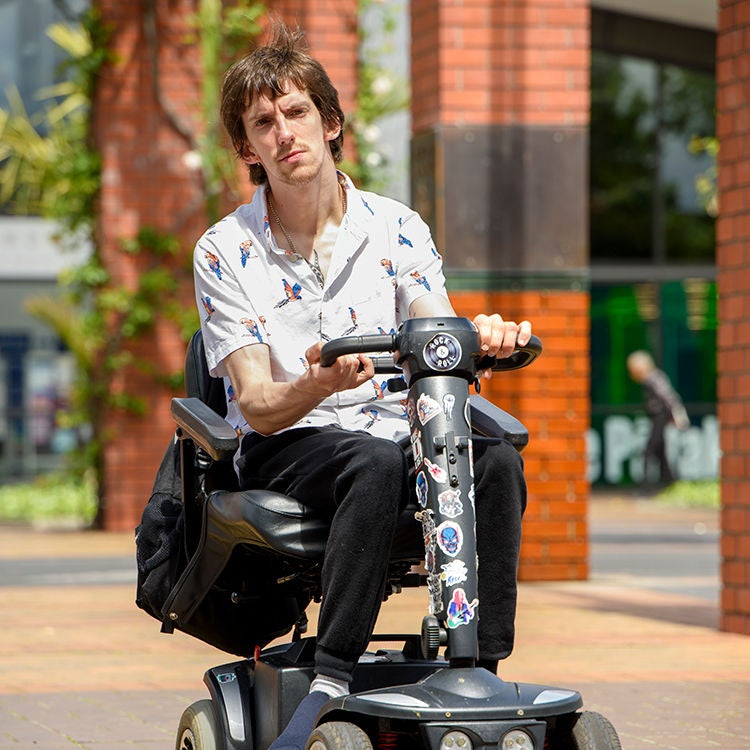
Even if a bus driver lets me on board with my scooter, it can be very difficult to park it out of the way of other passengers. It sometimes takes a while to manoeuvre it into the mobility area, which can be embarrassing as I am aware that I am holding up the journeys of everyone else on the bus.
Looking into how it is for others getting around Auckland, I found that using buses is problematic for many in the disability community. So much so that a call has gone to Auckland Transport's bus drivers to be held accountable for not allowing legal mobility aids on their buses.
Around 91% of AT’s buses are wheelchair accessible, and bus drivers are required to allow passengers on board with mobility vehicles that fit within the size requirements.
An AT spokesperson says they are not aware of any incidents of wheelchair users being refused entry onto buses, however, there are no written legal requirements around letting wheelchair users on buses.
“We have designed our buses to allow people with wheelchairs to be able to access public transport just as any other person has access to public transport.
“We have worked very hard to make sure all public transport is accessible for anyone that wants to use it, and some of our new electric buses, such as those used on the Outer Link service, have twice as much room for wheelchairs as some previous models.”
Auckland Transport says incidents where a driver has discriminated against anyone trying to access public transport are addressed with the operator and if it is found to be accurate, then that would be taken seriously.
Former AT bus driver, Greg Vandyk, says drivers do receive some specific training: “But it generally comes under the rubric of providing good customer service to all commuters,” he says.
“Operation of the ramp is usually the most significant difference between regular passenger and disabled passenger. However, once a driver is certified and is out driving it is difficult to monitor the behaviour of each and every driver.”
Greg says bus companies employ 'secret shoppers' on a random basis to check up on individual drivers and routes.
“As a driver you never know when they will appear so it encourages a driver to be consistently courteous to all passengers. But, as you can imagine, this method is not foolproof.
“The problem as I see it is that many drivers are reluctant to get out of their seats, which may be something to do with their overall fitness level as well as having a mindset that their vocation is first and foremost as a driver.”
Greg says although management will hammer home that the timings should never take precedence over customer service, drivers are aware that a late bus is an unpopular bus.
“Pressures of time may contribute to a driver's failure to stop and assist disabled passengers. I'm not making excuses, only trying to explain.
“I'm sure every driver has, at one time or another, driven past an occupied bus stop without realising it. Management understands this, so the odd mistake can be forgiven. Persistent failure, however, will result in disciplinary action and the best way to catch this is if the public gives feedback to management who can then monitor or investigate the driver concerned.”