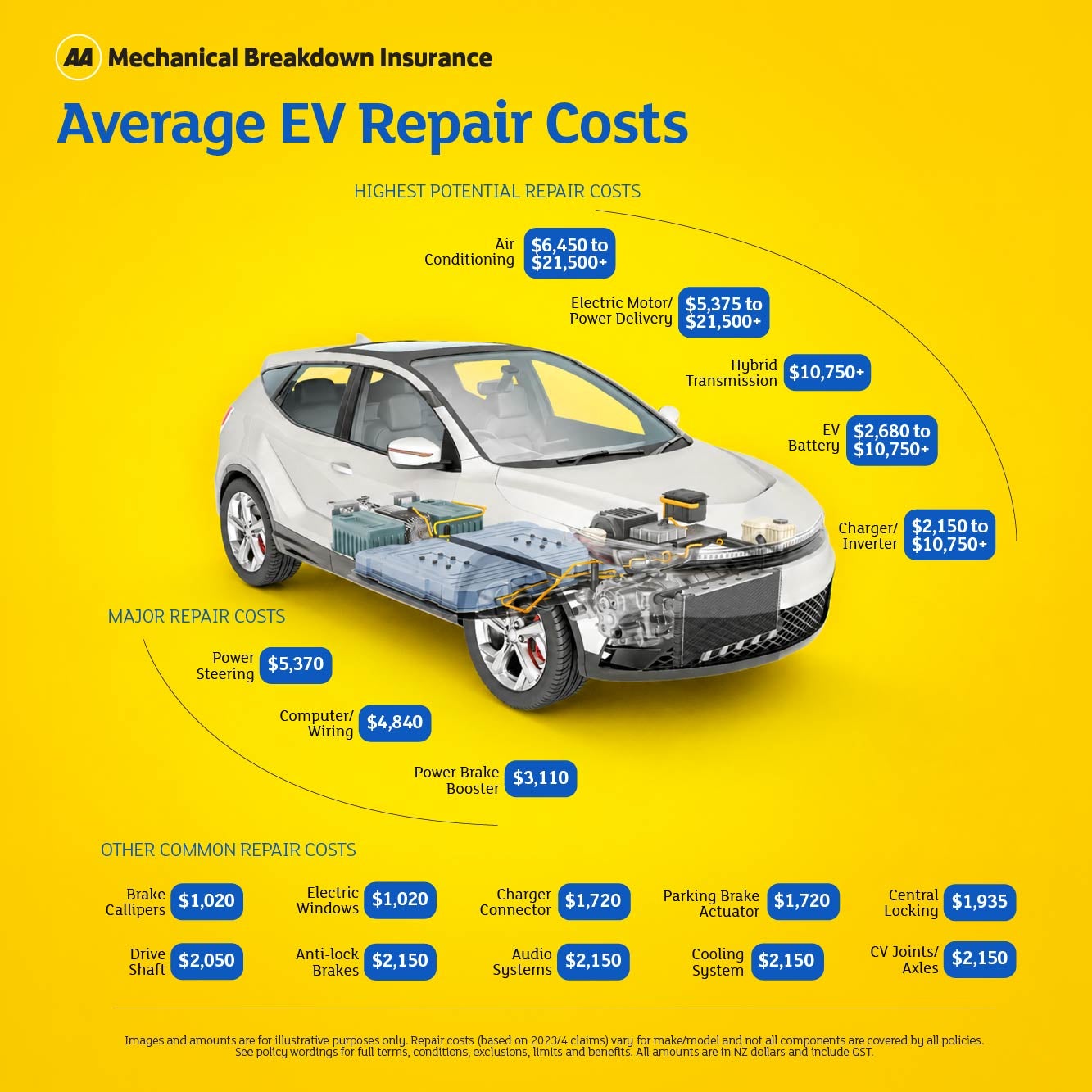
While EVs typically have lower running costs than ICE vehicles, it’s important to consider ongoing or future costs. If you’re planning to charge your EV at home, there may be initial costs in setting up home-charging infrastructure, and you should consider how much an EV is likely to impact your power bill each month.
Road User Charges (RUC) are another cost to factor in for EV ownership in New Zealand. Light battery electric vehicles (BEVs) must pay RUC based on distance travelled, currently $76 per 1,000km, so a driver covering 15,000km a year would need to budget around $1,140 annually, plus any transaction fees. These charges can reduce the running-cost advantage of an EV, so it’s worth including them when comparing a used EV with a petrol or hybrid vehicle.
With no oil changes required and fewer moving parts, EVs have a range of benefits when it comes to servicing, but they do require some specialised services.
An AA EV service includes a 32-point check designed specifically for EVs. Covering fluid levels for cooling systems, wheel bearings, brakes, air conditioning, filters, tyre condition and more, you can be assured your EV is in top condition and any issues that need attention will be quickly identified.