Chilling in Queensland
20 October 2026
Food, art, sunshine and beaches are all on offer in Brisbane and the Gold Coast.
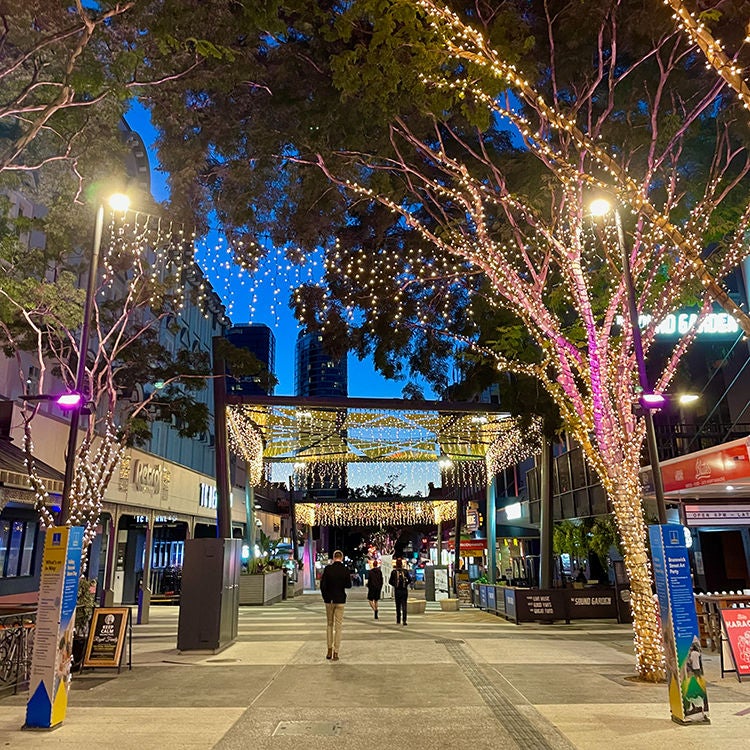
Fortitude Valley in inner-city Brisbane is undergoing a renaissance. Streets that were once too dodgy to walk at night are now gentrified, lined with tidy Queenslander-style houses. On the über-chic James Street, glass-fronted boutiques stuffed with ruffles and sequins and beautiful expensive things sit alongside huge Moreton Bay fig trees encrusted in fairy lights.
The best way to explore a new city is on foot or, for a more efficient option, e-scooter. Having never ridden one before, I find myself walking the streets feeling envious of people happily, speedily whizzing past me. So, with no small amount of trepidation, I download an app, scan and step aboard the next orange scooter I spot curbside. I wobble down the footpath white knuckling the brakes until I find my groove. Soon, I’m covering ground at twice the speed.
From James Street, I zip to New Farm, a leafy, pretty suburb on the edge of the Brisbane River. On a crisp winter day New Farm Park is bustling with prams and cyclists and dogwalkers. People sit lizard-like in the sunshine. A cacophony of crows plays sonic ping pong between the trees.
From New Farm I tag off my scooter and board one of the many ferries crisscrossing the river, shuttling people from berth to berth. We cruise past the feet of tall apartment buildings and office blocks in the central city and under the impressive Story Bridge.
Like Fortitude Valley, Howard Smith Wharf at Story Bridge has been recently revamped as a dining precinct. Here, the star of the show is the vast Felons Brewery. Stretching for nearly a kilometre along the wharf, the brewery has multiple dining and drinking areas – from boardwalk bar stools to astroturf lawns dotted with bin chickens and, on Wednesday evenings, beer-drinking yogis.
Opening in 2018, Felons’ claim to fame – aside from their tasty beverages – is as the brewery that ran out of beer. On their grand opening weekend the brewers blushingly admit they underestimated the scale of the crowds who literally drank the premises dry.
The riverside promenade snakes along wooden boardwalks and paved paths, winding past ferry berths, parks, restaurants and cafés. It’s easy to visualise Maiwar (the Brisbane River) as the serpent from Aboriginal legend, twisting below skyscrapers, carving its way towards the sea.
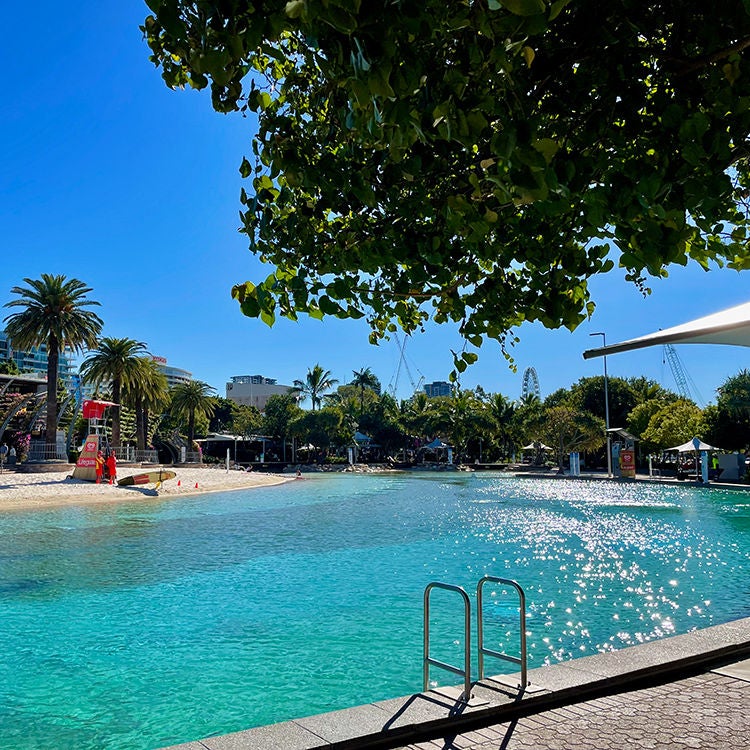
At Southbank, the white sand and jewel-like tones of the human-made lagoon at Streets Beach look deceptively tropical on a chilly afternoon. One hardy child splashes in the shallows, but the lifeguards don’t have much to watch today besides seagulls.
From the expansive cultural precinct at Southbank, Black Card runs walking tours that explore the city through an indigenous lens. Cassy Saunders leads us on an eye-opening and often sobering journey, taking in contemporary Aboriginal art and digging into the history behind each piece.
Some of this history, riddled with appalling stories of European colonisation, seeps uncomfortably close to the present day. Gavin Fenelon’s riverside sculpture Cell tells how Aboriginal girls were removed from their families to be trained as servants, stripped of their culture, their language and even their names. This was as recently as the 1970s.
Outside the main entrance of GOMA – Brisbane’s gallery of modern art – we admire Tow Row by Judy Watson, an Australian Waanyi artist siting pride of place. It’s a traditional Aboriginal fishing net, made from rope and dipped in bronze. Organic shapes and indigenous heritage preserved for all time.
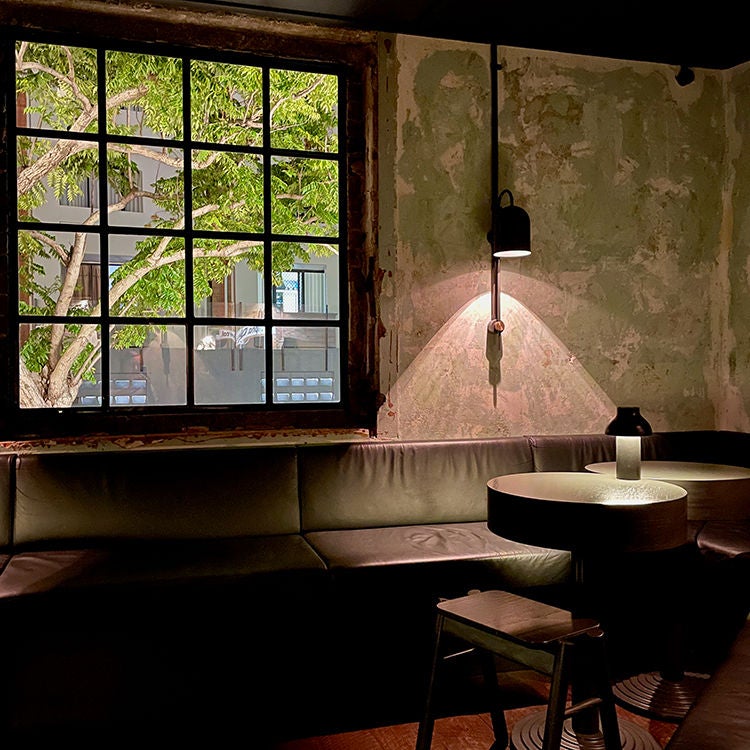
Later, I find Agnes. Tucked on a side street in a converted brick warehouse, Agnes restaurant is dark and intimate. Here, there is no oven, no gas and no electricity for cooking, just fire. I choose charred cucumbers and hay-roasted mussels with wilted sweet potato leaf. The flavours are innovative, surprising, unlike anything I’ve experienced.
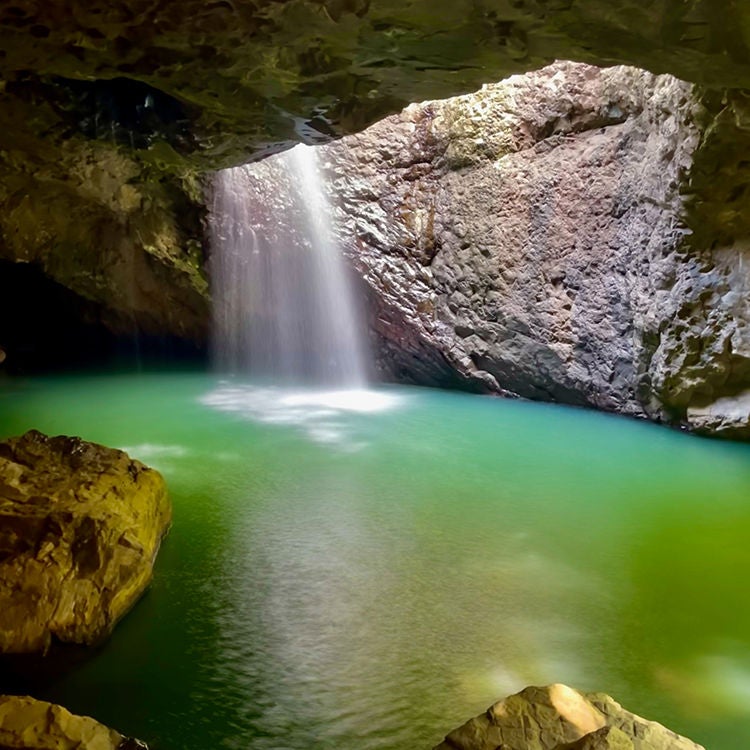
Having had my fill of cityscapes, I venture south from Brisbane to the Gold Coast hinterland, driving through the sleepy rural settlements of Numinbah Valley and on, through Springbrook National Park, to Natural Bridge.
An unusual rock formation in the base of a river valley, Natural Bridge is formed by the stream carving its way through the roof of a large glowworm cave, forming a waterfall that spills into deep green water. On a cool morning no-one else is around and I absorb the stillness of this magical spot. Birdsong, like crystal water drops, rings through the trees.
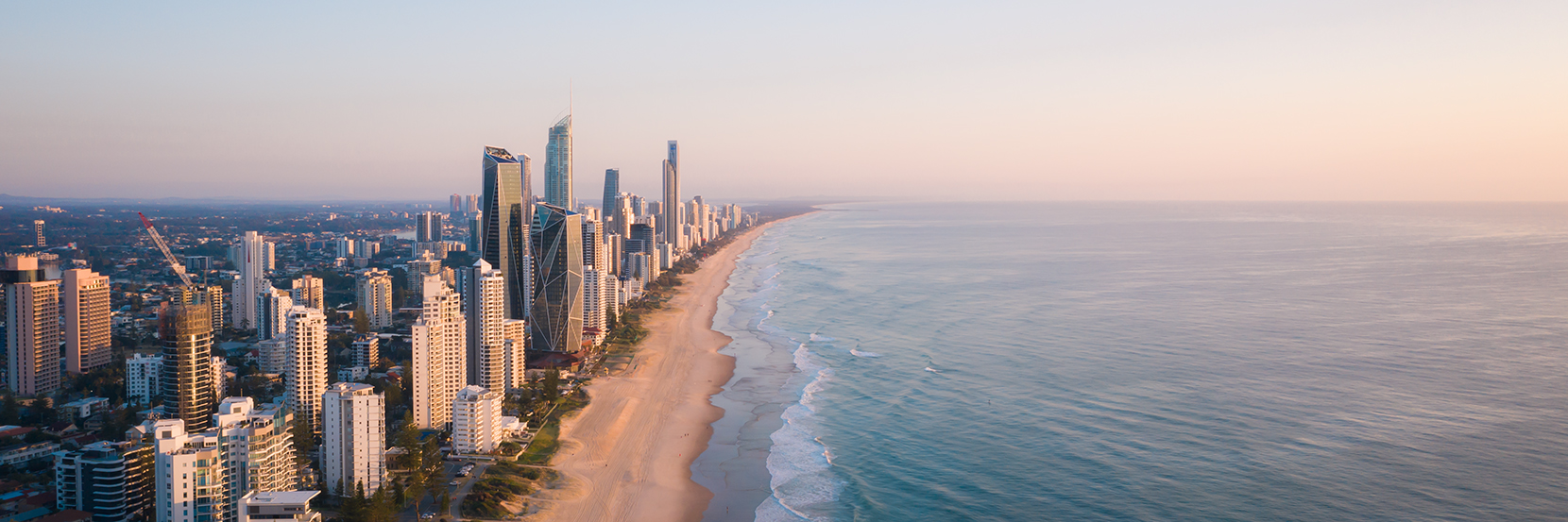
Nearby, Scenic Rim is aptly named – a territory defined by the edges of an ancient caldera, where the road coils around steep, eucalyptus-clad hills. From the ridge, the green gum forest gives way to the glittering shards of the Gold Coast’s skyscrapers beckoning irresistibly on the horizon. Beyond them, the ocean; blue and forever.
Close-up, the Gold Coast is like Mount Maunganui on steroids. Bustling, vibrant and unashamedly flashy. It’s a collection of resort towns filled with sun seekers, party people and holidaymakers. There’s a hint of recklessness in the air. People are here for a good time, not a long time. YOLO.
In Surfer’s Paradise, I visit HOTA Gallery – the largest public gallery outside a capital city in Australia – which opened in May 2021. Featuring colourful, contemporary and thought-provoking works in a sleek building, it’s worth the time spent indoors.
Of the many towering structures that march along the Queensland Coast, the Q1 building at Surfers is the tallest. Higher than both the Eiffel Tower and the Empire State Building, it's officially the tallest residential building in Australia.
Of course, the best way to appreciate this is from the top. Donning a sage-grey jumpsuit and complicated harness, I join a Sky Climb tour to the tippy top of the tower. The actual walk is a short distance – just a 40m climb up a set of metal stairs to the viewing platform and back down the other side – but the pace allows plenty of time to absorb the outstanding views.
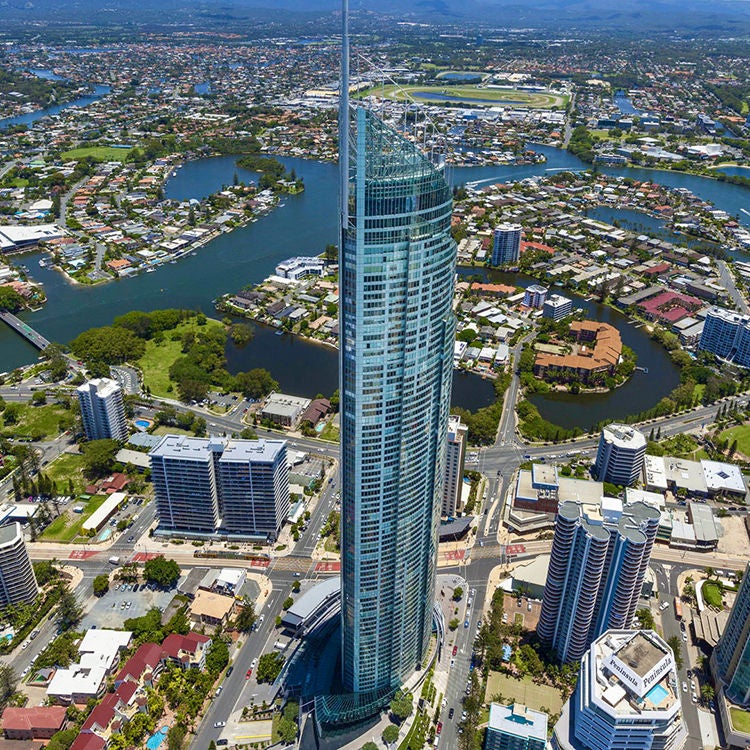
From the top you can see 86 kilometres of coastline – south to the NSW border and north to South Stradbroke Island; the furthest you can see without flying.
Directly below is the complicated network of canals and human-carved waterways, on the other side, that magical golden coast. Even from this height, the sea is so clear I can see to the bottom. It’s far too tempting to resist.
Back on solid ground, I make a beeline for the beach. Kicking off my shoes, the sand is like cool silk under my winter-soft feet. Nearby, implausibly tanned players in small scraps of lycra compete in a beach volleyball competition. I sit in the warm sunshine while saltwater dries to a film around my ankles and gaze to the coastline that curves to Coolangatta in the distance – the end of the Gold Coast.
Whether you're heading overseas for a beach escape or a business trip, our travel insurance can cover you for the unexpected.
From medical emergencies to lost luggage and trip cancellations, we have a range of plans and cover variations to choose from.