Off the map in Fiji
07 October 2026
We take a self-drive adventure to explore the hidden gems of Fiji.
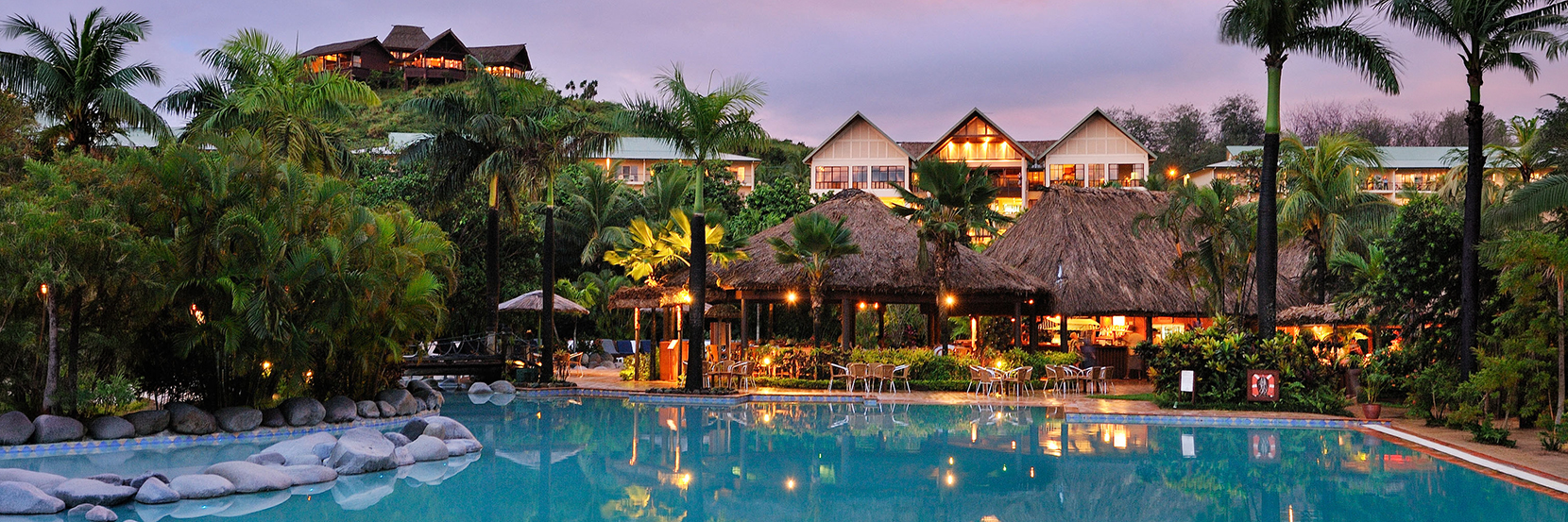
We needed a map. As we were driving from the airport in our rental car, I’d tried to access the navigation app recommended for Fiji but I hadn’t downloaded it properly. We needed a map. Thankfully, we found First Landing Beach Resort easily enough. We unpacked into a right-on-the-beach villa and slid into its little private pool before heading out into the dark to find a meal.
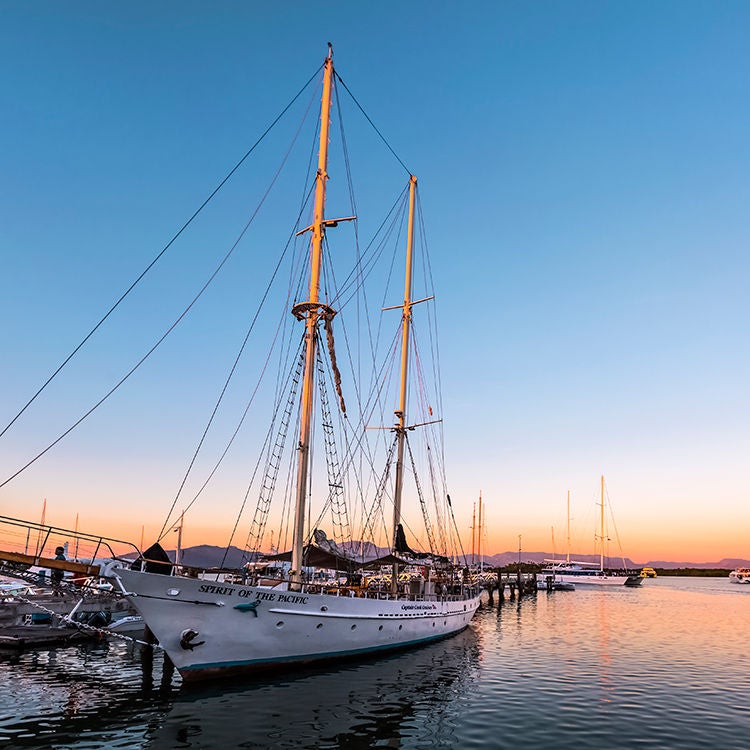
The Boat Shed was actually really close to where we were staying but it took some unnecessary driving around to realise that. Hungry and slightly cross, my mood was quickly shifted at our table that overlooked Vuda Marina; a sprinkling of mooring lights danced in the tide. The music playing was just right and the food was good. Sailors from yachts moored nearby had gathered to talk weather. It turned into an interesting and memorable evening.
Tropical gardens buffered the villas and suites at First Landing, and the beach, though tidal, was ideal for kayaking and walking. We’d have happily stayed on but we were on a mission, so early the next day we hit the road. And we needed a map.
We headed for Lautoka City about an hour’s drive north. Before reaching town, we detoured to Lautoka Port where piles of woodchips and massive corrugated iron sugar stores cast shadows over fleets of colourful ferries and fishing boats.
In the city, we parked and wandered, instantly fascinated by the produce market. Piles of pineapples, chillies, mangoes, crabs, seaweed, taro – everything and anything – weighed down trading tables and spilled out of baskets. Outside, buses lined up to take market shoppers and their bags home. Most locals depend on public transport – we noticed buses stopping wherever someone stood on rural roads – so direct connections with the best place to buy fresh food made sense.
We walked up and down Lautoka’s shopping streets, distracted from our map hunt by shops selling locally printed fabrics, electronics, jewellery. Lights were going up to celebrate Diwali.
The bookshop couldn’t help, so we headed to the library. It reminded me of my childhood public library – big wooden tables and shelves, racks laden with magazines, papers and books, displays of maps and historic photographs. For a while we poked around in the cool, then took the librarian’s advice to visit the Lands and Water Resource Office.
Armed, finally, we drove up toward Ba, following the coastline. We travelled through little villages decorated with bright pink bougainvillea and multi-coloured houses; past roadside stalls selling peanuts and bananas.
Lunch was healthy, locally grown organic food at Tukuni Restaurant where we chatted to the founder of the encompassing Friends of Fiji organisation. Shashi Kiran established this complex in response to Fiji’s civil unrest several years ago. She wanted to find common ground for the divided community. The organisation encourages farmers to shift to organic methods, educates them about healthy diets and teaches traditional horticulture.
As well as serving good food in the bright and airy Tukuni, the Friends run courses for locals, schools and even tourists interested to learn beekeeping, compost-making, traditional cooking and recycled paper-making.
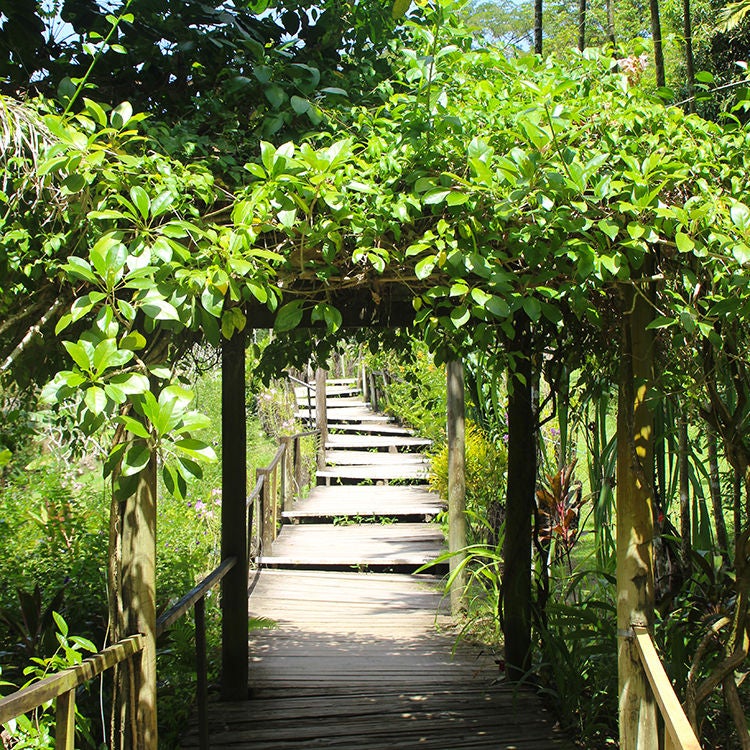
The Garden of the Sleeping Giant was our next stop. Thousands of orchids of all colours and sizes lined paths and crowded slopes. We wandered through lush green tunnels of plants, down into a shady mountain valley to ponds with frogs where the gardens backed onto dense tropical jungle.
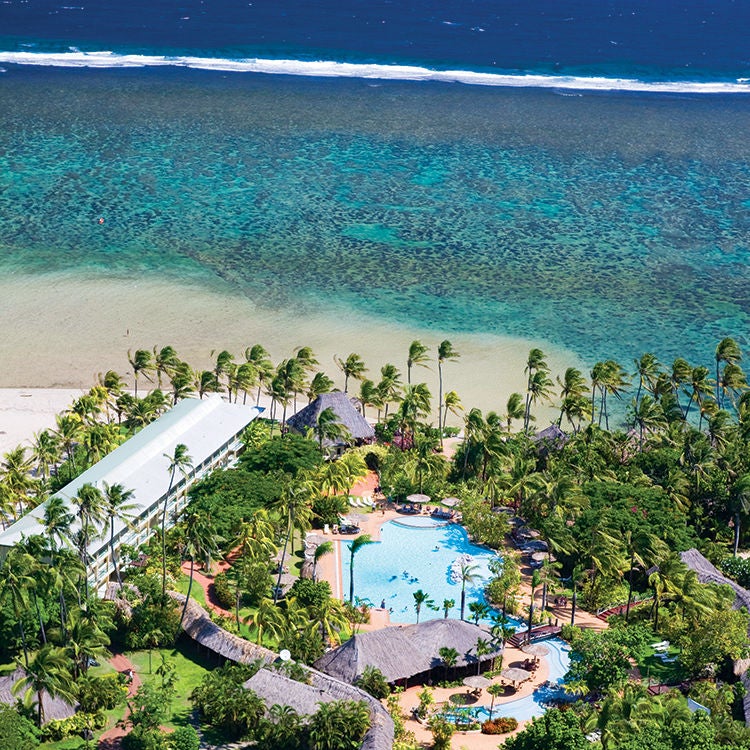
Having a rental car meant taking side trips to these spots was easy. Within a few days, we were able to experience many different sides of Fiji. That second night, we checked into Sofitel Fiji Resort & Spa on Denarau Island which was like stepping into another world entirely. And in the morning we headed south, swinging off the main Kings Road to snoop around isolated backroad pockets in search of beaches.
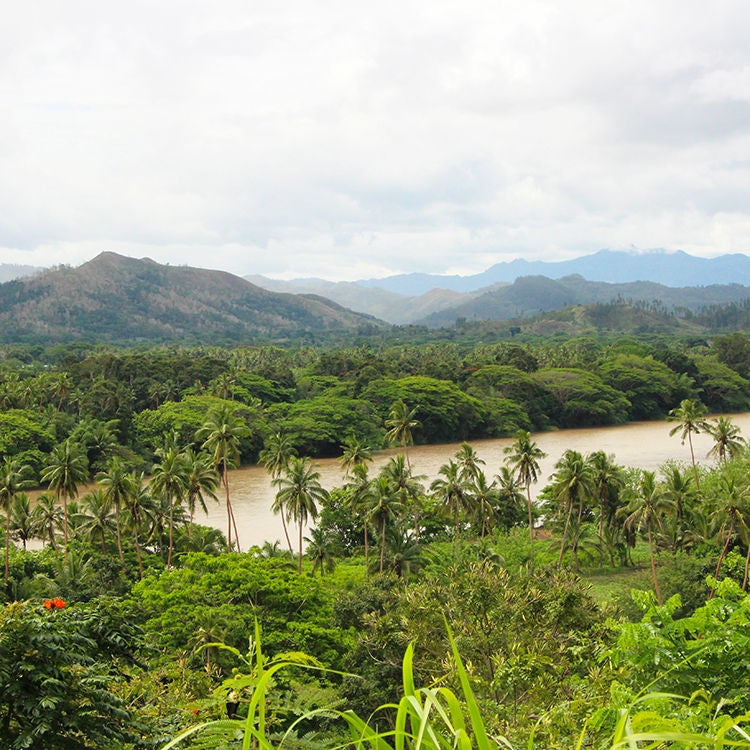
The landscape changed to villages with sprawling schools, churches, mosques, signs of Krishna and red prayer flags. Now and then, views of the sea. Now and then, wild horses. We drove over rough roads made slippery in the rain, pulling over for wide loads of sugar cane carried on tractor trays.
After a couple of hours, we reached the Coral Coast and stopped at a café across the road from a beach obscured by rain. Soon after, we found The Outrigger – our base for the next two nights – and settled into a comfortable, welcoming bure before indulging in a spa treatment on the hill high above the resort. A Bobo Fijian massage was exactly what I needed.
Several New Zealanders we met at the Outrigger were jealous of our rental car. Like them, we headed to Sigatoka for a look around, but we were able to easily explore further. The town of Sigatoka has a photogenic produce market, souvenir shops and interesting architecture. But what really intrigued us was the road following the river, winding through fertile valleys, past farms and gardens into mysterious-looking hills.
Another river road took us to Tavuni Hill Fort, a site overlooking the river that was occupied by around 600 people until the 1870s when Fiji’s tribal wars ended. Remnants of houses, gardens, ovens and defence walls are still visible. Our guide pointed out a killing stone as evidence of sacrificial rituals and cannibalism.
Thank goodness for the map we thought, then – and the next day – when we headed back to Port Denarau for our last night in Fiji. Once settled into our Palms Apartment, we walked two minutes to the marina for lunch with views of big yachts being loaded and unloaded and holidaymakers queuing for island transfers. There was excitement in the balmy air, adventures were being launched. With ours coming to an end, we watched with envy.
Whether you're heading overseas for a beach escape or a business trip, our travel insurance can cover you for the unexpected.
From medical emergencies to lost luggage and trip cancellations, we have a range of plans and cover variations to choose from.