What happens to EV batteries at the end of their life?
28 July 2026
We investigate the problems and opportunities for EV battery recycling in New Zealand.

We investigate the impact of data-gathering technology in our cars.
Today’s modern vehicles come with a suite of technology designed to enhance driver safety and convenience. Think voice activation, driver facing cameras, infotainment preferences, location services and vehicle diagnostics. If you’re using your car’s app, this can also mean providing access to your personal contact details. All this technology generates a large amount of data, not just about your vehicle, but also about you as a driver.
So, what information is being collected and who can access it? Does this mean your car is spying on you?
Our cars are becoming part of the cyber-physical environment. Rather than think of our vehicles simply as a mode of transport, we need to shift our perspective to view them in a similar way to our cell phones.
“Vehicles are no longer just machines,” says Warren Willmott, General Manager of BYD New Zealand. “They are becoming intelligent platforms; connected, responsive and constantly improving.”
Industry forecasts suggest that 95% of new vehicles sold in Australia will be internet-enabled by 2035 and New Zealand won’t be far behind.
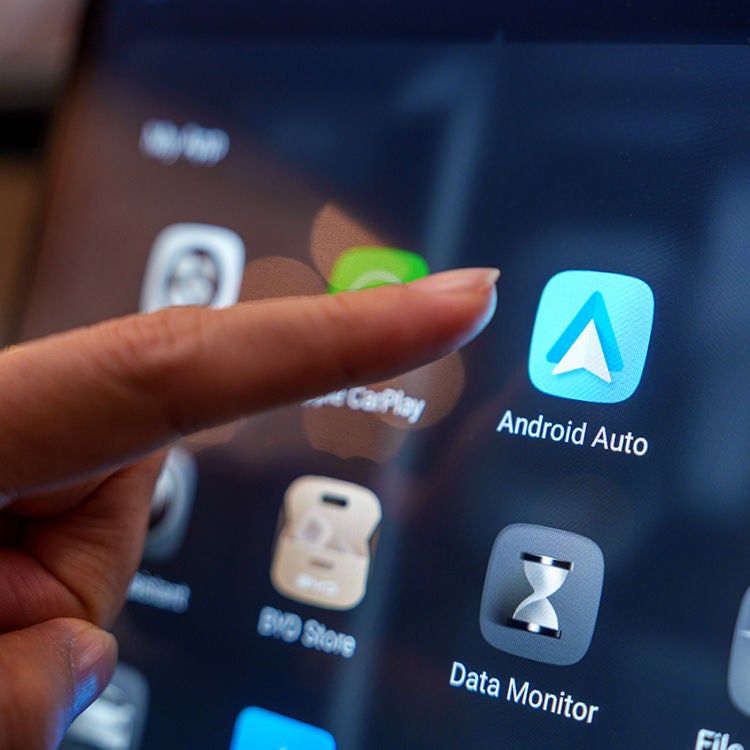
With increasing connectivity comes questions about what information is being collected, stored and transmitted, either to the vehicle manufacturer or to third parties.
There are benefits to having our cars connected to the internet. Manufacturers can send updates to the operating systems over the air. This means that your vehicle’s safety systems, features and functionality can be kept up to date without you having to regularly take the vehicle back the dealer.
“Connected car is great because it gives us the ability to send updates down to the car. With BYD, software updates are free for the life of the vehicle,” Warren Willmott says.
Bruce Fowler, Polestar Brand Manager at NordEast concurs. “Polestar and Volvo both run Android operating systems. It’s no different to having a Samsung handset, or an iPhone. To anyone concerned about collection of multiple data points, my response is: look at what’s in your hand. Look at what you’re typing into every day. It is no different.
“With our connectivity, at a minimum you can know where your vehicle is, but you can also use it to control the temperature, lock and unlock the car, know the status of the car – that’s all available on your phone. People seem pretty happy with all those services. I’ve been working with connected car for eight years and have never had anyone concerned about where their data is going.”
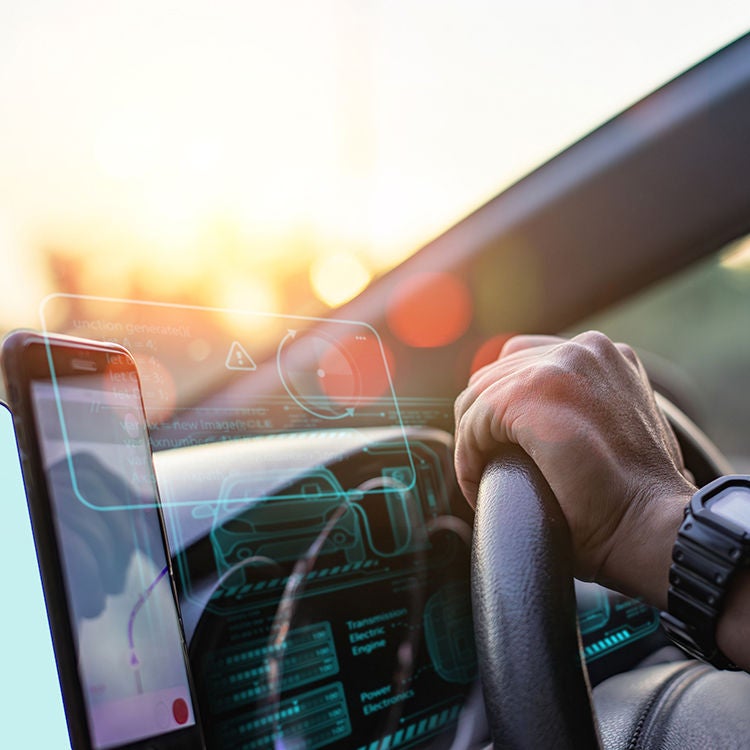
For BYD, Warren re-iterates that the information generated by the vehicle generally stays within the vehicle.
“As far as what data the factory can see it’s actually not a lot,” Warren says. “They don’t look at anything; they don’t track anything. All the operational data is contained in what is effectively a little black box. That’s stored for about 14 days and then it’s overwritten. It’s not sent to the factory.
“The idea that BYD has microphones in the vehicles, yes, they do, but none of that data is going back to them. They’re not sitting there listening to you have an argument with your spouse; the cameras aren’t watching you sit there and pick your nose. It just doesn’t happen.”
Shane Lawson, Ownership Experience Manager at Jaguar Land Rover New Zealand points out that customers must grant permission before any information is shared.
“When a client buys a new car, they’ll need to sign a number of forms including asking whether they want to connect their car to the service. By doing that they agree to sharing their data, but they can definitely choose not to,” he explains. “We have a system called ‘In Control’ where you can do all sorts of things via your phone, like start your car remotely when it’s cold in the mornings, lock and unlock it, and it also records your journeys. The app then indicates the status of the car, showing how much fuel you’ve got and how the car is performing.
“We ensure that when any data goes back to the factory it is governed by the same laws that we use in New Zealand.”
In addition to these connected car services there is a new feature being encouraged, where vehicles can call for help if something goes wrong. As of this year, it will become more difficult to achieve a five-star ANCAP safety rating without emergency call functionality, known as ‘e-call’.
In the event of a crash or a breakdown, a call goes through to a provider – in New Zealand, the AA fields many of these – to triage the situation and, if necessary, send emergency services to help.
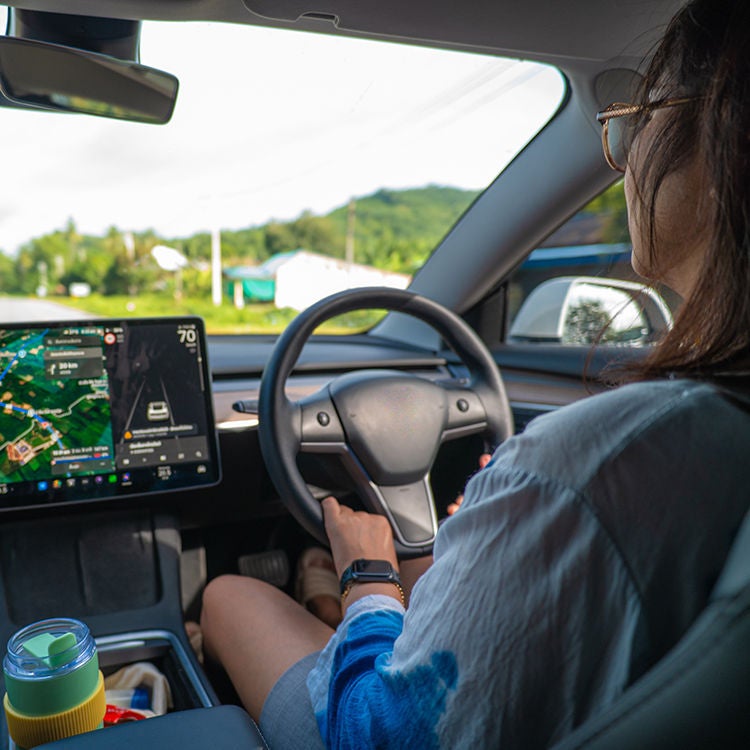
Depending on the vehicle, there are two options for these calls, Jeremy Cantley Mobility Systems and Projects Manager at the AA explains. “One button needs to be manually pressed in case of a breakdown, the other one is ACN, Auto Crash Notification, which is activated if the airbags are deployed.
“With the emergency button, calls go straight through to the agent and will usually be answered within 10 seconds. The call automatically connects so the agent can talk to the occupants of the car and, if there’s no answer, can escalate the situation if necessary.”
“E-call is going to be a significant component of an ANCAP five-star safety rating,” Carla Hoorweg, Chief Executive of ANCAP explains. “It has been mandated in Europe since 2018; in some jurisdictions they brought it in as early as 2015. In Australia, 40-45% of cars in 2025 had some form of this connectivity, but the number was much smaller in New Zealand, more like 15%. New Zealand is lagging behind.”
“The first vehicle we tested under the new protocols was a BMW iX3 that we did the rating for in July. That’s offering e-call in both New Zealand and Australia.
“E-call uses certain information from the car in the event of a crash,” Carla continues. “Details from vehicle sensors can be sent to a third-party call centre (like the AA), that could include the location of the vehicle, which airbags have been deployed, the seating positions that were occupied and the change in velocity.”
Mark Terrell, ANCAP’s Chief Technical Officer adds that for e-call, the basic data transferred is simply that the car has had a crash and where that has happened. “There are some extra features that manufacturers can add, which we encourage, like the number of occupants and the transfer of a paired mobile number,” Mark says. “So, even if a car has had a crash serious enough to fire the airbags, the driver might be fine and has got out of the car. If the call centre connects to the car and no-one answers, it’s useful to be able to call the driver and ask if they’re ok.
“This is not an invasive system,” Mark continues. “E-call is not something that is spying on you. It only sends a data packet if the car has a serious crash.”
Carla Hoorweg points out that there needs to be a distinction made between critical diagnostic or safety systems like e-call and connected data.
“The technologies that are in the car monitoring the driver are not in any way intended to be CCTV,” she says. “Those are sensors that are looking at and responding to the driver in real time. That is in-car technology. We would be very concerned if manufacturers were recording that because that’s not the intention of those systems.
“When you think about the practicality of it, that’s an enormous amount of data streaming out of every vehicle, so I think it would be noticeable if that was happening.”
“When you flip it around, as the user, would you rather a call centre knows that you’ve had a crash in a certain location and be able to dispatch emergency services if you can’t respond?” Bruce Fowler says. “That benefit far outweighs the risk of information being shared. Especially when that information is so minimal.”
It’s important to consider the user benefits of having a connected car, Bruce continues. “We try to reassure people that data is stored locally, it’s not ever being recorded. We’re an ethical country, we’re not corrupt; every manufacturer has to adhere to international laws for data security and privacy,” Bruce says. “The key thing to remember is that all of this data is about looking after the customer and giving them the best level of service possible.”
As a third-party provider liaising with both manufacturers and drivers, the AA also ensures that stringent privacy protocols are adhered to when dealing with any customer information or data. “Manufacturers can offer reassurances that their vehicles are not, in fact, spying on us,” says Jonathan Sergel, Chief Mobility Officer at the AA. “With emergency and breakdown calling this is technology and sharing of data that promotes driver and occupant safety, so we believe it’s a step in the right direction.”
This story is from the Spring 2026 issue of AA Directions magazine.