

e-Scooter safety
29 July 2026
With the growing popularity of e-scooters in our towns and cities, we explain the risks of riding and the best ways to stay safe.

We reveal the findings of an AA study on e-scooters.
Since they first hit the streets in October 2018, e-scooter schemes have established themselves as part of the urban transport system. In just six years, kilometres travelled per year by rental providers has risen from 4.7 million to 11 million in 2025. That’s an increase of 134%.
While that’s less than 1% of the kilometres driven by cars on local roads each year, AA Research Foundation (AARF) Programme Manager Christopher Stachowski says e-scooters are clearly a fixture of the transport system.
A new report commissioned by the AARF confirms this.
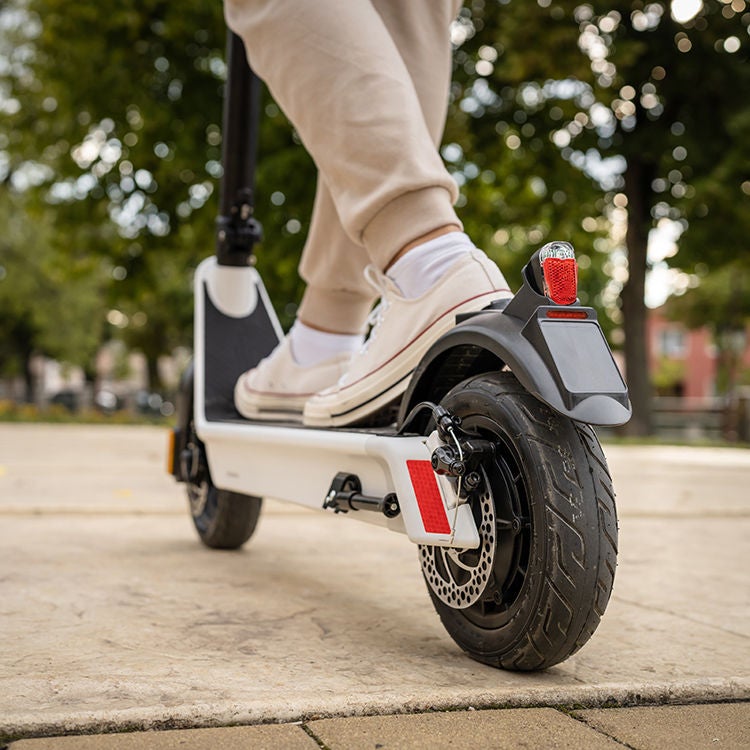
“One of the early hopes for these rental schemes was they would help fill gaps in the transport network, particularly for short urban journeys and to connect people with public transport. We can’t say from this study exactly why people are riding, but the continued growth in use suggests they are providing value as a transport option.
“What might have started out as a bit of a novelty has become a legitimate and increasingly common way of travelling, particularly for people aged under 35.”
From the earliest days of the rental schemes one of the big questions has been around safety. Many pedestrians have anecdotes of risky riding around them but this research pulled together the best available figures on how many people are getting hurt. The data suggests a more nuanced state of affairs than public perception might indicate.
While rental e-scooter trips have increased by around 134% since 2019, total ACC claims have risen by only 22%.
“That doesn’t mean e-scooters are risk-free – no form of transport is – but it suggests they are getting safer over time,” Christopher says.

Researchers point to several possible reasons: operators have improved maintenance and safety systems, riders have become more familiar with the devices, and councils have refined tools such as geofencing, speed-controlled zones and parking requirements.
The report also highlights a challenge in understanding exactly how safe e-scooters are.
Auckland City Council incident reports represented only a fraction of ACC injury claims, suggesting many incidents never come to the attention of operators or councils.
Surprisingly, the research highlights that there are no official records nationally of e-scooter incidents that result in death or severe injuries.
Unlike many Australian jurisdictions, e-scooters here are not recognised as vehicles; instead, they are classified as wheeled recreational devices so there are no national helmet requirements, age restrictions or enforceable speed limits. E-scooter sales and rental companies provide safety guidelines to new riders, encourage helmet use and rentals have speed limiters built in.
Legally, e-scooters are neither vehicles nor pedestrians; this ambiguity sits at the heart of many of New Zealand’s e-scooter headaches.
The report says many of the rules around e-scooters and responsibility for managing rental schemes have fallen to local councils, which have been governing use through bylaws to cover parking, speed restrictions, operating areas and helmets.
Auckland, Wellington and Christchurch have all adapted and strengthened their bylaws over time, however without a national legal framework councils are limited in their ability to influence rider behaviour or enforce compliance.
This ad hoc system also makes getting an overall picture of rental e-scooter use difficult, with each jurisdiction recording metrics set to different standards.
“Without clear legal status, there is no consistent framework for reporting safety outcomes or use patterns. The lack of data means it’s harder to understand the true scale of the risks. And without that understanding, developing effective national rules becomes much more difficult.”
As the report puts it, New Zealand risks being caught in a ‘vicious cycle’ of incomplete information, uncertain risk and patchwork regulation.
The question now isn’t whether e-scooters belong on our streets, but how to manage them in a way that works for everyone.
“E-scooters are here to stay – and if the rules catch up, they can keep becoming a safer and more useful part of how our cities move,” Christopher says.
This story is from the Spring 2026 issue of AA Directions magazine.